


Wood export: transparency of raw materials to meet rules of origin
Wednesday, November 11,2026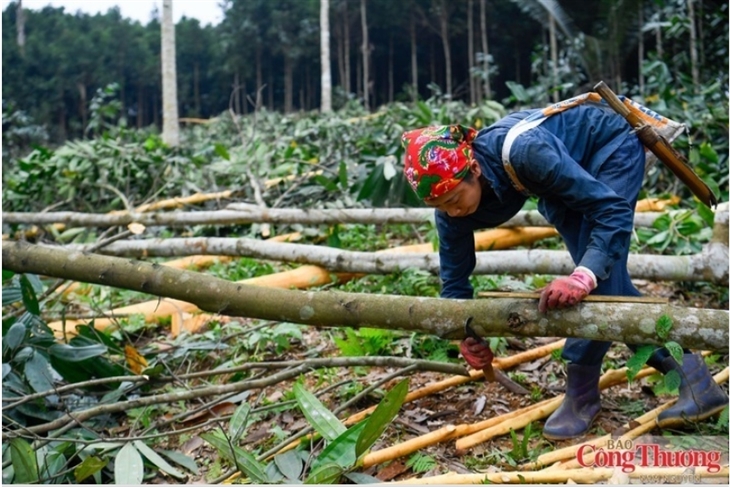
AsemconnectVietnam - Legal wood sources are an important condition, but to enjoy FTA tariff preferences, businesses must also prove that their products meet specific rules of origin.
Not just proving legal wood
For wood processing and export businesses, requirement for raw material sources is increasingly important. Import markets are not only concerned with product quality and price, but also demand legality of wood and its traceability. Meanwhile, to qualify for preferential tariffs under free trade agreements (FTAs), businesses must also meet another requirement: proving product's origin according to regulations of each agreement.
These two requirements are related but not identical. Documentation proving legality of wood helps businesses control their raw material sources; while determining origin to apply for a Certificate of Origin (C/O) must be based on the specific rules of the product, including HS code, raw material source and production process.
In an interview with a reporter from Industry and Trade Newspaper, Mr. Phung Quoc Man, Chairman of Ho Chi Minh City Handicraft and Wood Processing Association, stated...Ho Chi Minh City (HAWA) stated: “Currently, international markets are setting very strict requirements, especially regarding legality of wood sources and traceability. This has become an important criterion, alongside product quality and price”.
According to Mr. Man, businesses are having to prove legality of both imported wood and domestically grown timber. This is an issue involving many entities in supply chain, not just processing plants. He believes: “Businesses cannot solve this on their own”.
From this reality, challenge for businesses goes beyond simply gathering documentation when exporting. Information about raw materials needs to be managed from procurement stage and linked to processing process to provide a basis for comparison when determining product origin. If only documents proving legality of wood are available without determining corresponding origin criteria, businesses still lack sufficient grounds to request preferential tariffs under FTAs.
Rules of origin must be checked for each item
Rules of origin in FTAs do not apply a single criterion to all wood products. Depending on HS code and agreement, goods may have to meet requirements regarding HS code transformation, percentage of value of raw materials or specific processing steps.
For example, according to specific rules of origin for each item in CPTPP, for goods under Chapter 44, from HS codes 44.01 to 44.21, criterion is transformation to corresponding HS code from another HS code. This requires businesses to compare HS code of non-originating raw material with HS code of processed product, instead of simply relying on whether raw material was legally imported or traded.
For products in other HS codes, including wooden furniture, businesses must consult specific rules according to HS code of the finished product. Criteria applied to raw timber or products under Chapter 44 cannot be applied to all processed wood products.
Notably, rules of origin in EVFTA have also been updated. Circular No.14/2026/TT-BCT dated March 25, 2026, effective from May 10, 2026, stipulates rules of origin for goods under EVFTA, updating the list of specific rules for goods according to the HS 2022 system. Businesses need to correctly identify product code and origin criteria to determine their ability to meet requirements before requesting a certificate of origin.
From a business perspective, Mr. Phung Quoc Man suggested that coordination between the Government, ministries, agencies, associations and relevant organizations is needed to build a unified mechanism for proving the legality of raw material sources. "With a clear and transparent system of criteria, businesses will have a solid basis to prove the legality of their products to international customers", Mr. Phung Quoc Man stated.
Regarding implementation of Certificates of Origin (C/O), requirements are even more specific: businesses must manage their raw material sources, correctly identify the HS code, compare it with rules of origin of target market and retain documentation proving the production process. Standardizing input data therefore not only serves to control legality of timber but also helps businesses be more proactive in implementing rules of origin and taking advantage of tariff preferences from FTAs.
Source: Vitic/ congthuong.vn
Self-certification of origin: proactively leveraging CPTPP preferences
China increases purchases, Vietnamese rice export welcome recovery signals
Export in 2027: Which product groups have prospects and what do businesses need to prepare?
EVFTA creates opportunities for Vietnamese goods to expand market share in EU
Agricultural, forestry and aquatic product export reached over 63 billion USD after 10 months
Seafood export exceed US$10.4 billion: What's driving force for end of this year?
UKVFTA creates momentum to raise standards for Vietnamese goods in UK market
UKVFTA opens up, Vietnamese fruits and vegetables need to overcome technical barriers
RCEP expands export opportunities for Vietnamese goods to ASEAN
Exploiting FTAs, opening up more export opportunities for Nghe An
Ha Tinh: Export recover, import increase
Leveraging CEPA to expand export opportunities for Vietnamese fruits and vegetables to UAE
In the first 10 months of 2026, Vietnam's total goods import and export surpass 1,000 billion USD mark
Vietnamese coffee proactively cooperates to bring brands to the world
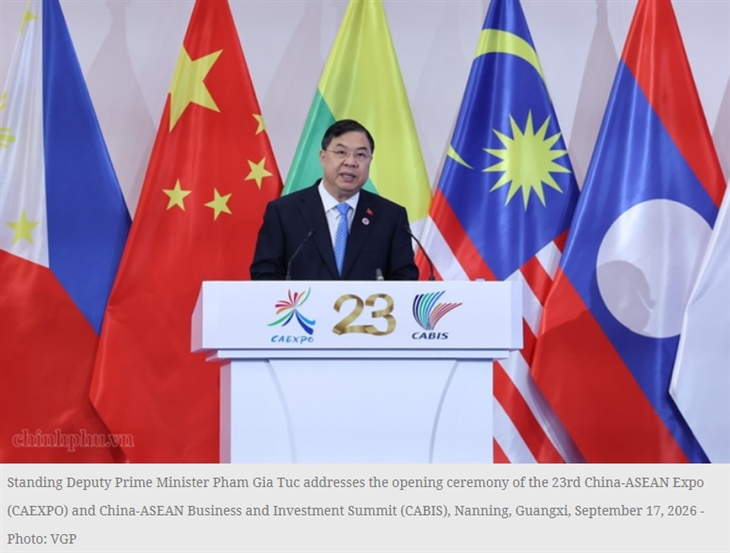
Viet Nam seeks to expand space for ASEAN-China cooperation ...
Viet Nam expects to make greater contributions to expanding the space for ASEAN-China cooperation for shared prosperity, underlined ...Top leader To Lam to attend 81st UNGA General Debate, ...
Viet Nam treasures friendly relations with Thailand: Prime ...
Viet Nam approves action program to implement ASEAN ...
The Vietnamese Government has approved an action program to implement the ASEAN Connectivity Strategic Plan in Viet Nam for 2026–2035 ...Industry and trade sector steps up strategic technology ...
Gov't approves National AI Strategy
Viet Nam continues to strengthen its strategic position in ...
