


Self-certification of origin: proactively leveraging CPTPP preferences
Wednesday, November 11,2026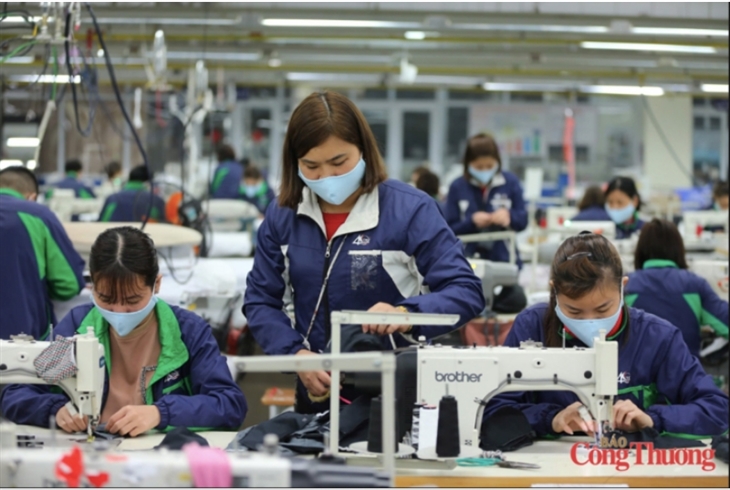
AsemconnectVietnam - Ministry of Industry and Trade is developing a self-certification mechanism for origin, aiming to empower eligible exporters to take the initiative. This is expected to be implemented from 2029, in accordance with CPTPP commitments.
Increased use of certificates of origin (C/O) and exploiting tariff preferences
After 7 years of implementing Comprehensive and Progressive Trans-Pacific Partnership (CPTPP) Agreement, percentage of Vietnamese export goods using CPTPP preferential C/Os has improved. From 2% of total export turnover to this market bloc in 2019, utilization rate of C/Os is projected to reach 10% by 2025, equivalent to over US$6 billion in export turnover.
At the recent seminar "From 'Made in Vietnam' to 'Made in CPTPP': Restructuring Supply Chains to Meet Origin Requirements and Increase Resilience", Ms. Tran Thanh Binh, Head of Goods Origin Department, Import-Export Department (Ministry of Industry and Trade), stated that when CPTPP came into effect in 2019, utilization rate of Certificates of Origin (C/O) was only 2%, partly because at that time only Canada and Mexico accepted and used this C/O form. By 2025, the rate had increased fourfold compared to the time the agreement began implementing.
Accordingly, Vietnamese goods are gradually appearing in CPTPP markets with many product groups such as agricultural products, textiles, footwear, iron and steel, rattan and bamboo products and handicrafts. In Mexico, Chile and Canada, products bearing the "Made in Vietnam" label with a C/O are also becoming increasingly well-known.
To benefit from preferential tariffs, businesses not only need orders but also must prove that their products meet corresponding rules of origin. This is one of obstacles many businesses face when exploiting CPTPP.
Reality of textile and garment industry clearly shows these difficulties. At the seminar, Mr. Truong Van Cam, Vice President and General Secretary of Vietnam Textile and Garment Association, also stated that before CPTPP came into effect, Vietnam's textile and garment export turnover to the region reached US$6.27 billion. By 2025, this figure is expected to increase to US$8.3 billion, a 33.3% increase.
However, "from yarn onward" rule of origin remains a major barrier for the industry. While yarn stage has met requirements relatively well, weaving, dyeing and finishing remain bottlenecks that cannot be resolved in the short term.
In addition, production methods also affect ability to take advantage of preferential treatment. Representatives from Vietnam Textile and Garment Association acknowledge that Vietnamese garment businesses currently mainly operate under CMT (Contract Manufacturing) method. When customers provide or specify source of raw materials and components, businesses do not have complete control over supplier selection, while origin of materials is a crucial factor in meeting CPTPP rules.
At TNG Investment and Trading Joint Stock Company, origin requirement has directly impacted selection of raw material suppliers. Mr. Tran Minh Hieu, the company's General Director, stated that because CPTPP applies rule of origin from yarn onwards, TNG has added origin criterion to its supplier selection conditions, reviewed and reclassified its partner list according to origin of raw materials and prioritized long-term cooperation with factories that meet agreement's requirements.
The company also works with customers from design, sample submission and price quotation stages to determine ability of raw materials and components to meet rules of origin. Simultaneously, strengthen cooperation with domestic fabric suppliers that meet standards of major brands to ensure a stable supply.
Preparing a mechanism for self-certification of origin by businesses
One of notable aspects in implementation of CPTPP is mechanism for self-certification of origin by businesses. Instead of submitting applications to competent agencies and organizations for Certificates of Origin (C/O) as is currently case, eligible exporters will be able to proactively determine and certify origin of their goods.
According to Ms. Tran Thanh Binh, CPTPP is one of the first agreements to require this mechanism. To fulfill commitment, Ministry of Industry and Trade is actively developing a Decree to replace Government Decree No. 31/2018/ND-CP detailing Law on Foreign Trade Management regarding origin of goods. One of proposed contents is to establish a self-certification mechanism for eligible exporters.
According to commitments in CPTPP, Vietnam will have to implement this mechanism by 2029. Under this mechanism, eligible businesses can self-certify that their goods meet rules of origin to benefit from CPTPP preferential treatment, instead of having to request competent authority to issue a Certificate of Origin (C/O) for each shipment as in current process.
A representative from Import-Export Department stated that new mechanism allows businesses to be more proactive in determining whether their products meet rules of origin. However, this proactive approach also comes with greater responsibility. Businesses must have sufficient grounds to accurately determine the origin, prove process of goods production and ensure transparency of information when inspection and verification are required.
The first requirement is to build a transparent information, record and data system. Businesses cannot simply control final product; they must also understand origin of raw materials, supplier records and information related to production process.
Meeting rules of origin also requires coordination between exporting businesses, raw material suppliers and agencies and organizations issuing Certificates of Origin (C/O). This forms basis for establishing a complete documentation system that meets origin criteria as stipulated.
In addition, CPTPP has several provisions that facilitate businesses, including full cumulation mechanism and rules of pure origin for member countries within the bloc.
For example, raw materials can be sourced from Australia or New Zealand to produce goods in Vietnam. If corresponding rules of origin are met, the product can still be considered as having pure origin under CPTPP regulations when exported to other members.
For textiles and garments, in addition to full cumulation mechanism, the agreement also includes a partial cumulation mechanism. A regional domestic content ratio of 5-10% can also be considered when determining compliance with rules of origin for this product.
These regulations open up more options for businesses to organize their supply chains, instead of relying solely on ability to produce all raw materials domestically. However, businesses must still identify, manage and prove the origin of materials used.
Therefore, during preparation of self-certification mechanism, development of data and traceability needs to be implemented synchronously. Ms. Tran Thanh Binh emphasized necessity of forming a linked chain of raw materials, records, data and information, both online and within electronic data systems.
Proactive data management, preparing for a new transition
Self-certification mechanism for origin, expected to be implemented in 2029, requires businesses to prepare early, especially in data management and supply chain control. In fact, at TNG, the company has already digitized its origin management process within its production and business operations.
Mr. Tran Minh Hieu stated that TNG has built a data management process for origin using a software system, from ordering raw materials to shipping. Each batch of raw materials entering warehouse is assigned a QR code or ERP code, part of comprehensive garment industry production and management software developed by the company.
Data is linked to documents, invoices, sales contracts and corresponding certificates of origin, ensuring traceability for each garment order and each batch of fabric used.
ERP (Enterprise Resource Planning) database connects information from purchasing department and warehouse to export department. Therefore, when customers request reports or unexpected origin audits occur, businesses can provide relevant documentation regarding origin of raw materials.
According to Mr. Tran Minh Hieu, having suitable raw materials is only a necessary condition. Sufficient condition is that businesses must be able to prove origin with a complete and consistent documentation system when customers or importing countries request inspection.
Based on this practice, TNG recommends that textile and garment businesses planning to expand exports to CPTPP countries should build a database of raw material sources, assess their ability to meet rules of origin from product development and pricing stages; and establish long-term cooperative relationships with qualified raw material suppliers.
From perspective of regulatory agency, Ms. Tran Thanh Binh also noted that businesses need to be transparent about origin of input materials, build traceability records for suppliers and proactively develop plans to meet rules of origin.
According to her, when managing supply sources, businesses need to assess entire supply chain, identify where supply comes from, what percentage it represents and whether it meets CPTPP criteria. Based on that, they should classify supply sources as those that can be immediately replaced, those that require time to improve capacity and technology and those that require further research and investment.
Regarding textile and garment industry, Mr. Truong Van Cam suggested that businesses need to gradually restructure their supply sources, which may include linking or forming joint ventures with raw material and accessory manufacturers to organize production in Vietnam. Transition process should be carried out step by step, focusing on evaluating suppliers, controlling quality and delivery schedules and avoiding excessive costs. Free Trade Agreements (FTAs) not only facilitate market expansion and utilization of tariff preferences but also encourage businesses to participate in and manage supply chains.
However, businesses also need to consider choosing appropriate agreement for each product, market and order. Vietnam currently has many FTAs in effect, each with its own advantages. Businesses need to research to choose agreement that offers the best advantages. If CPTPP preferences are not as favorable as another FTA, businesses can proactively request a Certificate of Origin (C/O) under a more suitable agreement.
Thus, goal is not to use CPTPP C/O for every shipment, but to most effectively exploit trade preferences that businesses are capable of meeting.
Source:Vitic/ congthuong.vn
Export in 2027: Which product groups have prospects and what do businesses need to prepare?
EVFTA creates opportunities for Vietnamese goods to expand market share in EU
Agricultural, forestry and aquatic product export reached over 63 billion USD after 10 months
Seafood export exceed US$10.4 billion: What's driving force for end of this year?
UKVFTA creates momentum to raise standards for Vietnamese goods in UK market
UKVFTA opens up, Vietnamese fruits and vegetables need to overcome technical barriers
RCEP expands export opportunities for Vietnamese goods to ASEAN
Exploiting FTAs, opening up more export opportunities for Nghe An
Ha Tinh: Export recover, import increase
Leveraging CEPA to expand export opportunities for Vietnamese fruits and vegetables to UAE
In the first 10 months of 2026, Vietnam's total goods import and export surpass 1,000 billion USD mark
Vietnamese coffee proactively cooperates to bring brands to the world
Quang Ninh woos Indonesian businesses with investment incentives, eyes Halal value chain
Viet Nam’s foreign trade surpasses US$1 trillion mark in first 10 months
Viet Nam seeks to expand space for ASEAN-China cooperation ...
Viet Nam expects to make greater contributions to expanding the space for ASEAN-China cooperation for shared prosperity, underlined ...Top leader To Lam to attend 81st UNGA General Debate, ...
Viet Nam treasures friendly relations with Thailand: Prime ...
Viet Nam approves action program to implement ASEAN ...
The Vietnamese Government has approved an action program to implement the ASEAN Connectivity Strategic Plan in Viet Nam for 2026–2035 ...Industry and trade sector steps up strategic technology ...
Gov't approves National AI Strategy
Viet Nam continues to strengthen its strategic position in ...
