


China increases purchases, Vietnamese rice export welcome recovery signals
Monday, November 9,2026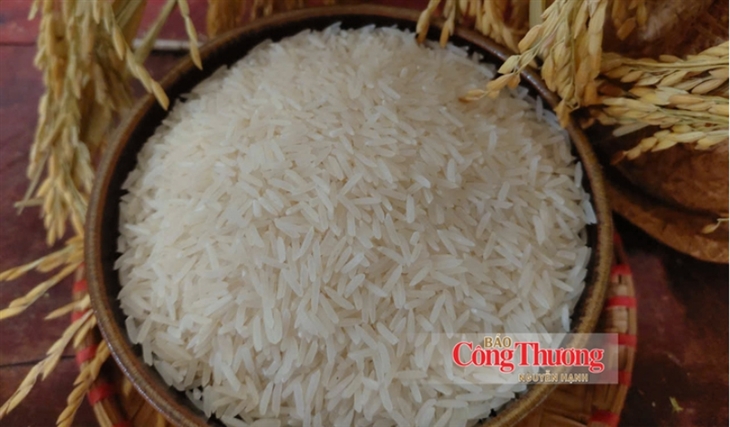
AsemconnectVietnam - Vietnamese rice export are thriving again as China, the Philippines and Africa increase purchases, while supply at the end of this year shows signs of shrinking.
Philippines opens up to imports, Vietnamese rice prices rise sharply
According to a report by Ministry of Agriculture and Environment, in October 2026, Vietnam's rice export are estimated at 475,500 tonnes, earning 252.9 million USD. Cumulatively, in the first 10 months, rice export reached 6.8 million tonnes, worth 3.31 billion USD, a decrease of 4.6% in volume and 9.7% in value compared to the same period in 2025. Average export price reached 484 USD/tonne, a decrease of 5.4%.
The Philippines continues to be Vietnam's largest rice market, accounting for 40.2% of the market share. China ranks second with 17.5%, followed by Ghana with 13.7%. Notably, in the first nine months of 2026, value of rice export to China increased by 75.7% year-on-year, while export to the Philippines decreased by 14.9% and Ghana by 2.5%. Among the top 15 export markets, China showed the strongest growth, while Cambodia experienced the deepest decline at 65.1%.
After a period of sluggish exports, rice market has shown positive developments since October. One notable driving force is the Philippines officially granting Sanitary and Phytosanitary (SPS) permits to its businesses to import 300,000 tonnes of rice from Vietnam in November 2026.
According to Vietnam Food Association (VFA), a notable point is that this time SPS (Sustainable Pest Management System) applies to fragrant rice with 25% broken grains, instead of 5% broken grains as in previous years. The Philippines reopening its import market, in context of many other markets also increasing purchases at the end of the year, has contributed to increased demand for Vietnamese rice.
Price of Vietnamese fragrant rice with 25% broken grains has now exceeded US$500/tonne. Some businesses in Mekong Delta said that price of this commodity at times reached US$540/tonne, an increase of US$50-60/tonne compared to the end of October.
Not only fragrant rice with 25% broken grains, but prices of other types of rice have also increased following the general market trend. According to VFA, at the end of October, price of Vietnamese fragrant rice with 5% broken grains increased by US$15/tonne compared to the previous week, reaching US$515/tonne; Jasmine rice prices increased by $8/tonne, reaching $539/tonne. This increase in Vietnamese rice prices is higher than that of some competitors such as Thailand, India, Pakistan and Myanmar.
Besides the Philippines, customers from China and African markets also increased their purchases of ST25 rice and glutinous rice in preparation for the Lunar New Year. Increased demand has pushed domestic paddy prices up to around 7,000-7,200 VND/kg. However, farmers are no longer able to fully benefit from the price increase due to the reduced supply of paddy rice after a period of low prices.
According to rice industry businesses, Vietnamese rice has advantages in quality, price and supply capacity. Given difficulties in supplying rice from some competing countries, replacing Vietnamese rice in the market is not easy.
Supply in 2027 faces pressure from El Niño
Increased import demand is occurring against backdrop of Vietnam's dwindling rice supply at the end of the year. According to Ministry of Agriculture and Environment, by the end of October 2026, the country had planted approximately 6.9 million hectares of rice, equivalent to 96.4% of the same period last year. The harvested area reached approximately 5.8 million hectares, with an estimated production of nearly 37 million tonnes, equivalent to 98% of the same period; the average yield reached 63.3 quintals/hectare, an increase of 1.2%.
Notably, the area planted with autumn-winter rice reached 696,200 hectares by October 20th, a decrease of 9.1% compared to the same period last year. The estimated harvest yield is 789,600 tonnes, a decrease of 55.2%, mainly due to slower planting and harvesting progress. This is also one of the factors putting pressure on rice supply in the last months of the year.
According to export businesses, after previous drop in rice prices, many farmers suffered losses due to increased fertilizer and input costs, leading to a reduction in the area planted for the next crop. Meanwhile, autumn-winter crop usually has lower yields than other crops. For 2026-2027 winter-spring crop, risk of drought and saltwater intrusion in Mekong Delta also raises concerns about planted area and yield.
Pressure on supply is not only coming from Vietnam. The Philippines' rice production in recent harvest did not meet expectations and quality also declined due to weather impacts. This is why the country opened its doors to imports earlier than planned, aiming to ensure food security against increasing threat of El Niño.
As of time mentioned in report, the Philippines had imported 4.07 million tonnes of rice, a 20.06% increase compared to the same period last year. However, this import volume is still lower than the 5.5 million tonns forecast by the US Department of Agriculture (USDA). Vietnam's import demand is projected to continue increasing to 5.6 million tonnes in 2027.
In addition, data from the Philippine Statistics Authority shows that as of September 1, 2026, Vietnam's rice reserves decreased by 8% compared to the same period last year, to 1.91 million tonnes. National Food Authority of the Philippines' rice reserves alone decreased by 36.1%. This development indicates that the Philippines still has a significant need to replenish its supply.
From a global market perspective, supply from major exporting countries could also be affected. Indian 5% broken rice prices have risen to $389-394 per tonne, the highest in over a year, due to the strengthening rupee and limited supply. Thailand also faces weather risks as part of its rice fields are outside the irrigation system.
It is predicted that El Niño could last until early 2027, then decrease in intensity but continue to impact until mid-year. Notably, impact of this climate phenomenon often lags behind weather patterns. Therefore, the effects on agricultural production and food supply may be more pronounced in 2027.
If El Niño unfolds as predicted, food supplies in Asia and the world will be significantly affected. India alone could see a reduction in rice production of 5-10 million tonnes in 2027. In this context, countries dependent on imports will tend to increase their reserves, putting further pressure on global rice demand and prices. Given current developments, the outlook for rice prices in the coming period is considered more positive than in the early months of 2026. However, price increases also raise concerns about ability of export businesses to secure supplies and their financial capacity.
According to experts, if El Niño significantly impacts food production, world rice prices could approach their 2023 peak in the first half of 2027. However, this development depends on India's rice export policies as well as production conditions in major supplying countries.
Given potential for continued increases in demand, export businesses need to carefully consider timing of their purchases, stockpiling and sales in line with market developments. Sales need to be balanced according to the time of year, avoiding signing contracts at low prices when domestic procurement costs are rapidly increasing. To achieve this, businesses need sufficient financial resources and a warehousing system that meets storage requirements. These are crucial conditions that help businesses proactively manage their supply chain and mitigate risks when market prices fluctuate.
Source: Vitic/ congthuong.vn
EVFTA creates opportunities for Vietnamese goods to expand market share in EU
Agricultural, forestry and aquatic product export reached over 63 billion USD after 10 months
Seafood export exceed US$10.4 billion: What's driving force for end of this year?
UKVFTA creates momentum to raise standards for Vietnamese goods in UK market
UKVFTA opens up, Vietnamese fruits and vegetables need to overcome technical barriers
RCEP expands export opportunities for Vietnamese goods to ASEAN
Exploiting FTAs, opening up more export opportunities for Nghe An
Ha Tinh: Export recover, import increase
Leveraging CEPA to expand export opportunities for Vietnamese fruits and vegetables to UAE
In the first 10 months of 2026, Vietnam's total goods import and export surpass 1,000 billion USD mark
Vietnamese coffee proactively cooperates to bring brands to the world
Quang Ninh woos Indonesian businesses with investment incentives, eyes Halal value chain
Viet Nam’s foreign trade surpasses US$1 trillion mark in first 10 months
Vietnam's seafood exports nearly reached full-year target
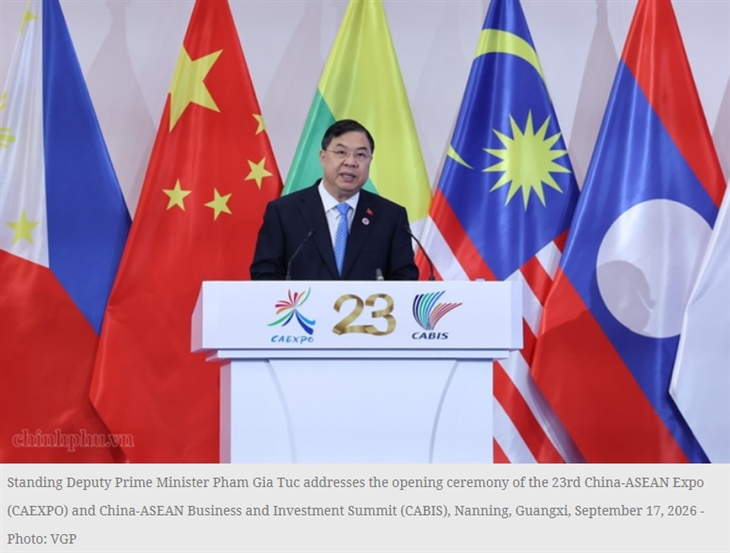
Viet Nam seeks to expand space for ASEAN-China cooperation ...
Viet Nam expects to make greater contributions to expanding the space for ASEAN-China cooperation for shared prosperity, underlined ...Top leader To Lam to attend 81st UNGA General Debate, ...
Viet Nam treasures friendly relations with Thailand: Prime ...

Viet Nam approves action program to implement ASEAN ...
The Vietnamese Government has approved an action program to implement the ASEAN Connectivity Strategic Plan in Viet Nam for 2026–2035 ...Industry and trade sector steps up strategic technology ...
Gov't approves National AI Strategy
Viet Nam continues to strengthen its strategic position in ...
