


Exploiting FTAs, opening up more export opportunities for Nghe An
Wednesday, November 4,2026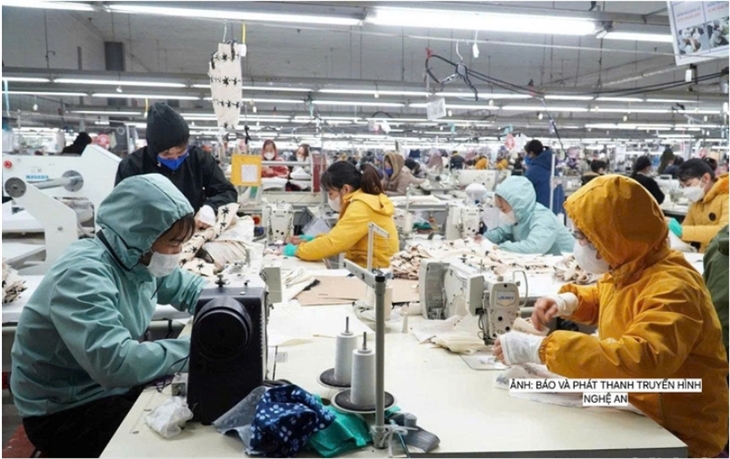
AsemconnectVietnam - In the first nine months of 2026, Nghe An's goods exports reached approximately US$5.2 billion, an increase of over 56% compared to the same period and exceeding annual plan. This result reflects development momentum of processing and manufacturing industry and the positive contribution of the FDI sector.
From export growth momentum to integration advantages
According to a report by Nghe An Department of Industry and Trade, in the first nine months of 2026, the province's merchandise export turnover reached approximately US$5.21 billion, an increase of 56.35% compared to the same period and exceeding annual plan by 4.13%. In addition, import turnover reached approximately US$4.342 billion, an increase of nearly 44%. Thus, Nghe An continues to maintain a trade surplus, contributing to creating additional resources for local economic development.
Notably, export growth is not only reflected in scale of turnover but also in shift in production structure. Group of electronic equipment and components increased by over 112%; automotive components and parts increased by 194%; steel sheets increased by 46%; and textiles and garments increased by 13.9%. These figures show that processing and manufacturing industry, especially those deeply involved in international supply chains, is becoming a crucial driving force for the province's trade activities.
This result is supported by expansion of production capacity, investment attraction and improvement of business environment. In the first nine months of 2026, Nghe An's industrial production index increased by 21.49% compared to the same period; processing and manufacturing industry alone increased by 25.79%. Production of electronic components is estimated at 395.3 million units, an increase of 30.03%. Several high-tech product lines recorded strong growth, such as smartphone components which increased fourfold and semiconductor devices reaching 14.9 million units, an increase of 3.5 times.
Increase in production shows that local production capacity is expanding, creating a source of goods to serve international markets. FDI sector plays a significant role in this. Exploiting free trade agreements (FTAs) has become a crucial direction for Nghe An province. Accordingly, in FTA Index 2025, Nghe An ranked 8th out of 34 provinces and cities, a significant improvement compared to its 33rd position out of 63 localities in the first assessment in 2024. This result shows progress in implementing FTAs and opens up room for locality to further improve quality of support for businesses integrating into global market.
It can be seen that improvement in FTA Index ranking is a positive sign, but actual effectiveness needs to be measured by ability of businesses to utilize tariff preferences, expand orders and increase export value. FTAs such as CPTPP, EVFTA, and RCEP create opportunities to access larger markets but each agreement has its own rules of origin, tariff reduction schedule and technical requirements. Businesses can only fully benefit when they understand the regulations, proactively prepare necessary documents and meet requirements of importing market.
Therefore, instead of just disseminating information, support activities need to delve into each industry, product and market. Businesses producing electronic components, textiles, footwear, wood, steel, or agricultural products need specific guidance on rules of origin, certificates of origin (C/O), traceability and related technical standards. With access to information tailored to their needs, businesses will be more proactive in choosing markets, developing production plans and negotiating with partners.
Removing logistics bottlenecks and improving quality of export goods
Besides opportunities from FTAs, logistics costs are becoming one of major challenges for export businesses in Nghe An. Due to impact of US-Iran conflict, sea freight rates to some South Asian and American markets have increased by approximately 60-70%, sometimes exceeding 100%; the US route alone has seen an increase of about 50-70%. This fluctuation increases transportation costs, narrows profit margins and directly affects the competitiveness of goods.
These developments show that increased export value does not necessarily translate into correspondingly improved business efficiency. If transportation, warehousing and delivery costs continue to rise, the price advantage of goods may diminish. Therefore, along with market expansion, businesses need to calculate total logistics cost per unit of goods, instead of focusing solely on negotiating freight rates.
To address logistics bottlenecks and improve quality of export goods, Nghe An Department of Industry and Trade suggests that businesses should strengthen multimodal transport, consolidate goods, purchase freight centrally by industry group and utilize two-way shipping to reduce empty containers. Simultaneously, they should restructure export markets, effectively exploit markets in Asia, ASEAN and China; promote digital transformation, leverage FTAs and enhance value of goods to offset increasing logistics costs.
In addition, localities need to improve transportation infrastructure, seaports and logistics services, which are crucial for long-term competitiveness. Along with logistics, requirement to improve quality and meet market standards should be central. Importing markets are increasingly focusing on traceability, environmental standards, supply chain responsibility, and product transparency. This requires Nghe An businesses to invest in technology, improve quality management processes, control raw materials, and build brands. For small and medium-sized enterprises (SMEs), meeting multiple sets of standards simultaneously can increase initial investment costs.
In an interview with Industry and Trade Newspaper, Mr. Pham Van Hoa, Director of Nghe An Department of Industry and Trade, stated that to maintain export growth, Nghe An has identified need to implement a comprehensive set of solutions to support businesses in expanding markets, effectively exploiting FTAs and enhancing competitiveness. This includes providing market information, guidance on rules of origin, procedures for issuing certificates of origin (C/O) and standards of importing markets, all tailored to specific needs of each industry and business.
“Besides, given fluctuations in international transportation costs, businesses need to proactively restructure export markets, optimize logistics operations and strengthen linkages in transportation and supply of goods. In the long term, improving product quality, investing in technology, meeting traceability requirements and environmental standards will be crucial factors for Nghe An goods to participate more deeply in the global supply chain and take full advantage of opportunities from international economic integration”, Mr. Hoa emphasized.
Source: Vitic/ congthuong.vn
In the first 10 months of 2026, Vietnam's total goods import and export surpass 1,000 billion USD mark
Vietnamese coffee proactively cooperates to bring brands to the world
Quang Ninh woos Indonesian businesses with investment incentives, eyes Halal value chain
Viet Nam’s foreign trade surpasses US$1 trillion mark in first 10 months
Vietnam's seafood exports nearly reached full-year target
Vietnamese tuna exports saw growth, challenges remained
Import-export of FDI sector: strong momentum from hi-tech industry
Vietnam-EFTA FTA: Another 'highway' to bring Vietnamese goods into European market
Vietnamese seafood welcomes new opportunities from Vietnam-EFTA FTA
VEFTA - further evidence affirming undeniable achievements of international economic integration
Opportunities from VIFTA: Vietnamese seafood export to Israel boost
Dairy imports and exports saw growth in 9 months of 2026
Vietnam records trade surplus for second consecutive period
Vietnam - Panama promote trade, investment and logistics cooperation
