


CPTPP opens up Malaysian market, creating more opportunities for Vietnamese Halal products
Tuesday, October 27,2026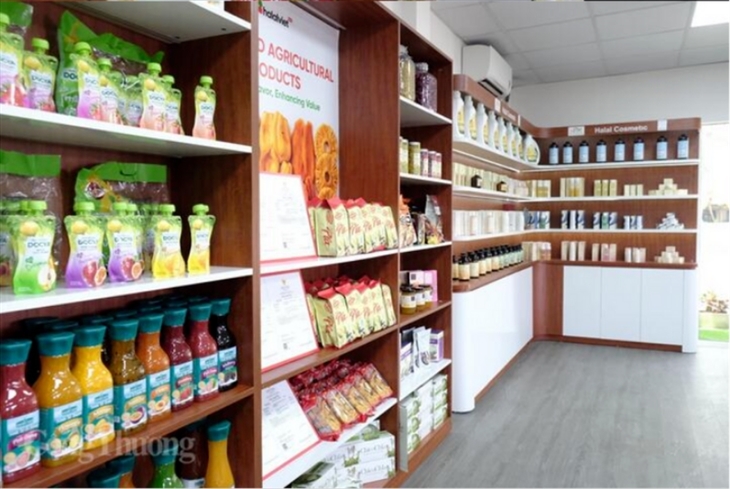
AsemconnectVietnam - With significantly reduced tariff barriers thanks to CPTPP and high demand, Malaysia has become a destination for Vietnamese Halal products to penetrate deeper into supply chain.
CPTPP opens more opportunities for Vietnamese Halal products
For many years, Vietnam-Malaysia trade has maintained a fairly positive growth momentum, especially since Comprehensive and Progressive Trans-Pacific Partnership (CPTPP) Agreement came into effect. Halal products are emerging as a sector with great potential.
Sharing at Trade Promotion Meeting with Vietnamese Trade Offices Abroad in September 2026, Mr. Phung Van Thanh, of Vietnamese Trade Office in Malaysia, informed that Malaysia has approximately 35 million inhabitants, of which more than 60% are Muslim. Malaysia is also a member of Organization of Islamic Cooperation (OIC) and is aiming to develop into a regional and global Islamic trade hub.
Currently, Vietnamese Halal products are still in process of exploring opportunities and methods to penetrate Malaysian market and export Halal products. However, with current development policies of Malaysian government, Vietnamese businesses have another path: cooperation between Vietnamese and Malaysian businesses to jointly produce products that meet Halal standards and quality and to obtain recognition, licensing and Halal certification from Malaysia.
According to representative of Vietnamese Trade Office in Malaysia, this is an important direction for cooperation, because Malaysia is not only a large consumer market but can also become a bridge for Vietnamese Halal goods to access other Muslim markets.
Malaysia is currently one of the leading centers for Halal industry development in the world. Malaysia has an internationally recognized system of standards and certifications, including JAKIM. Alongside this, Malaysian government has implemented numerous policies to promote the Halal ecosystem, from production, raw materials and logistics to Halal industrial zones.
In addition, CPTPP agreement provides another advantage in goods trade, committing to eliminating most tariffs on goods originating from Vietnam according to different schedules. Many agricultural products, seafood, processed foods and beverages – which have potential to be developed into Halal products – benefit from tariff reductions.
For export businesses, tariffs are always one of direct factors contributing to competitiveness. When import tariffs are reduced, price gap between Vietnamese goods and products from other sources can be narrowed, creating more favorable conditions for businesses to find importers and expand their markets.
However, like other product categories, CPTPP also includes commitments on transparency of technical regulations, technical barriers to trade and sanitary and phytosanitary measures for Halal products, but specific religious requirements remain under purview of importing market.
Strengthening trust
Vietnam has no shortage of conditions for developing Halal products. Diverse agricultural raw materials, a growing processed food industry and production capacity of businesses are creating a foundation for formation of product lines serving the Muslim market. However, achieving export-standard Halal products is a significant challenge.
In an interview with the Industry and Trade Newspaper, Ms. Vu Thi Thanh Huyen, General Director of Nha Xanh Toan Cau Cooperative, said that after more than a decade of development, the company has standardized 5 products from chia seeds and plants, of which 4 products meet global Halal standards. However, in process of accessing Muslim markets, businesses still face many obstacles regarding information, costs and ability to build relationships with partners.
“Halal sounds very vague, but after a decade of research, we found three key issues for penetrating this market: firstly, transparency regarding origin; secondly, cleanliness in production to avoid cross-contamination; and thirdly, food safety”, shared Ms. Vu Thi Thanh Huyen.
That is also why representative of Global Green House Cooperative believes that Vietnam having good raw materials is an advantage, but not enough. Businesses need to standardize production chain, update market information and adjust packaging and designs to suit each country. Because Halal is not a set of standards that can be applied universally to all Muslim markets. Each market has its own requirements, culture, and recognition methods.
Ms. Ba Thi Nguyet Thu, Director of HalalViet Promotion and Experience Center, also recognizes Malaysia as a noteworthy Halal market within CPTPP bloc due to its widely recognized JAKIM standard, its large Muslim community and its developed Halal economy.
According to Ms. Ba Thi Nguyet Thu, Vietnamese businesses wishing to penetrate this market, in addition to paying attention to traceability, need to change their approach: “We must be ready to directly survey the market, learn about the standards and also be willing to invest time, effort, and money to change production habits to meet standards required by the market”.
For businesses that already have the appropriate certification, Malaysia can open up a broader development path. Beyond selling to 35 million-person market, businesses can seek Malaysian partners to jointly produce, complete certifications, build supply chains and thereby access other Muslim markets.
This is also direction of cooperation emphasized by representative of Vietnamese Trade Office in Malaysia. Accordingly, instead of just selling Vietnamese products, businesses from both countries can jointly invest and produce products that meet Malaysia's Halal standards. In this case, Malaysia would not only be a target market but could also become a link in the journey of bringing Vietnamese products to larger Muslim markets.
It can be seen that, with the Halal product sector, Vietnam has advantages in raw materials, production capacity and increasing export experience; CPTPP adds important advantages in market access and tariffs. Important thing is that Vietnamese businesses make greater efforts to perfect a Halal product chain that meets standards, is transparent and has the capacity to go further after CPTPP agreement.
Source: Vitic/ congthuong.vn
Vietnamese tuna exports saw growth, challenges remained
Import-export of FDI sector: strong momentum from hi-tech industry
Dairy imports and exports saw growth in 9 months of 2026
Vietnam records trade surplus for second consecutive period
Imports of paper products increased in October
Fruit and vegetable trade in 9 months of 2026: growth drivers and seasonal fluctuations
Lam Dong: Vegetable and fruit export increase by nearly 300%
Textile and garment export grow but concerns remain
Effectiveness of processed agricultural products seen from coffee industry
Vietnam’s exports of phones and components: breakthrough growth in new markets
Manufacturing drove industrial growth in 9 months
Increasing localization rates is essential for sustainable growth
VASEP proposes tax relief to support Vietnamese seafood exporters
Paper trade in 9 months of 2026: positive growth in both exports and imports
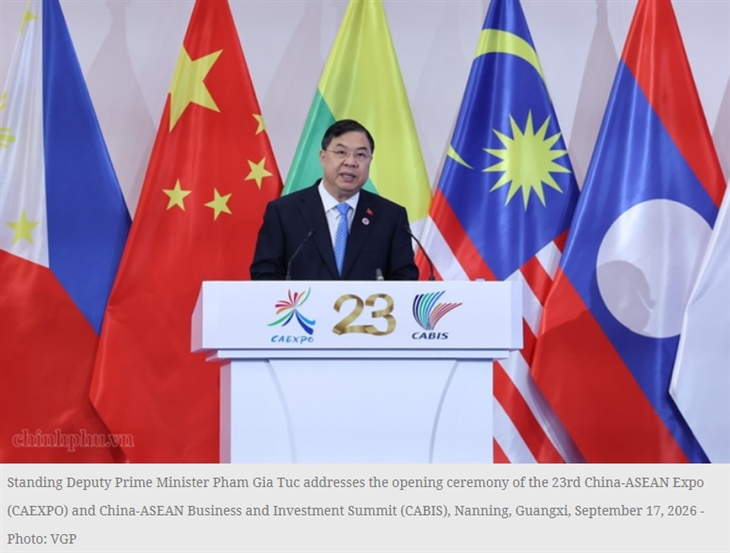
Viet Nam seeks to expand space for ASEAN-China cooperation ...
Viet Nam expects to make greater contributions to expanding the space for ASEAN-China cooperation for shared prosperity, underlined ...Top leader To Lam to attend 81st UNGA General Debate, ...
Viet Nam treasures friendly relations with Thailand: Prime ...
Viet Nam approves action program to implement ASEAN ...
The Vietnamese Government has approved an action program to implement the ASEAN Connectivity Strategic Plan in Viet Nam for 2026–2035 ...Industry and trade sector steps up strategic technology ...
Gov't approves National AI Strategy
Viet Nam continues to strengthen its strategic position in ...
