


Effectiveness of processed agricultural products seen from coffee industry
Monday, October 26,2026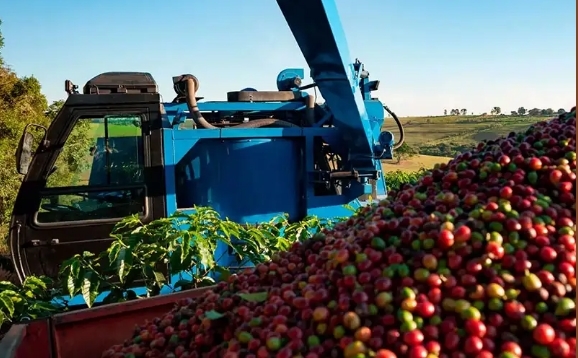
AsemconnectVietnam - 2025-2026 crop year concluded with record coffee export revenue of approximately US$8.5 billion. However, while volume increased by 21%, export value only increased by 1% compared to 2024-2025 crop year. Increase in volume but lack of export value is not unique to coffee industry.
Recently, in Ho Chi Minh City, Vietnam Coffee and Cocoa Association (VICOFA) held a conference to summarize 2025-2026 coffee crop year. According to the Association's report, Vietnam exported approximately 1.8 million tonnes of coffee in the past crop year, generating about US$8.5 billion in revenue, a 21% increase in volume and a 1% increase in value compared to previous crop year. This is the highest export value ever recorded for the industry.
Of that total, green coffee bean export reached 1.65 million tonnes, generating nearly $7 billion in revenue, a 21.4% increase in volume but a 1.5% decrease in value. Export increased by more than one-fifth of the production volume, but revenue was lower. Conversely, export of processed coffee totaled approximately 142,600 tonnes (before conversion), generating about $1.45 billion in revenue, a 15% increase in volume and a 14.1% increase in value.
Each tonne of processed coffee is worth more than twice as much.
Speaking at aforementioned conference, Mr. Le Hoang Tai, Deputy Director of Trade Promotion Department (Ministry of Industry and Trade), stated that, upon closer examination of growth structure, results of the past crop year were primarily driven by volume. A 21% increase in export volume while revenue only increased by 1% means that value earned per tonne of exported coffee decreased in line with global price fluctuations. Conversely, in the first six months of 2026, processed coffee accounted for only about 8% of volume but contributed approximately 17.5% of total coffee export value. According to him, the biggest potential for the industry no longer lies in selling more production, but in increasing value of each tonne of coffee through deep processing, standards and branding.
Converting two ratios to one tonne, each tonne of processed coffee yields approximately 2.4 times more profit than each tonne of unprocessed coffee. A greater advantage of processed coffee is its less dependence on world raw material prices. Domestic coffee prices have decreased from around 115,000 VND/kg at the beginning of the crop year (October 2025) to around 93,000 VND/kg currently. Meanwhile, green coffee exports have decreased in value despite a significant increase in volume, while processed coffee export continue to grow at double-digit rates.
2026-2027 crop year will bring in new pressures for coffee industry. According to some forecasts, global coffee supply is expected to be in surplus and world prices continue to face pressure. European Union's anti-deforestation regulations (EUDR), effective from December 30, 2026, apply to large and medium-sized enterprises, while EU accounts for over 40% of Vietnam's coffee exports. Businesses that do not meet traceability and data transparency requirements risk being eliminated from the market.
Major agricultural products face a common problem.
Pepper industry is currently repeating paradox of coffee. According to Vietnam Pepper and Spice Association (VPSA), in the first eight months of 2026, Vietnam exported 190,153 tonnes of pepper, worth approximately US$1.2 billion; volume increased by 14.2% but value only increased by 8.9%. Average price of black pepper reached US$6,372/tonne, a decrease of 4.4%; white pepper reached US$8,386/tonne, a decrease of 4%. Through processing, each tonne of white pepper is about 32% more expensive than black pepper.
Cashew industry shows another side of the story. In the first eight months of 2026, cashew exports reached 477,894 tonnes, a decrease of 0.9%, with a value of US$3.37 billion, an increase of 2.8%, and an average price of US$7,061/tonne. Vietnam leads the world in cashew kernel exports. However, according to a cashew industry expert, Vietnam has been exporting cashew kernels for over 35 years and has held the top position in the world for many years. However, if mainly cashew kernels are exported, the retained added value remains limited. Many countries importing Vietnamese cashew kernels then further process and package them into higher-value products. This is precisely value segment that Vietnamese businesses need to gradually participate in more deeply.
Looking at three agricultural product sectors with export strengths, a common point can be observed. In sectors where agricultural products are primarily sold as raw materials, increased production does not translate into corresponding value and export revenue depends on world prices. Where processing accounts for a larger proportion, exports grow more steadily and access to demanding markets is more accessible.
Increasing value through processing has been a requirement for many key agricultural products in recent times. Achieving this goal requires a comprehensive solution and close cooperation from farmers to the purchasing, processing and export stages. Returning to coffee industry, $8.5 billion mark was a record for the past crop year but the figure to watch in next crop year is likely the 17.5% growth rate of processed coffee in total export revenue of the industry.
Source: Vitic/ congthuong.vn
Manufacturing drove industrial growth in 9 months
Vietnamese tuna exports saw growth, challenges remained
Increasing localization rates is essential for sustainable growth
VASEP proposes tax relief to support Vietnamese seafood exporters
Paper trade in 9 months of 2026: positive growth in both exports and imports
China remains Vietnam’s largest supplier of fertilizers
Vietnam’s exports to Russia in 9 months of 2026 and year-end outlook
Textile and garment sector sees growth in 2026
US – Vietnam’s leading electronics export markets in North American region
Creating breakthrough in developing next-generation industry
Positive signs in textile and garment raw material imports
Viet Nam-U.S. trade value increases 460-fold in three decades
Regulations on criteria and conditions for establishing Free Trade Zones issued
Mainstay of national economic development
Viet Nam seeks to expand space for ASEAN-China cooperation ...
Viet Nam expects to make greater contributions to expanding the space for ASEAN-China cooperation for shared prosperity, underlined ...Top leader To Lam to attend 81st UNGA General Debate, ...
Viet Nam treasures friendly relations with Thailand: Prime ...

Viet Nam approves action program to implement ASEAN ...
The Vietnamese Government has approved an action program to implement the ASEAN Connectivity Strategic Plan in Viet Nam for 2026–2035 ...Industry and trade sector steps up strategic technology ...
Gov't approves National AI Strategy
Viet Nam continues to strengthen its strategic position in ...
