


Creating breakthrough in developing next-generation industry
Monday, October 19,2026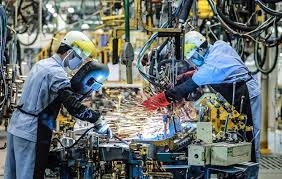
AsemconnectVietnam - Developing next-generation industry, mastering technology, and promoting eco-industrial parks are key industrial development orientations.
This initiative is based on Resolution No. 19-NQ/TW, dated July 28, 2026, from the Third Plenum of the 14th Party Central Committee regarding the reform of Vietnam’s development model; Action Program No. 33-CTr/TW, dated July 28, 2026, from the Politburo on implementing the aforementioned Resolution; and Government Resolution No. 217/NQ-CP, dated August 6, 2026, which outlines the Government’s action plan to implement the aforementioned Resolution of the Third Plenum of the 14th Party Central Committee.
Accordingly, on October 13, 2026, the Ministry of Industry and Trade issued Decision No. 2657/QD-BCT, establishing an action program to implement the resolutions of the Party Central Committee, the Politburo, and the Government concerning the reform of Vietnam’s development model.
Within the industrial sector, the program focuses on enhancing production capacity, mastering technology, and fostering the growth of domestic enterprises, all while integrating green and digital transformations.
The Ministry of Industry and Trade is prioritizing the development of next-generation industry, the mastery of technology, and the promotion of eco-industrial parks.
The Ministry of Industry and Trade is prioritizing the development of next-generation industry, the mastery of technology, and the promotion of eco-industrial parks. The program places businesses and the public at its core, with science, technology, innovation, data, and high-quality human resources serving as the primary drivers. Tasks must be assigned with clearly defined responsibilities, resources, timelines, and implementation conditions, aligned with the specific functions and mandates of each entity.
The Department of Industry is tasked with leading the development and implementation of the National Strategy for the Development of Vietnam’s Materials Industry through 2045, in coordination with relevant agencies and units. This initiative is scheduled for the 2026–2030 period, with the strategy itself to be finalized between 2026 and 2027.
Regarding production development, the program mandates focusing resources on high-tech processing and manufacturing, while enhancing production capacity and technological mastery in sectors such as mechanical engineering, metallurgy, and supporting industries. The development of supporting industries is to be linked with increasing the localization rate and fostering the growth of domestic industrial conglomerates and "anchor" enterprises capable of leading value chains.
Furthermore, the program encourages businesses to increase investment in research and development (R&D), intellectual property, and core technologies to strengthen self-reliance. Foreign investment attraction will be selective, prioritizing technology transfer and the enhancement of domestic production capabilities; specific mechanisms will be applied to attract multinational corporations to participate in key industrial programs.
In the rural industrial sector, industrial promotion activities are designated as a tool to assist production facilities in technological innovation, digital and green transitions, and improvements in both productivity and quality. The Program also mandates support for these industrial facilities to gradually integrate into value chains, thereby expanding development opportunities and enhancing their competitiveness.
Regarding the development of industrial infrastructure, the Program promotes the model of eco-industrial parks and cleaner production. The Department of Industry, acting as the Ministry’s focal point, is tasked with monitoring the proportion of recognized eco-industrial parks relative to the total number of operational industrial parks. The targets are set at 10% by the end of the 2026–2030 period, 13–15% for the 2031–2035 period, and 20% for the 2036–2045 period.
In tandem with the development of production, the Program calls for the innovation of management methods. It requires the continued refinement of institutional frameworks, the review and reduction of administrative procedures, and a shift from pre-inspection to "smart" post-inspection—where appropriate—based on data, standards, technical regulations, risk classification, and compliance history. Furthermore, the establishment of an industrial database, along with data connectivity and sharing, is prioritized to support management, administration, and business operations.
To ensure implementation, relevant units must incorporate these tasks into their annual work plans, clearly defining responsibilities, specific assignments, timelines, and expected deliverables; the heads of these units shall be held accountable for the outcomes. Progress must be regularly monitored, evaluated, and measured, with reports submitted to the Planning and Finance Department by December 10 of each year for consolidation. The implementation of activities within the industrial sector under the Action Program will focus on enhancing the production capacity and technological mastery of domestic enterprises, increasing localization rates, and boosting value added, thereby laying the foundation for an industrial sector that is autonomous, modern, and sustainable.
Source: VITIC/congthuong.vn
Viet Nam-U.S. trade value increases 460-fold in three decades
Regulations on criteria and conditions for establishing Free Trade Zones issued
Textile and garment sector sees growth in 2026
Mainstay of national economic development
Developing logistics services to create leverage for import and export by 2030
Tay Ninh: Official export through border gates increase
New expressway creates momentum for accelerated logistics in the Mekong Delta
Manufacturing drove industrial growth in 9 months
Fruit and vegetable exports top $7.35 billion in 9M
33 new SPS notifications, many notable regulations for export
Trade surplus returns after 9 consecutive months of deficit
Northwest Coffee: Transforming to meet EUDR requirements and increase value
Increasing localization rates is essential for sustainable growth
Dairy imports and exports saw growth in 9 months of 2026
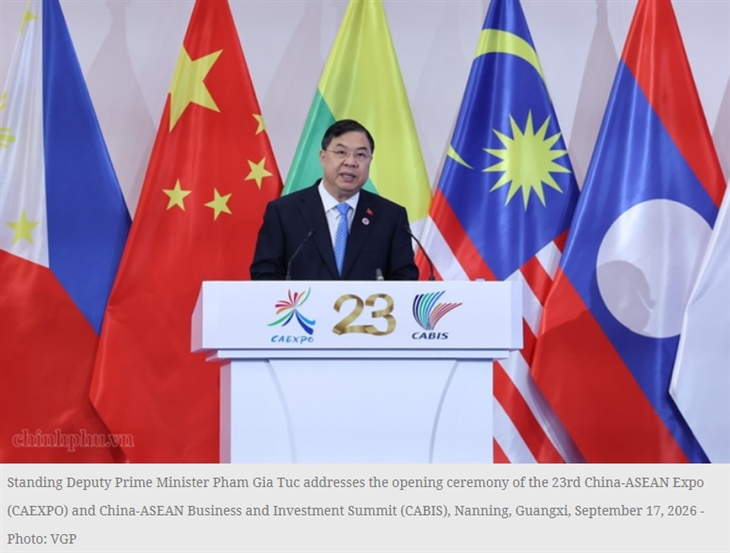
Viet Nam seeks to expand space for ASEAN-China cooperation ...
Viet Nam expects to make greater contributions to expanding the space for ASEAN-China cooperation for shared prosperity, underlined ...Top leader To Lam to attend 81st UNGA General Debate, ...
Viet Nam treasures friendly relations with Thailand: Prime ...

Viet Nam approves action program to implement ASEAN ...
The Vietnamese Government has approved an action program to implement the ASEAN Connectivity Strategic Plan in Viet Nam for 2026–2035 ...Industry and trade sector steps up strategic technology ...
Gov't approves National AI Strategy
Viet Nam continues to strengthen its strategic position in ...
