


Vietnam’s tilapia targets new market segments
Friday, October 2,2026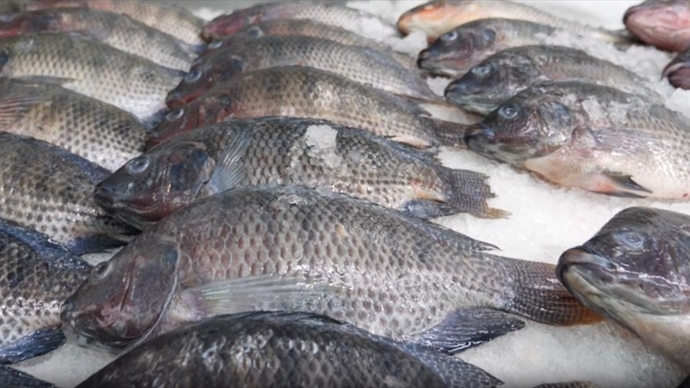
AsemconnectVietnam - Vietnamese tilapia exports maintained positive growth during the first eight months of 2026, with total turnover reaching $90 million, a 43% increase year-on-year.
However, the exports in August alone fell by 8% to $11 million, indicating uneven market performance. Brazil remained the key market, while Japan recorded notable growth, opening up new development avenues for Vietnamese tilapia products.
Brazil remained the key market for Vietnamese tilapia
Brazil continued to play a prominent role in Vietnam's tilapia export landscape. In August alone, export turnover to this market reached $4 million. Cumulative exports to Brazil in the first eight months of 2026 totaled $44 million, representing a 22,142% increase compared to the same period last year.
This surge primarily reflected rapid export expansion from a low baseline in the previous year. Brazil accounted for nearly half of Vietnam's total tilapia export value for the eight-month period, establishing itself as a vital market for the sector.
US market remained under pressure
The country’s tilapia exports to the U.S reached $2 million in August, a 72% drop year-on-year. For the eight-month period, total turnover stood at $21 million, down by 48%.
Purchasing power in the US has yet to show a clear recovery, and relatively high inventory levels are making importers cautious about new purchases. These factors continue to impact Vietnamese tilapia exports to this major consumer market. Positive signals from the Middle East and Japan
The country’s tilapia exports to Saudi Arabia reached $2 million in August, a 20% increase. The cumulative total for the first eight months stood at $7 million, up by 23%. This market remained a key contributor to the Middle East region's performance, where total export value reached $7 million, a 23% rise.
Japan also recorded notable growth in August, with export value hitting $400,000, a 192% increase year-on-year. In the eight-month period, exports to Japan totaled $2 million, up by 77%.
Significantly, Vietnamese brackish-water tilapia has begun to enter the sushi and sashimi segments in Japan. Meeting the stringent requirements for quality, farming water control, traceability, and processing for this segment demonstrates the potential to enhance the value of Vietnamese tilapia, moving beyond competition solely in the mass-market segment.
Continued market expansion
Beyond individual markets, several regions also posted positive results. In the first eight months of the year, tilapia exports to the CPTPP bloc reached $6 million, a 50% increase, with Japan and Mexico serving as significant contributors. The exports to the EU reached $4 million, up by 7%, driven primarily by the Belgian market.
In Europe, limited supplies and high prices for wild-caught whitefish are creating opportunities for farmed fish species capable of stable supply. Tilapia can be considered an alternative raw material in certain segments, particularly when it meets requirements regarding quality, product specifications, and certifications. Quality is the key factor
The results from the first eight months indicated that Vietnamese tilapia is gradually expanding its market reach; however, heavy reliance on specific markets and a sharp decline in exports to the US suggest the industry still faces significant volatility.
The entry of Vietnamese tilapia into the sushi and sashimi segments in Japan could open up new growth avenues, not only in that market but also in other markets with high standards. To sustain current growth, businesses must maintain strict quality control from farming to processing, meet international certification requirements, ensure traceability, and leverage the advantages of brackish-water tilapia.
Building reputation for Vietnamese tilapia requires a step-by-step approach based on consistent quality, reliable supply, and products tailored to the specific needs of each market. This will serve as the foundation for Vietnamese tilapia to transition from merely increasing export value to establishing a more sustainable position in the international market.
Source: VITIC/vasep.com.vn
Vietnamese tuna exports saw growth, challenges remained
Ho Chi Minh City eyes $19 billion in 2026 FDI
Ninh Binh records export turnover of $28.13 billion in 9M
India led Vietnam's seafood import market share in 8 months of 2026
Vietnam's seafood exports nearly reached full-year target
Bringing Vietnamese agricultural products deeper into UAE thanks to CEPA advantages
New decree standardizes Vietnamese recruitment rules for foreign entities
Vietnam posts $42 bln deficit with China in computers and electronics
Vietnamese exporters look beyond trade to supply chain synergy under CPTPP
Exporting to EU: Don't wait until it's too late
Gia Lai: export exceed US$2.9 billion, coffee continues to lead
Halal – a 'gateway' for Vietnamese goods to expand into Malaysian market
Draft proposal for signing Vietnam–EFTA free trade agreement completed
Vietnam tilapia exports surge 43 percent in first eight months as Brazil drives growth
Viet Nam seeks to expand space for ASEAN-China cooperation ...
Viet Nam expects to make greater contributions to expanding the space for ASEAN-China cooperation for shared prosperity, underlined ...Top leader To Lam to attend 81st UNGA General Debate, ...
Viet Nam treasures friendly relations with Thailand: Prime ...

Viet Nam approves action program to implement ASEAN ...
The Vietnamese Government has approved an action program to implement the ASEAN Connectivity Strategic Plan in Viet Nam for 2026–2035 ...Industry and trade sector steps up strategic technology ...
Gov't approves National AI Strategy
Viet Nam continues to strengthen its strategic position in ...
