


Vietnamese exporters look beyond trade to supply chain synergy under CPTPP
Wednesday, September 30,2026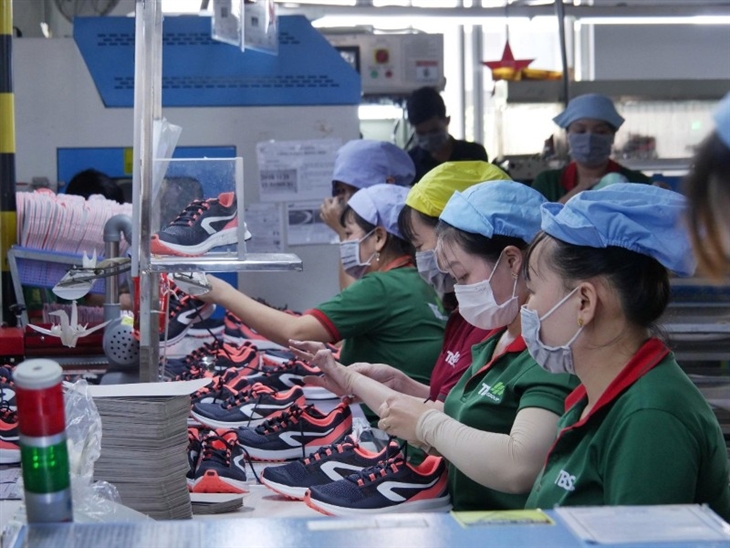
AsemconnectVietnam - The Comprehensive and Progressive Agreement for Trans-Pacific Partnership (CPTPP) serves not only as a vast consumer market for Vietnamese goods, but also as a strategic platform for domestic enterprises to diversify their supply chains amidst shifting global trade dynamics.
This key takeaway was emphasized during a seminar titled “From Global Trade Volatility to Market Opportunities: Leveraging the CPTPP to Pivot and Expand Exports” held in Hanoi on September 28.
Official data presented at the event showed two-way trade between Vietnam and CPTPP member states reaching $124.5 billion in 2025, with Vietnamese exports accounting for $70.6 billion - an 11.5 percent increase compared to 2024. This growth was driven significantly by new markets where Vietnam had no prior free trade agreements (FTAs), such as Canada, Mexico, and Peru.
Mr. Ngo Chung Khanh, Deputy Director General of the Foreign Market Development and Multilateral Trade Department under the Ministry of Industry and Trade, noted that the CPTPP should no longer be viewed strictly as an Asia-Pacific agreement. With the UK joining, Costa Rica and Uruguay applying, and growing interest from UAE, the Philippines, Indonesia, and Ukraine, the pact is evolving into a global next-generation FTA.
Despite these inroads, Vietnam’s market share remains remarkably modest. Excluding Vietnam, total imports by CPTPP members topped $4.25 trillion in 2025, yet Vietnam’s export volume of over $70 billion accounts for roughly 1 percent of that total.
In key markets like Canada and Mexico, which annually import over $700 billion and $650 billion, respectively, Vietnamese products capture only around 1 percent of market share. Aside from textiles and footwear, which hold a 20 to 22 percent share in Canada, agricultural and food products remain minimally represented.
Addressing internal bottlenecks, Mrs. Do Thi Thuy Huong, Vice President and General Secretary of the Vietnam Electronic Industries Association, observed that the primary obstacle for small and medium-sized enterprises (SMEs) is not production capacity, but a lack of market intelligence, resources, and trusted partner networks.
Furthermore, meeting strict rules of origin and non-traditional standards covering labor and environmental protections poses heavy compliance challenges. Supply chain disruptions and conflicting regulatory demands from major economies further complicate operations for local suppliers.
To translate trade potential into tangible value, experts outlined several priority strategies for domestic firms.
First, businesses must enhance regulatory compliance. Meeting rules of origin is essential to qualify for preferential tariffs, alongside proactively aligning with high CPTPP standards on environmental and labor policies.
Second, enterprises must build supply chain resilience. Utilizing the CPTPP region allows firms to diversify their sourcing networks, mitigating risks associated with reliance on single suppliers.
Third, firms should adapt their market entry strategies. Rather than attempting to export finished goods independently, SMEs can enter supply chains as component or module suppliers for multinational corporations. Active participation in international trade fairs and industry expos is critical for establishing direct B2B connections rather than waiting passively for institutional support.
Finally, exporters must maintain a balanced market strategy.
Mr. Khanh also advised that expanding into new CPTPP markets should complement rather than replace traditional trading partners, ensuring a phased, flexible approach to risk management across both supply sources and export destinations.
Source: vneconomy.vn
Vietnam posts $42 bln deficit with China in computers and electronics
Exporting to EU: Don't wait until it's too late
Gia Lai: export exceed US$2.9 billion, coffee continues to lead
Halal – a 'gateway' for Vietnamese goods to expand into Malaysian market
Draft proposal for signing Vietnam–EFTA free trade agreement completed
Vietnam tilapia exports surge 43 percent in first eight months as Brazil drives growth
China - largest supplier of fruits and vegetables to Vietnam in August
Iron and steel exports maintain growth momentum in 8 months of 2026
Digital technology industry saw growth
HCM City’s industrial parks attract $5.57bln in investment in 9M
Automotive parts imports saw impressive growth
Over 10 million tonnes of iron and steel imported in 8 months of 2026
Machinery exports saw growth in 8 months of 2026
Seafood exports face significant pressure from US market in 4th quarter
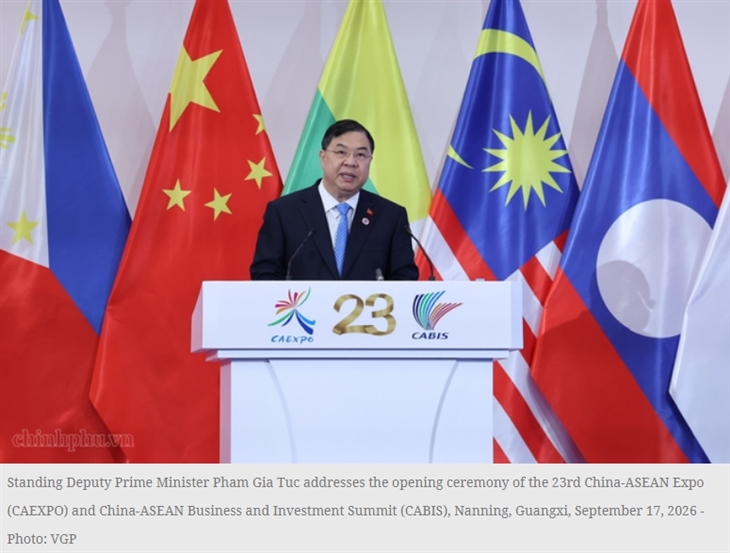
Viet Nam seeks to expand space for ASEAN-China cooperation ...
Viet Nam expects to make greater contributions to expanding the space for ASEAN-China cooperation for shared prosperity, underlined ...Top leader To Lam to attend 81st UNGA General Debate, ...
Viet Nam treasures friendly relations with Thailand: Prime ...
Viet Nam approves action program to implement ASEAN ...
The Vietnamese Government has approved an action program to implement the ASEAN Connectivity Strategic Plan in Viet Nam for 2026–2035 ...Industry and trade sector steps up strategic technology ...
Gov't approves National AI Strategy
Viet Nam continues to strengthen its strategic position in ...
