

Halal – a 'gateway' for Vietnamese goods to expand into Malaysian market
Tuesday, September 29,2026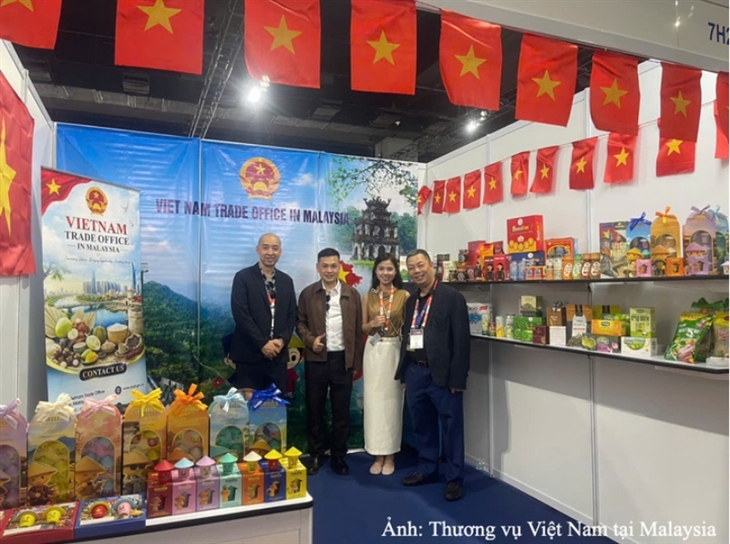
AsemconnectVietnam - Vietnam-Malaysia trade is growing strongly, but Vietnamese export remain modest. Halal market is seen as an opportunity for Vietnamese goods to increase their presence in this market.
Rapid trade growth, still much potential for Vietnamese export
Malaysia is one of Vietnam's important trading partners in ASEAN and globally. Period from 2015 to 2025 has seen significant growth in bilateral trade turnover. From US$7.4 billion in 2015, total import and export turnover between two countries has more than doubled, reaching US$16.33 billion in 2025.
This upward trend is expected to continue in 2026. In the first six months of the year alone, Vietnam-Malaysia import and export turnover reached US$10.8 billion, with Vietnam exporting US$3.4 billion and importing US$7.4 billion. With these results, total bilateral trade turnover in 2026 is projected to exceed US$18 billion for the first time.
However, in an interview with the media, Mr. Phung Van Thanh, Head of Vietnamese Trade Office in Malaysia, stated that Vietnam's export to Malaysia have not kept pace with growth rate of imports.
In 2015, Vietnam exported US$3.58 billion to Malaysia; after 10 years, this figure only increased to US$5.33 billion, an average increase of 3.89% per year. Conversely, import from Malaysia have increased significantly faster, with an average increase of 11.48% per year during 2015-2025 period.
Mr. Phung Van Thanh also said that one of reasons for slow growth of Vietnamese exports to Malaysia is barriers related to Halal standards. Food and beverage products exported to Malaysia often have to meet strict Halal standards and be certified, while many Vietnamese products have not yet met this requirement. Therefore, Vietnamese goods that are currently exporting well to Malaysia are mainly industrial products, manufactured goods, machinery, equipment and raw materials – these are product groups that do not require Halal certification.
This shows that there is still considerable room for expanding Vietnamese exports to Malaysia, especially in agricultural, food and beverage sectors. This is also where Halal standards become an important condition for businesses to access the market.
Halal opens more opportunities for Vietnamese goods
With a population of approximately 34.2 million people, of which 60.4% are Muslim, Malaysia has a significant market for Halal products. Not only serving domestic consumption needs, Malaysia is also aiming to develop into a trading hub for the Islamic world.
According to Mr. Phung Van Thanh, Malaysia is currently among top 5 Halal food importing countries in Organization of Islamic Cooperation, with annual Halal food imports exceeding US$20 billion. Size of Malaysia's Halal food market is estimated at approximately US$50 billion per year.
Furthermore, Malaysian government has approved Halal Industry Master Plan (HIMP), aiming to make Malaysia a leading country in Halal economy, with domestic consumption reaching US$113 billion by 2030. This is coupled with goal of developing Malaysia into a global Islamic trade hub.
“This is a great opportunity that we need to seize and if more Vietnamese products meet Halal standards and are certified, exporting to Malaysian market will be easier, potentially helping Vietnam-Malaysia trade reach US$20 billion and even US$25 billion annually”, Mr. Phung Van Thanh emphasized.
Thus, for Vietnamese goods, meeting Halal requirements can create more opportunities to access a large consumer market and leverage Malaysia as a "gateway" to bring products to Muslim market. This also forms the basis for supporting the bilateral trade target of US$20 billion, aiming for US$25 billion annually.
In fact, Vietnam has favorable conditions for developing Halal products, being among the top 10 in the world for exporting many key agricultural products such as rice, coffee, cashew nuts, pepper, processed agricultural products and medicinal herbs. Notably, over 80% of Vietnam's purely plant-based agricultural products meet basic Halal requirements, due to their natural composition and absence of alcohol or prohibited derivatives.
This is an advantage in terms of raw materials, but to transform that advantage into Halal goods capable of penetrating Malaysian market, enterprises still have to overcome numerous requirements.
Regarding this, Mr. Phung Van Thanh pointed out that, firstly, there are limitations in knowledge and experience in developing Halal products. Halal standards are not entirely consistent across Islamic countries and there are even differences and competition between systems. Therefore, businesses cannot simply understand Halal according to a single standard and apply it to all markets.
In addition, there are issues with expert services and consulting on Halal product development, as well as costs of obtaining and maintaining certification. Vietnam currently lacks many organizations with extensive experience and widespread recognition in Islamic countries in the field of Halal assessment and certification. This forces businesses to seek assistance from foreign organizations, resulting in higher costs and procedures.
Requirements for Halal certification are not simple. Malaysian Islamic Development Authority (JAKIM) is certifying body for Halal certification. Enterprises must meet strict quality and process requirements. After receiving application, JAKIM's inspectors will directly assess processing facility to determine extent to which Halal requirements are met.
Following initial assessment, JAKIM may require enterprises to modify its facilities or review its production chain to ensure compliance with Halal standards and conditions. For foreign businesses, assessment process may also incur travel and accommodation costs for inspectors.
It is clear that promoting export of Halal products to Malaysia is challenging not only in certification process but also in building capacity to meet Halal standards from raw materials, production, supply chain control to certification and maintaining certification.
Source: Vitic/ congthuong.vn
Malaysia is one of Vietnam's important trading partners in ASEAN and globally. Period from 2015 to 2025 has seen significant growth in bilateral trade turnover. From US$7.4 billion in 2015, total import and export turnover between two countries has more than doubled, reaching US$16.33 billion in 2025.
This upward trend is expected to continue in 2026. In the first six months of the year alone, Vietnam-Malaysia import and export turnover reached US$10.8 billion, with Vietnam exporting US$3.4 billion and importing US$7.4 billion. With these results, total bilateral trade turnover in 2026 is projected to exceed US$18 billion for the first time.
However, in an interview with the media, Mr. Phung Van Thanh, Head of Vietnamese Trade Office in Malaysia, stated that Vietnam's export to Malaysia have not kept pace with growth rate of imports.
In 2015, Vietnam exported US$3.58 billion to Malaysia; after 10 years, this figure only increased to US$5.33 billion, an average increase of 3.89% per year. Conversely, import from Malaysia have increased significantly faster, with an average increase of 11.48% per year during 2015-2025 period.
Mr. Phung Van Thanh also said that one of reasons for slow growth of Vietnamese exports to Malaysia is barriers related to Halal standards. Food and beverage products exported to Malaysia often have to meet strict Halal standards and be certified, while many Vietnamese products have not yet met this requirement. Therefore, Vietnamese goods that are currently exporting well to Malaysia are mainly industrial products, manufactured goods, machinery, equipment and raw materials – these are product groups that do not require Halal certification.
This shows that there is still considerable room for expanding Vietnamese exports to Malaysia, especially in agricultural, food and beverage sectors. This is also where Halal standards become an important condition for businesses to access the market.
Halal opens more opportunities for Vietnamese goods
With a population of approximately 34.2 million people, of which 60.4% are Muslim, Malaysia has a significant market for Halal products. Not only serving domestic consumption needs, Malaysia is also aiming to develop into a trading hub for the Islamic world.
According to Mr. Phung Van Thanh, Malaysia is currently among top 5 Halal food importing countries in Organization of Islamic Cooperation, with annual Halal food imports exceeding US$20 billion. Size of Malaysia's Halal food market is estimated at approximately US$50 billion per year.
Furthermore, Malaysian government has approved Halal Industry Master Plan (HIMP), aiming to make Malaysia a leading country in Halal economy, with domestic consumption reaching US$113 billion by 2030. This is coupled with goal of developing Malaysia into a global Islamic trade hub.
“This is a great opportunity that we need to seize and if more Vietnamese products meet Halal standards and are certified, exporting to Malaysian market will be easier, potentially helping Vietnam-Malaysia trade reach US$20 billion and even US$25 billion annually”, Mr. Phung Van Thanh emphasized.
Thus, for Vietnamese goods, meeting Halal requirements can create more opportunities to access a large consumer market and leverage Malaysia as a "gateway" to bring products to Muslim market. This also forms the basis for supporting the bilateral trade target of US$20 billion, aiming for US$25 billion annually.
In fact, Vietnam has favorable conditions for developing Halal products, being among the top 10 in the world for exporting many key agricultural products such as rice, coffee, cashew nuts, pepper, processed agricultural products and medicinal herbs. Notably, over 80% of Vietnam's purely plant-based agricultural products meet basic Halal requirements, due to their natural composition and absence of alcohol or prohibited derivatives.
This is an advantage in terms of raw materials, but to transform that advantage into Halal goods capable of penetrating Malaysian market, enterprises still have to overcome numerous requirements.
Regarding this, Mr. Phung Van Thanh pointed out that, firstly, there are limitations in knowledge and experience in developing Halal products. Halal standards are not entirely consistent across Islamic countries and there are even differences and competition between systems. Therefore, businesses cannot simply understand Halal according to a single standard and apply it to all markets.
In addition, there are issues with expert services and consulting on Halal product development, as well as costs of obtaining and maintaining certification. Vietnam currently lacks many organizations with extensive experience and widespread recognition in Islamic countries in the field of Halal assessment and certification. This forces businesses to seek assistance from foreign organizations, resulting in higher costs and procedures.
Requirements for Halal certification are not simple. Malaysian Islamic Development Authority (JAKIM) is certifying body for Halal certification. Enterprises must meet strict quality and process requirements. After receiving application, JAKIM's inspectors will directly assess processing facility to determine extent to which Halal requirements are met.
Following initial assessment, JAKIM may require enterprises to modify its facilities or review its production chain to ensure compliance with Halal standards and conditions. For foreign businesses, assessment process may also incur travel and accommodation costs for inspectors.
It is clear that promoting export of Halal products to Malaysia is challenging not only in certification process but also in building capacity to meet Halal standards from raw materials, production, supply chain control to certification and maintaining certification.
Source: Vitic/ congthuong.vn
Vietnam tilapia exports surge 43 percent in first eight months as Brazil drives growth
China - largest supplier of fruits and vegetables to Vietnam in August
Iron and steel exports maintain growth momentum in 8 months of 2026
Digital technology industry saw growth
HCM City’s industrial parks attract $5.57bln in investment in 9M
Automotive parts imports saw impressive growth
Over 10 million tonnes of iron and steel imported in 8 months of 2026
Machinery exports saw growth in 8 months of 2026
Seafood exports face significant pressure from US market in 4th quarter
Vietnam's fruit and vegetable exports saw strong growth in key markets
CBU automobile market: Chinese vehicles expanded market share
Paper exports saw growth in 9 months of 2026
Vietnam’s exports to Spain saw growth in first 8 months of 2026
Vietnam’s tea exports: volume decline offset by price gains
