


Over 10 million tonnes of iron and steel imported in 8 months of 2026
Friday, September 25,2026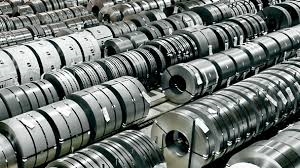
AsemconnectVietnam - The data from the General Department of Vietnam Customs showed that, Vietnam imported 10.37 million tonnes of various iron and steel products in the first eight months of 2026, with a total value of US$7.7 billion.
Compared to the same period of 2025, import volume rose by 3.16%, while import value increased by 7.52%. The average import price stood at US$742.66 per tonne, up by 4.22% year-on-year. These figures indicate sustained demand for iron and steel imports alongside a rise in import price levels compared to the same period last year.
In August of 2026 alone, Vietnam imported 1.355 million tonnes of iron and steel, a decrease of 0.76% from July of 2026 but an increase of 0.6% compared to August of 2025. Import value reached US$1.018 billion, down by 4.95% from the previous month but up by 7.55% year-on-year. The average import price was US$751.51 per tonne, a drop of 4.23% from July of 2026 but a rise of 6.91% compared to August of 2025. Thus, while import volume in August remained virtually flat year-on-year, the total value increased due to higher price levels compared to the previous year. Compared to July, both volume and value saw slight declines, and the average import price also eased.
Regarding market composition, China remained Vietnam's largest supplier of iron and steel, providing 5.25 million tonnes valued at US$3.61 billion; accounting for 50.57% of the total volume and 46.81% of the total import value. However, compared to the first eight months of 2025, the volume of steel imported from China fell by 10.49%, while the import value decreased by 2.66%. The continued decline in imports from China, occurring alongside a rise in the country's total imports, indicates a shift in the supply structure and a trend among Vietnamese enterprises to seek sources from other markets. The fact that the decline in volume exceeded the decline in value suggests that the average import price of steel from China rose compared to the same period.
Indonesia ranked second with 1.044 million tonnes valued at US$1.259 billion, accounting for 10.07% of the total volume and 16.34% of the total import value. Compared to the same period last year, import volume rose by 27.88% and value by 24.9%. The significantly higher share of value compared to volume indicates a relatively high average price for steel imported from Indonesia. With positive growth in both volume and value, Indonesia is playing an increasingly important role in Vietnam's iron and steel supply structure.
Japan ranked third with 1.258 million tonnes valued at US$883.8 million, accounting for 12.14% of the total volume and 11.47% of the total import value. However, compared to the first eight months of 2025, the imports from this market dropped by 18.19% in volume and 11.71% in value. Although it retained a significant position in the supply structure, the volume of steel imported from Japan is trending downward as Vietnamese enterprises expand their search for and diversify supply sources from other markets.
South Korea was the fourth-largest supplier, providing 941,021 tonnenes valued at US$761.67 million, accounting for 9.07% of the total volume and 9.89% of the total value. Compared to the same period last year, import volume fell by 10.7%, while value decreased by 9.64%.
India continued to be a market recording remarkable growth in iron and steel imports during the first eight months of 2026. Vietnam imported 941,525 tonnes of iron and steel from this market, valued at US$508.36 million, increases of 8,742.27% in volume and 1,485.26% in value compared to the same period of 2025.
India accounted for 9.08% of the total volume and 6.6% of the total import value, emerging as a major supplier of iron and steel to Vietnam. This surge was primarily due to the very low import volume from India during the same period in 2025. However, with import volumes reaching nearly 1 million tonnes, India is increasingly becoming a significant source of supply. The sharp rise in imports from India also indicates that Vietnamese enterprises are broadening their search for suppliers, thereby contributing to the diversification of import markets.
Vietnam imported 734,389 tonnes valued at US$473.43 million Taiwan (China), representing increases of 29.39% in volume and 22.9% in value compared to the same period of 2025. This market accounted for 7.08% of the total volume and 6.15% of the total import value. The upward trend from Taiwan, combined with significant increases from India and Indonesia, indicates a substantial shift in the structure of Vietnam's steel supply sources. While import volumes from traditional sources such as China, Japan, and South Korea have declined, Vietnamese businesses are increasing imports from other markets.
In addition to key markets, several other countries have also recorded high growth rates. The imports from Thailand rose by 64.03% in volume and 105.31% in value. In Europe, the import volume from Belgium (up by 1,184.4%), France (up by 219.87%), Finland (up by 231.64%), the Netherlands (up by 200.68%), and Denmark (up 4,458.82%). Sweden saw a 28.9% increase in volume, while Germany recorded a 58.49% rise. Singapore also saw import volumes grow by 348.65%.
The sharp increases from these markets likely stem from a trend among Vietnamese enterprises to expand and diversify their supply sources, seeking suppliers beyond traditional markets. Additionally, some of these markets can meet specific demands for steel types with unique quality or product characteristics. However, as import volume from most of these markets remain small, the high growth rates are largely attributable to a low base of comparison and have not yet significantly altered the overall import structure.
Conversely, the imports from certain sources saw significant declines. The imports from South Africa fell by 75.57% in volume and 75.8% in value, while those from Australia dropped by 27.27% and 29.08%, respectively. The imports from Spain decreased by 23.93% in value, and those from the UK fell by 12.46% in volume and 29.25% in value. Imports from Mexico dropped by 77.03% in volume and 81.05% in value. These trends indicate that the role of non-Asian supply sources remains limited, as Vietnamese enterprises continue to focus primarily on Asian markets, which offer advantages in terms of geographical proximity, logistics costs, and supply capacity.
In the first eight months of 2026, Vietnam's iron and steel imports rose by 3.16% in volume and 7.52% in value, reflecting an increase in average import prices. China remained the leading supplier despite a drop in volume, while imports from Indonesia, India, and Taiwan showed strong growth. The imports from Japan and South Korea continued to decline. Notably, the strong growth in imports from India highlights a trend toward supply diversification and a gradual reduction in reliance on traditional markets.
Source: VITIC
HCM City’s industrial parks attract $5.57bln in investment in 9M
Seafood exports face significant pressure from US market in 4th quarter
Vietnam's fruit and vegetable exports saw strong growth in key markets
CBU automobile market: Chinese vehicles expanded market share
Paper exports saw growth in 9 months of 2026
Vietnam’s exports to Spain saw growth in first 8 months of 2026
Vietnam’s tea exports: volume decline offset by price gains
New food safety and quarantine requirements: export enterprises need to know early
Vietnam’s imports from South Korea saw growth in August and first 8 months of 2026
Striving to capitalize on free trade agreements
Agricultural exports' role in balancing the country's trade account
Vietnam's economy maintained growth momentum
Vietnam's overseas investment on the rise
Essential elements for the carbon market in Vietnam
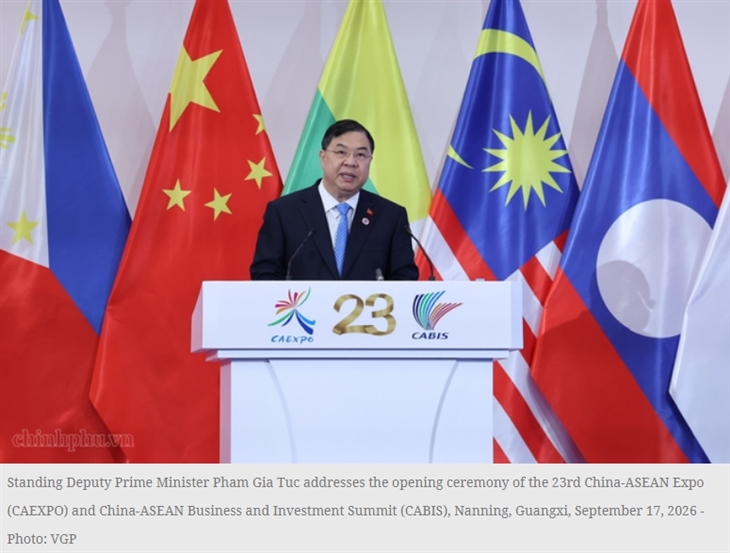
Viet Nam seeks to expand space for ASEAN-China cooperation ...
Viet Nam expects to make greater contributions to expanding the space for ASEAN-China cooperation for shared prosperity, underlined ...Top leader To Lam to attend 81st UNGA General Debate, ...
Viet Nam treasures friendly relations with Thailand: Prime ...
Viet Nam approves action program to implement ASEAN ...
The Vietnamese Government has approved an action program to implement the ASEAN Connectivity Strategic Plan in Viet Nam for 2026–2035 ...Industry and trade sector steps up strategic technology ...
Gov't approves National AI Strategy
Viet Nam continues to strengthen its strategic position in ...
