


Seafood exports face significant pressure from US market in 4th quarter
Thursday, September 24,2026
AsemconnectVietnam - Vietnam's seafood exports reached $1.14 billion in August of 2026, a 6.4% increase year-on-year. The country’s total seafood exports in the first eight months stood at over $8.0 billion, up by 11.9%.
While monthly export value remained above $1 billion, the growth rate in August was less than half the accumulated growth rate. This indicates that the eight-month performance was significantly bolstered by strong growth in earlier months, whereas the market is now entering a period of greater unpredictability.
Shrimp remained the largest export category, reaching $478.5 million in August and nearly $3.28 billion over the eight-month period. Pangasius exports totaled $204.9 million for the month and $1.52 billion cumulatively. The exports of tuna, squid, and octopus continued to rise, though the pace of growth slowed. Crabs and other crustaceans stood out with increases of 50.2% in August and 34.1% over the eight months, though their scale was insufficient to dictate the overall trend.
The US emerged as the biggest variable for the fourth quarter
The exports to the US fell by 3.8% in August to $182.0 million. Specifically, shrimp exports dropped by 12.6% and pangasius by 49.3%. Cumulatively, exports to the US market still showed a 1.5% increase over the eight months, but this growth remains fragile, given the respective declines of 11.7% for shrimp and 13.2% for pangasius.
The downturn stems from more than just tariffs. The sales of fresh and frozen seafood in the US fell by over 7% in August; high inventory levels led importers to limit new purchases, shorten contract durations, and exert downward pressure on prices. Consequently, even as demand for the year-end holiday season emerges, imports may not necessarily rise in tandem if distributors continue to prioritize clearing existing inventories.
From July 24, 2026, numerous Vietnamese seafood products will be subject to an additional 12.5% tariff under Section 301. This levy is applied on top of Most-Favored-Nation (MFN) rates and, depending on the specific product or enterprise may be compounded by anti-dumping and countervailing duties. As a result, the price charged to importers will not merely rise by 12.5% but could face a significantly heavier cumulative tax burden.
Regarding pangasius, the final results of the 21st Period of Review (POR21), announced on August 12, imposed less favorable duty rates than the preliminary findings; this has directly impacted pricing capabilities and supplier selection. A rapid recovery in pangasius exports to the U.S. during the fourth quarter appears unlikely, particularly for enterprises facing high duty rates or those with unclear applicability criteria.
For shrimp, the final results of the anti-dumping duty review are expected in early November. This timing is quite late for the year-end purchasing season, forcing businesses and importers to plan orders without full knowledge of their tax liabilities. Should final duty rates rise sharply, signed contracts could trigger disputes regarding pricing, cost-sharing, or delivery schedules.
Beyond tariffs, seafood entering the U.S. faces pressure from the Marine Mammal Protection Act (MMPA), which mandates "comparability findings" for certain product codes, as well as regulations concerning forced labor, food safety, and increasingly rigorous enforcement by U.S. Customs. Proposals for stricter controls on imported seafood containing antibiotic residues also warrant close monitoring, even though not all have yet been codified into official regulations. Alternative markets are not entirely favorable either.
The exports to the EU fell by 6.2% in August. The shipments of shrimp, tuna, and squid/octopus dropped by 23.5%, 15.6%, and 32.4%, respectively. Wild-caught seafood sectors continue to face challenges regarding raw material verification, catch certificates, and requirements to connect with the CATCH system. Meanwhile, pangasius exports to the EU rose by 33.3%, benefiting from tightened supplies of cod and wild whitefish. This presents a notable opportunity for certified, processed, and portion-cut pangasius products.
Exports to China and Hong Kong exceeded $2.0 billion in the first eight months—a 32.0% increase—though the growth rate slowed to 16.5% in August. Ecuadorian shrimp is regaining market access, while China reopened the Yellow Sea–Bohai Sea fishing season in early September. Increased supply could drive down wholesale prices and make importers more cautious following the National Day holiday.
The exports to ASEAN continued to grow by 17.4% in August, with positive results for tuna, shrimp, and squid/octopus. However, this market primarily serves as a supplement for processed goods and small-format products; it cannot yet match the scale of US purchasing for shrimp and pangasius.
Vietfish 2026 was a significant trade promotion event in August, fostering connections with international buyers and domestic distribution networks. However, its effectiveness should be measured by the number of sample requests, trial orders, and contracts generated in the fourth quarter, rather than just visitor numbers or meetings held at the fair.
Enterprises need to prepare for a more challenging scenario
The export target of approximately $12.0 billion for 2026 remains achievable if the final four months maintain an average of nearly $1.0 billion per month. However, downside risks are mounting, particularly if U.S. purchasing power fails to recover, shrimp tariffs in early November prove unfavorable, or IUU and MMPA documentation requirements continue to delay shipments.
Enterprises exporting to the US must calculate total tax liabilities on a per-product and per-legal-entity basis, rather than applying a single average tax rate to their entire business plan. Contracts should clearly stipulate responsibilities regarding tax changes, the timing of liability determination, and mechanisms for price adjustments and cost-sharing.
For shrimp, companies need to prepare at least two scenarios ahead of the early-November outcome while avoiding the stockpiling of inventory that lacks guaranteed sales outlets. For pangasius, there is a need to pivot more rapidly toward the EU, the Middle East, ASEAN, and alternative whitefish market segments. Regarding wild-caught seafood, compliance with IUU and MMPA regulations and traceability requirements must be verified right at the raw material procurement stage.
Amid rising costs for raw materials, feed, and regulatory compliance, chasing export volume through price cuts risks transferring market-related instability into the enterprise's financial operations. Consequently, the priority for the fourth quarter is not merely securing orders, but selecting orders where tax obligations, documentation, accounts receivable, and profit margins can be effectively managed.
Source: VITIC/vasep.com.vn
Vietnam's fruit and vegetable exports saw strong growth in key markets
CBU automobile market: Chinese vehicles expanded market share
Paper exports saw growth in 9 months of 2026
Vietnam’s exports to Spain saw growth in first 8 months of 2026
Vietnam’s tea exports: volume decline offset by price gains
New food safety and quarantine requirements: export enterprises need to know early
Vietnam’s imports from South Korea saw growth in August and first 8 months of 2026
Striving to capitalize on free trade agreements
Agricultural exports' role in balancing the country's trade account
Vietnam's economy maintained growth momentum
Vietnam's overseas investment on the rise
Essential elements for the carbon market in Vietnam
Vietnam’s seafood exports increased in 8 months of 2026
FDI into Vietnam surged in 8 months of 2026
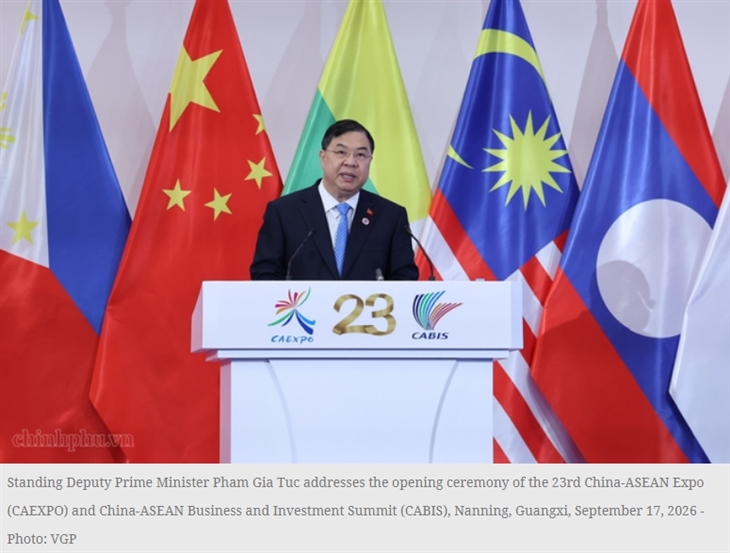
Viet Nam seeks to expand space for ASEAN-China cooperation ...
Viet Nam expects to make greater contributions to expanding the space for ASEAN-China cooperation for shared prosperity, underlined ...Top leader To Lam to attend 81st UNGA General Debate, ...
Viet Nam treasures friendly relations with Thailand: Prime ...
Viet Nam approves action program to implement ASEAN ...
The Vietnamese Government has approved an action program to implement the ASEAN Connectivity Strategic Plan in Viet Nam for 2026–2035 ...Industry and trade sector steps up strategic technology ...
Gov't approves National AI Strategy
Viet Nam continues to strengthen its strategic position in ...
