


Garment and textile industry helps propel Viet Nam into the World’s Top exporting nations
Friday, September 18,2026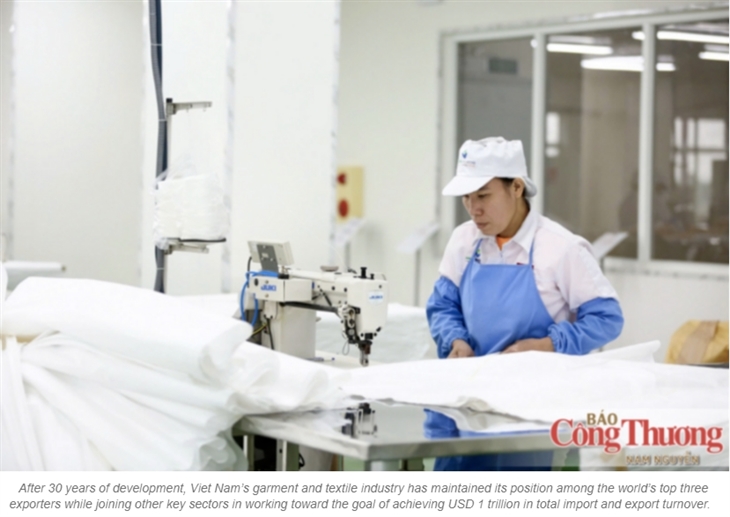
AsemconnectVietnam - After 30 years of development, Viet Nam’s garment and textile industry has become a key export sector and is now shifting toward deeper growth driven by productivity, technology and higher value added.
30 years of breakthroughs: From USD 850 million to USD 46 billion
The development of Viet Nam’s garment and textile industry has gone hand in hand with the country’s economic opening, international integration and rise. From an industry with export turnover of around USD 850 million during the 1995-2005 period, the sector gradually expanded its markets, strengthened production capacity and became more deeply integrated into global supply chains.
By 2015, the industry’s total export turnover had surpassed USD 26 billion, placing Viet Nam among the world’s top five textile and garment exporters. In 2020, despite the COVID-19 pandemic and disruptions to global supply chains, the industry still recorded exports of around USD 35 billion.
By 2025, garment and textile exports had reached approximately USD 46 billion, up 5.6% from 2024, maintaining Viet Nam’s position among the world’s top three textile and garment exporters. The sector’s trade surplus rose from USD 15.5 billion in 2020 to around USD 21 billion in 2025 and reached approximately USD 9.2 billion in the first six months of 2026.
These results are particularly notable as the industry has faced successive challenges, including the COVID-19 pandemic, inflation, weakened purchasing power, geopolitical uncertainties, protectionist trends and new tariff policies. Businesses’ ability to adapt has become one of the key factors enabling the industry to maintain export momentum.
“The export figures achieved are the result of efforts by the entire business community, together with close support from authorities at all levels,” said Vu Duc Giang, Chairman of the Vietnam Textile and Apparel Association.
To date, Vietnamese textile and garment products have reached 138 markets. The export structure has also gradually shifted as businesses place greater emphasis on products with higher technical and design content and more stringent environmental requirements.
The domestic value-added ratio reached around 52% in 2025, reflecting significant improvements in domestic supply development and value-chain linkages, while reducing dependence on imported raw materials and production inputs. This also provides an important foundation for the industry to retain more value domestically and improve its ability to meet rules of origin under free trade agreements.
At the enterprise level, production and business efficiency has also improved. In an interview with Industry and Trade Newspaper, Than Duc Viet, General Director of Garment 10 Corporation - JSC, said that compared with 2020, Garment 10’s revenue in 2025 increased by around 47%, while profit rose approximately 2.6 times and average employee income increased by about 40%.
According to the Garment 10 executive, major resolutions on science and technology, international integration, legal reform and private-sector development are creating greater room for businesses to innovate their development models.
“For Garment 10, the resolutions of the Party and Government have had a direct and far-reaching impact on our development strategy... thereby providing additional momentum for sustainable business growth in the new era,” Than Duc Viet said.
Shifting from volume growth to deeper growth
Entering 2026, as Viet Nam targets USD 1 trillion in total import and export turnover and the economy pursues double-digit growth, garment and textiles remain one of the key sectors contributing to these goals. However, room for growth through higher production volumes and increased labor use is becoming increasingly limited.
Global demand for textiles and garments has grown by an average of only around 1.8% annually over the past decade, while domestic industry growth in recent years has hovered around 6% per year. If the sector were to maintain annual growth of 10% for five years, its scale would reach approximately USD 75 billion by 2030, significantly exceeding the current absorption capacity of the market and available labor supply.
Therefore, the sector’s contribution to these national targets does not necessarily depend on achieving 10% annual growth in export turnover. The focus should instead be on raising productivity, increasing value added and reducing import costs, thereby improving the industry’s overall efficiency and contribution to the economy.
For 2026-2030, the industry aims to achieve export turnover of around USD 64.5 billion by 2030, representing average annual growth of 6.5-7%. In 2026, exports are targeted at USD 48-49 billion.
To achieve these targets, the industry has identified three key priorities: diversifying markets, customers and products; developing domestic sources of raw materials and production inputs; and accelerating automation, artificial intelligence, robotics and digital transformation.
In particular, developing supporting industries and raising the localization rate to above 60% would help businesses reduce their dependence on imported materials, increase value added and become more resilient to disruptions in global supply chains.
Production models are also gradually shifting from contract manufacturing toward higher-value activities, enabling Vietnamese enterprises to participate more deeply in design, materials sourcing, management, logistics and distribution.
The green transition is another parallel requirement. Increasingly stringent environmental standards in major markets are requiring businesses to invest in clean energy, resource efficiency, circular production and emissions control. This is both a pressure and an opportunity for the garment and textile industry to strengthen its position in global supply chains.
Alongside exports, the domestic market of more than 100 million people is emerging as a new growth space, with the sector targeting a market size of USD 8-9 billion by 2030. Developing domestic brands, design capabilities, retail networks and e-commerce will provide a foundation for businesses to move beyond order-based manufacturing toward greater control over products and brands.
After three decades of breakthroughs, the development model of Viet Nam’s garment and textile industry is changing. From a focus on increasing output, expanding the workforce and securing more orders, the sector is shifting toward growth based on productivity, technology, greener production and higher value added.
Source: ven.congthuong.vn/garment-and-textile-industry-helps-propel-viet-nam-into-the-world-s-top-exporting-nations-59688.html
The development of Viet Nam’s garment and textile industry has gone hand in hand with the country’s economic opening, international integration and rise. From an industry with export turnover of around USD 850 million during the 1995-2005 period, the sector gradually expanded its markets, strengthened production capacity and became more deeply integrated into global supply chains.
By 2015, the industry’s total export turnover had surpassed USD 26 billion, placing Viet Nam among the world’s top five textile and garment exporters. In 2020, despite the COVID-19 pandemic and disruptions to global supply chains, the industry still recorded exports of around USD 35 billion.
By 2025, garment and textile exports had reached approximately USD 46 billion, up 5.6% from 2024, maintaining Viet Nam’s position among the world’s top three textile and garment exporters. The sector’s trade surplus rose from USD 15.5 billion in 2020 to around USD 21 billion in 2025 and reached approximately USD 9.2 billion in the first six months of 2026.
These results are particularly notable as the industry has faced successive challenges, including the COVID-19 pandemic, inflation, weakened purchasing power, geopolitical uncertainties, protectionist trends and new tariff policies. Businesses’ ability to adapt has become one of the key factors enabling the industry to maintain export momentum.
“The export figures achieved are the result of efforts by the entire business community, together with close support from authorities at all levels,” said Vu Duc Giang, Chairman of the Vietnam Textile and Apparel Association.
To date, Vietnamese textile and garment products have reached 138 markets. The export structure has also gradually shifted as businesses place greater emphasis on products with higher technical and design content and more stringent environmental requirements.
The domestic value-added ratio reached around 52% in 2025, reflecting significant improvements in domestic supply development and value-chain linkages, while reducing dependence on imported raw materials and production inputs. This also provides an important foundation for the industry to retain more value domestically and improve its ability to meet rules of origin under free trade agreements.
At the enterprise level, production and business efficiency has also improved. In an interview with Industry and Trade Newspaper, Than Duc Viet, General Director of Garment 10 Corporation - JSC, said that compared with 2020, Garment 10’s revenue in 2025 increased by around 47%, while profit rose approximately 2.6 times and average employee income increased by about 40%.
According to the Garment 10 executive, major resolutions on science and technology, international integration, legal reform and private-sector development are creating greater room for businesses to innovate their development models.
“For Garment 10, the resolutions of the Party and Government have had a direct and far-reaching impact on our development strategy... thereby providing additional momentum for sustainable business growth in the new era,” Than Duc Viet said.
Shifting from volume growth to deeper growth
Entering 2026, as Viet Nam targets USD 1 trillion in total import and export turnover and the economy pursues double-digit growth, garment and textiles remain one of the key sectors contributing to these goals. However, room for growth through higher production volumes and increased labor use is becoming increasingly limited.
Global demand for textiles and garments has grown by an average of only around 1.8% annually over the past decade, while domestic industry growth in recent years has hovered around 6% per year. If the sector were to maintain annual growth of 10% for five years, its scale would reach approximately USD 75 billion by 2030, significantly exceeding the current absorption capacity of the market and available labor supply.
Therefore, the sector’s contribution to these national targets does not necessarily depend on achieving 10% annual growth in export turnover. The focus should instead be on raising productivity, increasing value added and reducing import costs, thereby improving the industry’s overall efficiency and contribution to the economy.
For 2026-2030, the industry aims to achieve export turnover of around USD 64.5 billion by 2030, representing average annual growth of 6.5-7%. In 2026, exports are targeted at USD 48-49 billion.
To achieve these targets, the industry has identified three key priorities: diversifying markets, customers and products; developing domestic sources of raw materials and production inputs; and accelerating automation, artificial intelligence, robotics and digital transformation.
In particular, developing supporting industries and raising the localization rate to above 60% would help businesses reduce their dependence on imported materials, increase value added and become more resilient to disruptions in global supply chains.
Production models are also gradually shifting from contract manufacturing toward higher-value activities, enabling Vietnamese enterprises to participate more deeply in design, materials sourcing, management, logistics and distribution.
The green transition is another parallel requirement. Increasingly stringent environmental standards in major markets are requiring businesses to invest in clean energy, resource efficiency, circular production and emissions control. This is both a pressure and an opportunity for the garment and textile industry to strengthen its position in global supply chains.
Alongside exports, the domestic market of more than 100 million people is emerging as a new growth space, with the sector targeting a market size of USD 8-9 billion by 2030. Developing domestic brands, design capabilities, retail networks and e-commerce will provide a foundation for businesses to move beyond order-based manufacturing toward greater control over products and brands.
After three decades of breakthroughs, the development model of Viet Nam’s garment and textile industry is changing. From a focus on increasing output, expanding the workforce and securing more orders, the sector is shifting toward growth based on productivity, technology, greener production and higher value added.
Source: ven.congthuong.vn/garment-and-textile-industry-helps-propel-viet-nam-into-the-world-s-top-exporting-nations-59688.html
Canada opens new investment doors for Vietnamese businesses
A particularly promising partnership
Top Vietnamese leader's upcoming visit to inject new momentum into Viet Nam-France relations
ADB provides US$42.76 million to modernize irrigation systems in three Vietnamese provinces
Prime Minister stresses importance of foreign-invested sector in Vietnamese economy
Viet Nam, Russia maintain dynamic relations: Russian Ambassador
Viet Nam’s FDI inflows exceed US$40 billion in first eight months
Viet Nam strengthens position in global supply chains
Viet Nam becomes increasingly influential on global stage: UK Ambassador
Viet Nam, US businesses strengthen food and beverage ties
Viet Nam among India’s top partners in “Act East” policy, Indo-Pacific vision: Top Indian diplomat
Viet Nam, Singapore issue Joint Statement on Technology Connectivity Strategy
Singapore highly values Viet Nam's development prospect: Prime Minister Lawrence Wong
Vietnam, Singapore bolster cooperation in AI, semiconductors, and green finance
