


Textiles and garments contribute to Vietnam's rise to group of export powerhouses
Monday, September 14,2026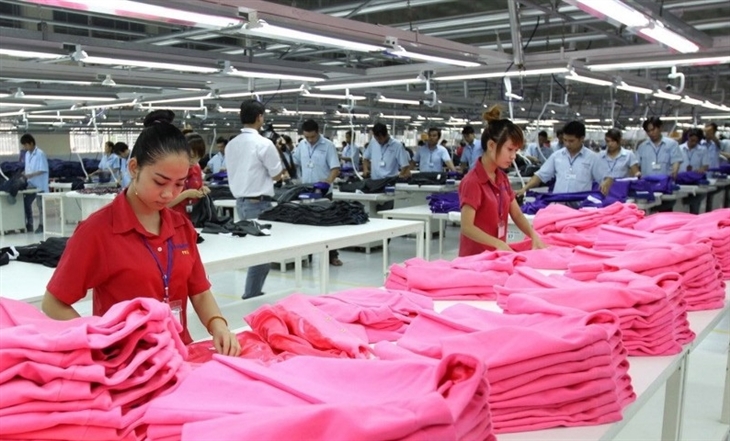
AsemconnectVietnam - After 30 years of development, textiles and garments have become a key export industry and continue to orient their growth towards in-depth development, based on productivity, technology and added value.
30 years of breakthroughs: from $850 million to $46 billion
Journey of Vietnam's textile and garment industry is closely linked to the opening up, integration and development of the economy. From an industry with export turnover of approximately $850 million in a period of 1995-2005, textile and garment industry has gradually expanded its market, increased production capacity and participated more deeply in global supply chain.
By 2015, total export turnover of the industry exceeded $26 billion, placing Vietnam in the top 5 largest textile and garment exporting countries in the world. In 2020, despite COVID-19 pandemic and supply chain disruptions, the industry still achieved approximately $35 billion.
By 2025, textile and garment export turnover is expected to reach approximately $46 billion, an increase of 5.6% compared to 2024, continuing to maintain its position as one of the top 3 largest textile and garment exporting countries in the world. The industry's trade surplus is projected to increase from US$15.5 billion in 2020 to approximately US$21 billion in 2025 and reach around US$9.2 billion in the first six months of 2026.
These results are particularly noteworthy given that textile and garment industry has continuously faced challenges such as the pandemic, inflation, weakened purchasing power, geopolitical instability, protectionist trends and new tariff policies. Adaptability of enterprises has become one of key factors in maintaining export momentum.
“Export figures achieved are result of efforts of entire business system and close support of all levels of government,” emphasized Mr. Vu Duc Giang, Chairman of Vietnam Textile and Garment Association.
To date, Vietnamese textile and garment products have reached 138 markets. Export structure is also gradually shifting as businesses focus more on products with higher technical content, design and environmental requirements.
Domestic value-added ratio is projected to reach approximately 52% by 2025, reflecting significant changes in development of domestic supply sources and supply chain linkages, reducing dependence on imported raw materials and components. This is also a crucial foundation for the industry to increase domestic value retention and improve its ability to meet rules of origin from free trade agreements.
At enterprise level, production and business efficiency are also improving. In an interview with Industry and Trade Newspaper, Mr. Than Duc Viet, General Director of May 10 Corporation - JSC, stated that compared to 2020, May 10's revenue is expected to increase by approximately 47% in 2025, profits by approximately 2.6 times, and average employee income by approximately 40%.
According to May 10 representative, major resolutions on science, technology, international integration, legal reform and private sector development are opening up more space for businesses to innovate their development models.
“For May 10, resolutions of the Party and Government have a direct and profound impact on the development strategy...thereby creating more impetus for businesses to develop sustainably in the new era,” said Mr. Than Duc Viet.
Transition from quantitative growth to in-depth growth
Entering 2026, as Vietnam aims to achieve a US$1 trillion import-export turnover, along with goal of double-digit economic growth, textiles and garments will continue to be one of important contributing sectors. However, potential for growth through expanding production and employing more labor is no longer significant.
Global textile and garment demand has only increased by an average of about 1.8% per year over the past decade, while domestic industry growth in recent years has hovered around 6% per year. If a 10% annual growth rate is maintained for 5 years, the industry's size will reach approximately US$75 billion by 2030, significantly exceeding current market and labor supply's absorption capacity.
Therefore, textile and garment industry's contribution to these goals does not necessarily lie in achieving a 10% annual increase in export turnover. Focus should be on increasing productivity, enhancing added value and reducing import costs, thereby improving the industry's efficiency and contributing to the economy.
For period of 2026-2030, the industry aims for export turnover of approximately US$64.5 billion by 2030, with an average growth rate of 6.5-7% per year. In 2026, export turnover is targeted to reach US$48-49 billion.
To realize this goal, the industry has identified three key areas of focus: Diversifying markets, customers and products; developing domestic sources of raw materials and components; Promoting automation, AI, robotics and digital transformation.
In particular, developing supporting industries and increasing localization rate to over 60% will help enterprises reduce their dependence on imported raw materials, increase added value and be more proactive in the face of fluctuations in global supply chain.
The production model is also gradually shifting from processing to higher value-added production methods, thereby enabling Vietnamese businesses to participate more deeply in design, raw materials, management, logistics and distribution.
Green transformation is a parallel requirement. Increasingly high environmental standards in major markets demand that businesses invest in clean energy, resource conservation, circular production and emission control. This is both a pressure and an opportunity for textile and garment industry to improve its position in supply chain.
Besides export, domestic market of over 100 million people is identified as a new growth space, aiming to reach a size of 8-9 billion USD by 2030. Developing domestic brands, designs, retail and e-commerce will create a foundation for businesses to move further from order-based production to mastering products and brands.
After 30 years of breakthroughs, development model of the textile and garment industry has changed. From focusing on increasing production, expanding labor and orders, the industry is shifting towards growth based on productivity, technology, greening and added value.
Source: Vitic/ congthuong.vn
Journey of Vietnam's textile and garment industry is closely linked to the opening up, integration and development of the economy. From an industry with export turnover of approximately $850 million in a period of 1995-2005, textile and garment industry has gradually expanded its market, increased production capacity and participated more deeply in global supply chain.
By 2015, total export turnover of the industry exceeded $26 billion, placing Vietnam in the top 5 largest textile and garment exporting countries in the world. In 2020, despite COVID-19 pandemic and supply chain disruptions, the industry still achieved approximately $35 billion.
By 2025, textile and garment export turnover is expected to reach approximately $46 billion, an increase of 5.6% compared to 2024, continuing to maintain its position as one of the top 3 largest textile and garment exporting countries in the world. The industry's trade surplus is projected to increase from US$15.5 billion in 2020 to approximately US$21 billion in 2025 and reach around US$9.2 billion in the first six months of 2026.
These results are particularly noteworthy given that textile and garment industry has continuously faced challenges such as the pandemic, inflation, weakened purchasing power, geopolitical instability, protectionist trends and new tariff policies. Adaptability of enterprises has become one of key factors in maintaining export momentum.
“Export figures achieved are result of efforts of entire business system and close support of all levels of government,” emphasized Mr. Vu Duc Giang, Chairman of Vietnam Textile and Garment Association.
To date, Vietnamese textile and garment products have reached 138 markets. Export structure is also gradually shifting as businesses focus more on products with higher technical content, design and environmental requirements.
Domestic value-added ratio is projected to reach approximately 52% by 2025, reflecting significant changes in development of domestic supply sources and supply chain linkages, reducing dependence on imported raw materials and components. This is also a crucial foundation for the industry to increase domestic value retention and improve its ability to meet rules of origin from free trade agreements.
At enterprise level, production and business efficiency are also improving. In an interview with Industry and Trade Newspaper, Mr. Than Duc Viet, General Director of May 10 Corporation - JSC, stated that compared to 2020, May 10's revenue is expected to increase by approximately 47% in 2025, profits by approximately 2.6 times, and average employee income by approximately 40%.
According to May 10 representative, major resolutions on science, technology, international integration, legal reform and private sector development are opening up more space for businesses to innovate their development models.
“For May 10, resolutions of the Party and Government have a direct and profound impact on the development strategy...thereby creating more impetus for businesses to develop sustainably in the new era,” said Mr. Than Duc Viet.
Transition from quantitative growth to in-depth growth
Entering 2026, as Vietnam aims to achieve a US$1 trillion import-export turnover, along with goal of double-digit economic growth, textiles and garments will continue to be one of important contributing sectors. However, potential for growth through expanding production and employing more labor is no longer significant.
Global textile and garment demand has only increased by an average of about 1.8% per year over the past decade, while domestic industry growth in recent years has hovered around 6% per year. If a 10% annual growth rate is maintained for 5 years, the industry's size will reach approximately US$75 billion by 2030, significantly exceeding current market and labor supply's absorption capacity.
Therefore, textile and garment industry's contribution to these goals does not necessarily lie in achieving a 10% annual increase in export turnover. Focus should be on increasing productivity, enhancing added value and reducing import costs, thereby improving the industry's efficiency and contributing to the economy.
For period of 2026-2030, the industry aims for export turnover of approximately US$64.5 billion by 2030, with an average growth rate of 6.5-7% per year. In 2026, export turnover is targeted to reach US$48-49 billion.
To realize this goal, the industry has identified three key areas of focus: Diversifying markets, customers and products; developing domestic sources of raw materials and components; Promoting automation, AI, robotics and digital transformation.
In particular, developing supporting industries and increasing localization rate to over 60% will help enterprises reduce their dependence on imported raw materials, increase added value and be more proactive in the face of fluctuations in global supply chain.
The production model is also gradually shifting from processing to higher value-added production methods, thereby enabling Vietnamese businesses to participate more deeply in design, raw materials, management, logistics and distribution.
Green transformation is a parallel requirement. Increasingly high environmental standards in major markets demand that businesses invest in clean energy, resource conservation, circular production and emission control. This is both a pressure and an opportunity for textile and garment industry to improve its position in supply chain.
Besides export, domestic market of over 100 million people is identified as a new growth space, aiming to reach a size of 8-9 billion USD by 2030. Developing domestic brands, designs, retail and e-commerce will create a foundation for businesses to move further from order-based production to mastering products and brands.
After 30 years of breakthroughs, development model of the textile and garment industry has changed. From focusing on increasing production, expanding labor and orders, the industry is shifting towards growth based on productivity, technology, greening and added value.
Source: Vitic/ congthuong.vn
Total import and export turnover in the first 8 months reached US$770.14 billion
Leather and footwear exports reached US$19.54 billion in 8 months of 2026
From growth to sustainability: New challenge for Vietnam’s fish meal
Vietnam’s seafood exports increased in 8 months of 2026
Fruit and vegetable import market structure: China and US remained dominant
Imports of computers and electronic components increased in 8 months
Expor to EU: Packaging becomes a new challenge
Electronics exports to North America increased due to supply chain shifts and AI demand
Vietnam's leading export markets of fruits and vegetables
Agricultural, forestry and fisheries export in the first 8 months of 2026 reached nearly US$49.3 billion
36 new SPS notifications: What should export enterprises pay attention to?
Coffee export: abundant potential from deep processing
Exports of computers and components and prospects for last months of 2026
In the first 8 months, textile and garment export reached US$26.897 billion
Ministry of Industry and Trade issues action plan to ...
The Ministry of Industry and Trade (MoIT) has issued an action plan to implement the “GoGlobal Program for 2026-2030,” outlining key ...National Assembly Chairman: Foreign affairs must become a ...
Place preserving memories of President Ho Chi Minh in ...
Vietnamese leaders pay tribute to President Ho Chi Minh on ...

Viet Nam to invest US$383 million in key laboratories, ...
Viet Nam plans to invest approximately VND10 trillion (US$383.6 million) from now to 2030 in eight key laboratories and four testing ...Major contents of CPV Central Committee's Resolution ...
Gov't issues Strategy for international cooperation ...
