


5 key policies for drafting the Law on Commodity Derivatives Trading approved
Tuesday, August 11,2026
AsemconnectVietnam - On August 7, 2026, the Government issued Resolution No. 220/NQ-CP approving the policies for the Law on Commodity Derivatives Trading.
The Resolution standardized the draft legislation's title as the "Law on Commodity Derivatives Trading" and adopted five key policies to guide its development.
This marks a significant step in drafting the first specialized law to comprehensively and consistently regulate commodity derivatives trading in Vietnam, covering everything from the scope of regulation, products, participants, trading methods, and market infrastructure to clearing and settlement, risk management, and cross-border trading activities.
A standout feature of the draft law is the shift from a primary focus on regulating trading activities to establishing a legal framework that ensures safety and transparency while fostering market growth. This framework aims to link the derivatives market with the underlying commodity market and progressively integrate Vietnam’s market more deeply into regional and international systems.
Establishing a unified legal framework for the market
For the first time, Vietnam is moving to draft a specialized law that provides a unified regulatory framework for the entire commodity derivatives trading market, clearly defining its scope, application principles, and relationship with other relevant laws.
This framework aims to ensure legal consistency and coherence, minimizing overlaps between regulations on commodity derivatives trading and those governing securities, banking, foreign exchange, and other specialized sectors.
A unified legal foundation will enable the market to develop comprehensively—encompassing products, trading methods, participants, and support institutions—thereby laying the groundwork for a professional, transparent, and scalable commodity derivatives market in the future. Developing the derivatives market in conjunction with the underlying commodities market
A key objective of the draft Law is to develop the derivatives market in a mutually supportive relationship with the underlying commodities market.
The underlying commodities market establishes the foundation regarding commodities and the demand for risk hedging; meanwhile, the derivatives market provides tools to manage price volatility risks while contributing to the formation and provision of commodity price reference data.
The development of these two markets can reinforce one another: the underlying market provides the basis for derivative products, while liquidity, information, and pricing within the derivatives market contribute to enhancing the transparency and efficiency of the underlying market.
On this basis, the draft Law aims to facilitate product diversification, trading methods, and broader market participation, thereby meeting the risk-hedging and investment needs of enterprises, producers, traders, and other stakeholders; it seeks to gradually establish derivatives as practical instruments serving the real economy.
Building modern, integrated, and secure market infrastructure
To ensure sustainable market development, the draft Law prioritizes the refinement of trading, clearing and settlement, and risk management infrastructures in alignment with international practices.
Institutions such as clearing centers, along with mechanisms for margin requirements, settlement, collateral management, and risk control tools, will be perfected to create a foundation that ensures the fulfillment of obligations and overall market safety.
Concurrently, physical infrastructure supporting the commodities market, such as warehousing, commodity management, warehouse receipts, and digitalization solutions, is slated for integrated development to strengthen the linkage between derivatives trading and physical commodities. This serves as the foundation for establishing a modern market infrastructure system, enhancing capabilities in settlement, clearing, commodity management, and risk control, thereby enabling the Vietnamese market to gradually align with international standards.
Fostering a development-oriented environment, encouraging innovation, and improving market quality
The draft law aims to reform state management methods by prioritizing development facilitation and decentralizing authority, coupled with inspection, supervision, and risk management, while simultaneously improving the investment and business climate, simplifying administrative procedures, and reducing compliance costs.
A notable feature is the plan to establish a controlled testing mechanism for new products, models, technologies, or trading methods. This approach creates space for innovation while ensuring necessary risk control limits and requirements are maintained.
Alongside the innovation of business models and technology, market quality is prioritized by refining requirements regarding financial capacity, governance, risk management, and operational conditions for market participants; and by exploring professional certification mechanisms and standardizing professional competencies for relevant roles. This process aims to gradually cultivate a workforce of knowledgeable, professional, and responsible market participants.
Expanding international connectivity and deepening the integration of Vietnamese commodities into the global market
Given the increasing interconnectedness of commodity markets, the draft Law will refine the framework for commodity derivatives transactions involving foreign elements, including foreign entity participation, cross-border trading, and links to overseas markets.
Simultaneously, mechanisms for cross-listing and market interconnection will be explored to enable Vietnamese commodities with competitive advantages, such as coffee, rubber, agricultural produce, and other product groups, to integrate more deeply into regional and international markets.
In doing so, the derivatives market will not only serve domestic risk management needs but also act as a bridge for Vietnamese commodities to access international price-setting and reference systems, while enabling domestic enterprises to access advanced products, trading methods, and risk management practices.
Aiming for a modern, professional, and competitive commodity derivatives market
The five key policy directions approved by the Government form a cohesive whole: ranging from establishing the legal framework and developing products and market participants; upgrading infrastructure and risk management; and fostering an enabling environment that encourages innovation; to expanding international connectivity. The ultimate goal is to establish a modern commodity market ecosystem where the spot and derivatives markets mutually reinforce one another; commodity prices are determined and referenced with greater transparency; infrastructure for trading, clearing, settlement, warehousing, and warehouse receipts is developed comprehensively; market participants possess professional expertise and robust risk management capabilities; controlled innovation is encouraged; and the domestic market gradually integrates with international markets.
Based on the five policies approved by the Government, the Ministry of Industry and Trade will continue to lead and coordinate with relevant ministries, sectors, agencies, and organizations to draft and finalize the bill in accordance with the Law on Promulgation of Legal Documents.
The Law on Commodity Derivatives Trading is expected to create a unified, modern, and flexible legal framework that ensures safe and transparent market operations while fostering development. It aims to serve as an effective tool for enterprises to manage price risks, support the physical commodity market, and enhance the competitiveness and connectivity of Vietnamese commodities within regional and international markets.
Source: VITIC/tapchicongthuong.vn
Import-export revenue surpassed $659 billion in 7 months
Coffee continues to hold a 'king' position in Gia Lai province's export
Vietnam’s CPI fell slightly in July of 2026
Export of agricultural, forestry and aquatic products reached nearly US$42.8 billion in the first 7 months of 2026
Vietnam’s FDI attraction increased in first 7 months of 2026
Industrial production increased in first 7 months of 2026
Tilapia exports surge, Brazil accounts for 50% of export value
Bottlenecks in raw material areas hinder wood export growth
Imports of goods from Germany: machinery and electronics leading
Paving way for Dien Bien Arabica to conquer high-end export segment
Prospects for Vietnam's electronics industry in North American market
Electronics and hi-tech products: leading role in export structure of FDI sector
Simplifying issuance of growing area codes, accelerating agricultural export
Vietnam's iron and steel imports increased in both volume and value
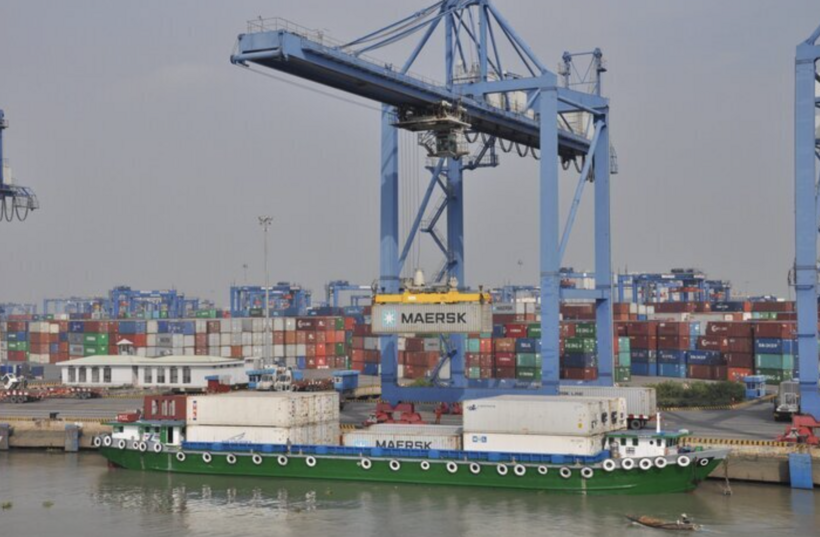
Ministry of Industry and Trade issues action plan to ...
The Ministry of Industry and Trade (MoIT) has issued an action plan to implement the “GoGlobal Program for 2026-2030,” outlining key ...National Assembly Chairman: Foreign affairs must become a ...
Place preserving memories of President Ho Chi Minh in ...
Vietnamese leaders pay tribute to President Ho Chi Minh on ...
Viet Nam approves International Financial Center ...
The Viet Nam International Financial Center (IFC) is expected to rank among the top 75 financial centers worldwide, top 25 financial ...Project on Ecosystem of supporting enterprises in ...
Inter-sectoral legal support program for small and ...
General plan task of Can Tho City until 2050 with a vision ...
