


Export of agricultural, forestry and aquatic products reached nearly US$42.8 billion in the first 7 months of 2026
Friday, August 7,2026
AsemconnectVietnam - In the first 7 months of 2026, export of agricultural, forestry and aquatic products reached nearly US$42.8 billion. Ministry of Agriculture and Environment is focusing on many solutions to achieve a target of US$74 billion for the whole year of 2026.
Export accelerate, trade surplus nearly US$11.7 billion.
According to Ministry of Agriculture and Environment, export value of agricultural, forestry and aquatic products in July 2026 is estimated at US$6.67 billion, an increase of 1.3% compared to the previous month and an increase of 11.9% compared to the same period in 2025. For the first 7 months, total export value reached nearly US$42.8 billion, an increase of 7.5%, higher than the 6.7% increase in the first 6 months of the year. In export structure, agricultural product group reached nearly US$22.2 billion, an increase of 2.4%; Aquatic products reached US$6.85 billion, an increase of 12.7%; forestry products reached US$10.96 billion, an increase of 5.8%; livestock products reached US$455 million, an increase of 33.2%; and production inputs reached US$2.32 billion, a significant increase of 71.1%.
Regarding markets, Asia continues to be the largest export region for Vietnamese agricultural, forestry and aquatic products, accounting for 45.2% of total export value. This is followed by the Americas with 21.4% and Europe with 13.8%. China, the United States and Japan continue to be the three largest export markets, accounting for 21.9%, 19%, and 6.8% of market share respectively. Notably, export to China increased by 24.4%, Japan by 3.9%, while exports to the United States decreased by 1.6% compared to the same period last year.
Many key product sectors continued to record positive results. Fruits and vegetables were a bright spot with export value reaching US$4.83 billion in the first seven months, up 24.9%; pepper reached US$1.09 billion, up 10.6%; seafood reached US$6.85 billion, up 12.7%; wood and wood products reached US$10.2 billion, up 5.5%; and cashew nuts reached US$2.91 billion, up 3.7%. Meanwhile, some commodities such as coffee, rubber, tea, cassava and rice faced price pressure, causing export value to increase slowly or decrease despite stable production.
Conversely, import of agricultural, forestry and aquatic products showed signs of slower growth. In July 2026, import value was estimated at US$4.53 billion, down 1.6% compared to the previous month but up 8% compared to the same period last year. Cumulative export for the first seven months reached US$31.13 billion, an increase of 10.8%, lower than the 11.3% increase in the first six months of the year. As a result, the entire sector recorded a trade surplus of approximately US$11.67 billion in the first seven months.
Focusing on 5 groups of solutions to achieve growth targets
According to Resolution No.168/NQ-CP dated June 27, 2026 of the Government, growth target for agriculture, forestry and fisheries sector in 2026 has been adjusted from 3.7% to 4%. To achieve this target, the agriculture, forestry and fisheries sector needs to achieve a growth rate of approximately 4.3% in the last six months of the year, while striving to bring total export turnover for the year to US$74 billion.
Ministry of Agriculture and Environment stated that it will focus on implementing 5 key tasks. In particular, priority will be given to improving institutions, accelerating drafting of laws and continuing to reduce administrative procedures and investment and business conditions to facilitate people and businesses.
Simultaneously, comprehensive solutions will be implemented to promote growth, expand export markets, expedite issuance of planting area and packaging facility codes, effectively operate traceability system, proactively address difficulties for key industries, meet new regulations of import markets and continue to vigorously implement solutions to remove the IUU "yellow card" warning.
The Ministry will also accelerate disbursement of public investment, effectively implement national target programs, proactively respond to natural disasters, droughts and saltwater intrusion; and promote science and technology, innovation and digital transformation and improve the industry database to enhance governance efficiency.
Furthermore, the Ministry will continue to work alongside localities and the business community, promptly resolving obstacles related to land, minerals, environment, irrigation and disaster prevention and control, thereby freeing up resources for growth. Previously, at the Conference with industry associations on promoting agricultural, forestry and fisheries exports in the last six months of 2026, Minister of Agriculture and Environment Trinh Viet Hung emphasized that to achieve growth and export turnover targets for 2026, entire sector needs to thoroughly understand the major viewpoints. Accordingly, agricultural sector must use market demand as the basis for reorganizing production, developing value chains from seeds, raw material areas, production, processing and logistics to distribution; and proactively meet increasingly high standards on food safety, traceability, emission reduction and green development.
The Minister also requested a strong shift from growth based on output to growth based on quality, efficiency and added value; developing deeply processed products, building brands, establishing geographical indications and enhancing ability to directly participate in international distribution systems are crucial.
In addition, it is necessary to promote role of all stakeholders in value chain, with businesses as central organizers of market and production linkages; farmers, fishermen and cooperatives as the foundation of production; industry associations as the bridge between production and the market; and the State focusing on improving institutions, providing information and removing bottlenecks.
According to Minister Trinh Viet Hung, immediate solutions must also aim at building long-term competitiveness for each industry through developing standardized raw material areas, improving processing and logistics capabilities, standardizing codes for growing areas, farming areas, packaging facilities and perfecting the national traceability system towards greater transparency, accuracy and efficiency.
Source: Vitic/ congthuong.vn
According to Ministry of Agriculture and Environment, export value of agricultural, forestry and aquatic products in July 2026 is estimated at US$6.67 billion, an increase of 1.3% compared to the previous month and an increase of 11.9% compared to the same period in 2025. For the first 7 months, total export value reached nearly US$42.8 billion, an increase of 7.5%, higher than the 6.7% increase in the first 6 months of the year. In export structure, agricultural product group reached nearly US$22.2 billion, an increase of 2.4%; Aquatic products reached US$6.85 billion, an increase of 12.7%; forestry products reached US$10.96 billion, an increase of 5.8%; livestock products reached US$455 million, an increase of 33.2%; and production inputs reached US$2.32 billion, a significant increase of 71.1%.
Regarding markets, Asia continues to be the largest export region for Vietnamese agricultural, forestry and aquatic products, accounting for 45.2% of total export value. This is followed by the Americas with 21.4% and Europe with 13.8%. China, the United States and Japan continue to be the three largest export markets, accounting for 21.9%, 19%, and 6.8% of market share respectively. Notably, export to China increased by 24.4%, Japan by 3.9%, while exports to the United States decreased by 1.6% compared to the same period last year.
Many key product sectors continued to record positive results. Fruits and vegetables were a bright spot with export value reaching US$4.83 billion in the first seven months, up 24.9%; pepper reached US$1.09 billion, up 10.6%; seafood reached US$6.85 billion, up 12.7%; wood and wood products reached US$10.2 billion, up 5.5%; and cashew nuts reached US$2.91 billion, up 3.7%. Meanwhile, some commodities such as coffee, rubber, tea, cassava and rice faced price pressure, causing export value to increase slowly or decrease despite stable production.
Conversely, import of agricultural, forestry and aquatic products showed signs of slower growth. In July 2026, import value was estimated at US$4.53 billion, down 1.6% compared to the previous month but up 8% compared to the same period last year. Cumulative export for the first seven months reached US$31.13 billion, an increase of 10.8%, lower than the 11.3% increase in the first six months of the year. As a result, the entire sector recorded a trade surplus of approximately US$11.67 billion in the first seven months.
Focusing on 5 groups of solutions to achieve growth targets
According to Resolution No.168/NQ-CP dated June 27, 2026 of the Government, growth target for agriculture, forestry and fisheries sector in 2026 has been adjusted from 3.7% to 4%. To achieve this target, the agriculture, forestry and fisheries sector needs to achieve a growth rate of approximately 4.3% in the last six months of the year, while striving to bring total export turnover for the year to US$74 billion.
Ministry of Agriculture and Environment stated that it will focus on implementing 5 key tasks. In particular, priority will be given to improving institutions, accelerating drafting of laws and continuing to reduce administrative procedures and investment and business conditions to facilitate people and businesses.
Simultaneously, comprehensive solutions will be implemented to promote growth, expand export markets, expedite issuance of planting area and packaging facility codes, effectively operate traceability system, proactively address difficulties for key industries, meet new regulations of import markets and continue to vigorously implement solutions to remove the IUU "yellow card" warning.
The Ministry will also accelerate disbursement of public investment, effectively implement national target programs, proactively respond to natural disasters, droughts and saltwater intrusion; and promote science and technology, innovation and digital transformation and improve the industry database to enhance governance efficiency.
Furthermore, the Ministry will continue to work alongside localities and the business community, promptly resolving obstacles related to land, minerals, environment, irrigation and disaster prevention and control, thereby freeing up resources for growth. Previously, at the Conference with industry associations on promoting agricultural, forestry and fisheries exports in the last six months of 2026, Minister of Agriculture and Environment Trinh Viet Hung emphasized that to achieve growth and export turnover targets for 2026, entire sector needs to thoroughly understand the major viewpoints. Accordingly, agricultural sector must use market demand as the basis for reorganizing production, developing value chains from seeds, raw material areas, production, processing and logistics to distribution; and proactively meet increasingly high standards on food safety, traceability, emission reduction and green development.
The Minister also requested a strong shift from growth based on output to growth based on quality, efficiency and added value; developing deeply processed products, building brands, establishing geographical indications and enhancing ability to directly participate in international distribution systems are crucial.
In addition, it is necessary to promote role of all stakeholders in value chain, with businesses as central organizers of market and production linkages; farmers, fishermen and cooperatives as the foundation of production; industry associations as the bridge between production and the market; and the State focusing on improving institutions, providing information and removing bottlenecks.
According to Minister Trinh Viet Hung, immediate solutions must also aim at building long-term competitiveness for each industry through developing standardized raw material areas, improving processing and logistics capabilities, standardizing codes for growing areas, farming areas, packaging facilities and perfecting the national traceability system towards greater transparency, accuracy and efficiency.
Source: Vitic/ congthuong.vn
Industrial production increased in first 7 months of 2026
Tilapia exports surge, Brazil accounts for 50% of export value
Bottlenecks in raw material areas hinder wood export growth
Imports of goods from Germany: machinery and electronics leading
Paving way for Dien Bien Arabica to conquer high-end export segment
Prospects for Vietnam's electronics industry in North American market
Electronics and hi-tech products: leading role in export structure of FDI sector
Simplifying issuance of growing area codes, accelerating agricultural export
Vietnam's iron and steel imports increased in both volume and value
Vietnam's main import markets of phones and components in first half of 2026
Vietnam's seafood imports fell slightly in first half of 2026
Trade volume soars by 28.1% in first seven months
Vietnam's fetilizer exports saw strong growth
Vietnam-Japan trade and prospects for breakthrough in 2026
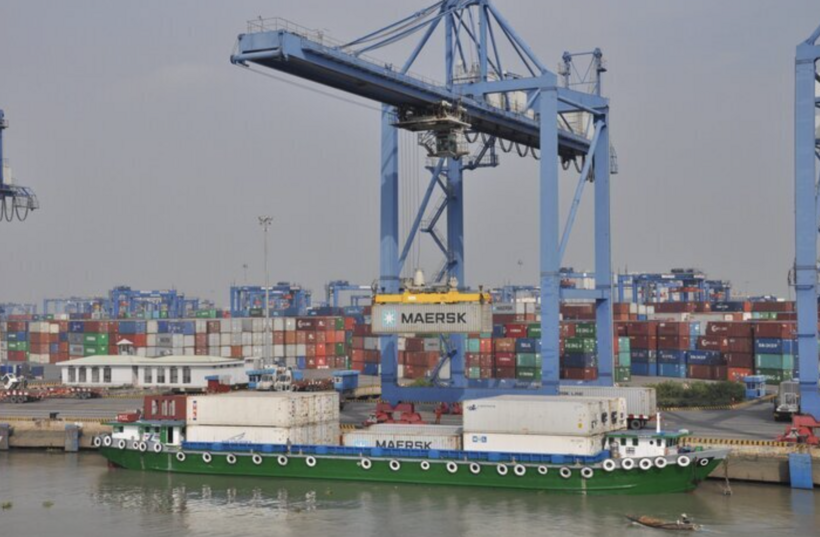
Ministry of Industry and Trade issues action plan to ...
The Ministry of Industry and Trade (MoIT) has issued an action plan to implement the “GoGlobal Program for 2026-2030,” outlining key ...National Assembly Chairman: Foreign affairs must become a ...
Place preserving memories of President Ho Chi Minh in ...
Vietnamese leaders pay tribute to President Ho Chi Minh on ...
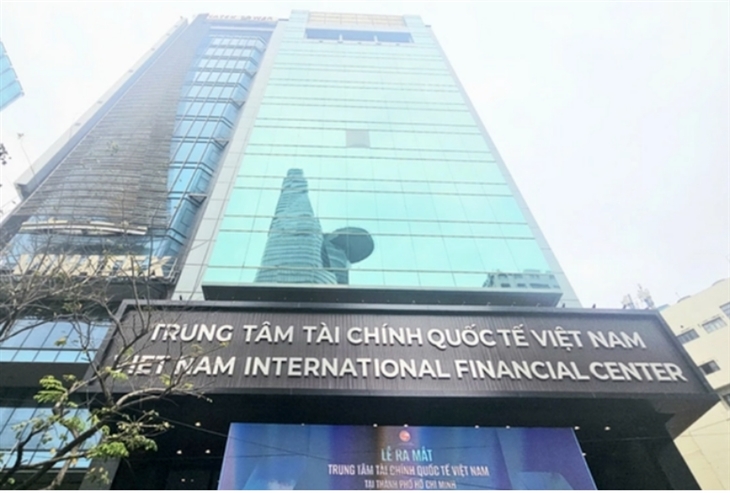
Viet Nam approves International Financial Center ...
The Viet Nam International Financial Center (IFC) is expected to rank among the top 75 financial centers worldwide, top 25 financial ...Project on Ecosystem of supporting enterprises in ...
Inter-sectoral legal support program for small and ...
General plan task of Can Tho City until 2050 with a vision ...
