


Bottlenecks in raw material areas hinder wood export growth
Thursday, August 6,2026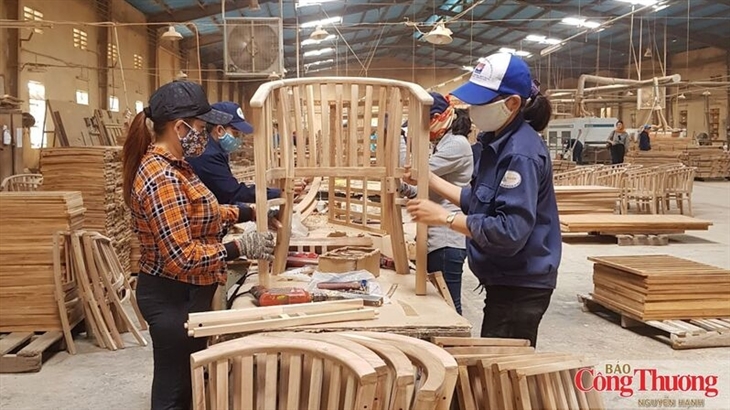
AsemconnectVietnam - Wood exports have exceeded $17 billion, but the processing industry still faces many 'bottlenecks' regarding raw material areas. Supply chain linkage is solution for sustainable development of Vietnam's wood industry.
Raw material sources: A 'bottleneck' that needs to be addressed in the wood industry
Vietnam's wood processing and export industry continues to maintain impressive growth, with export turnover reaching over US$17 billion in 2025. Behind this result is increasing demand for raw materials for processing, in which domestically grown plantation timber plays an increasingly important role.
Currently, the industry's raw materials come from two main channels: imported timber from countries with good forest management practices such as the US and Europe and domestic timber from plantations and rubber trees. However, as wood exports grow rapidly, pressure on raw material supply also increases.
Each segment of the industry uses different types of raw materials. Furniture manufacturers need large-diameter timber; plywood manufacturers use smaller timber; while wood chip and pellet industry mainly uses small timber, branches and by-products such as sawdust and bark.
This has led to intense competition among various business groups for domestic acacia and eucalyptus wood resources. In northern region, raw materials have become even scarcer after many planted forests were damaged by storms, driving up raw material prices. In context of a struggling export market, many veneer and furniture manufacturers are unable to compete with wood chip producers in sourcing raw materials.
Competition is not only occurring between product groups but also within the same industry. Businesses with strong resources and established raw material sources through partnerships with forest farmers have a significant advantage over smaller businesses. Furthermore, the fact that many businesses invest in the same sector, such as wood pellets, in the same area leads to an imbalance between processing capacity and raw material supply, creating unsustainable competition.
Another limitation is that Vietnam still lacks a scientific foundation for planning development of tree species suitable for each ecological zone. While tree species such as acacia, melaleuca, eucalyptus, pine and bodhi have different growth characteristics, assessment of each species' potential based on soil conditions remains lacking, affecting development orientation of raw material areas and allocation of processing capacity.
At webinar "enhancing value chain of wood industry through strengthening linkages between processing and sustainable raw material areas and carbon markets: from perspective of the southeast region and the Mekong Delta" organized by EUDR Forestry Network, Agricultural and Forestry Policy Research Network, Ho Chi Minh City Handicraft and Wood Processing Association (HAWA) and Forest Trends on the afternoon of July 24th, Mr. Phung Quoc Man, Vice President of the Vietnam Wood and Forest Products Association and Chairman of HAWA, stated that developing sustainable raw material areas linked to deep processing is becoming a matter of particular concern for the entire industry.
According to Mr. Phung Quoc Man, success in export does not necessarily equate to sustainable development. Although Vietnam leads Southeast Asia in wood and furniture exports, the lack of linkage between raw material sources and the processing industry remains a "bottleneck" that needs to be addressed soon. Therefore, building a supply chain linking forest growers, businesses, and local authorities should be considered a key task in the coming period.
Opening up growth potential through supply chain linkages and carbon markets
According to Dr. To Xuan Phuc, Director of Forestry Policy, Trade and Finance Program at Forest Trends, developing raw material sources is not just a problem for the Southeast region or the Mekong Delta, but needs to be considered nationwide. Currently, Vietnam has about 10.1 million hectares of natural forest and 4.9 million hectares of planted forest, of which about 4.1 million hectares are production forests - the main source of raw materials for the wood processing industry. To date, whole country has about 880,000 hectares of forest certified under the FSC and PEFC sustainable forest management systems.
According to Dr. According to To Xuan Phuc, total demand for raw materials in the wood, artificial board, wood pellet and wood chip industries currently reaches approximately 59 million cubic meters per year, highlighting the crucial role of planted forests in the wood industry's value chain. However, after more than 20 years of promoting development of large-scale timber forests, Vietnam has not yet achieved the expected results. This is due to insufficient market demand, a lack of economic incentives for forest growers, and a shortage of deep processing enterprises in the raw material areas, leading to a continued preference for harvesting small timber.
Another drawback is that development planning of processing facilities in many localities is not linked to planning of raw material areas, resulting in supply-demand imbalances and competition among businesses in procurement. Therefore, it is necessary to develop a strategy for developing raw material areas according to each ecological zone, clearly planning types of trees suitable for each type of processing and strengthening linkages between associations, businesses and localities.
From a business perspective, Mr. Nguyen Huu Thong, General Director of Hoang Thong Wood Company, also believes that promoting sustainable development of large timber raw materials for furniture production needs to be viewed in two stages: short-term and long-term. In the short term, the most important thing is to build a comprehensive database of planted forests, including area, tree structure, forest age and raw material supply capacity. Based on that, raw material areas can be classified to serve each industry such as wood chips, wood pellets, MDF, veneer or large timber, so that businesses and associations can proactively link together. In the long term, it is necessary to plan development of planted forest areas nationwide, clearly defining scale, structure and usage orientation for each region. "Only with a comprehensive plan and stable supply will businesses have a basis to invest in deep processing and form a sustainable value chain for the wood industry", Mr. Nguyen Huu Thong emphasized.
According to Customs Department (Ministry of Finance), in the first six months of 2026, exports of wood and wood products reached US$8.6 billion, an increase of 4.9% compared to the same period last year. Of this, export to China increased by 46.5%, reaching US$1.3 billion, making it the second largest destination for Vietnamese wood products, surpassing Japan. Export are projected to continue growing in the second half of the year thanks to recovering demand and advantages from FTAs. However, businesses still face challenges related to raw material sourcing, pressure from trade barriers, environmental standards, traceability, and fluctuations in global trade policies.
Experts believe that, in context of Vietnam's commitment to net-zero emissions by 2050, the carbon credit market will open up new opportunities for the wood industry. Extending the harvesting cycle, developing large timber forests and applying silvicultural measures aimed at reducing emissions not only helps improve quality of raw materials for deep processing but also creates additional revenue from carbon credits.
Source: Vitic/ congthuong.vn
Vietnam's wood processing and export industry continues to maintain impressive growth, with export turnover reaching over US$17 billion in 2025. Behind this result is increasing demand for raw materials for processing, in which domestically grown plantation timber plays an increasingly important role.
Currently, the industry's raw materials come from two main channels: imported timber from countries with good forest management practices such as the US and Europe and domestic timber from plantations and rubber trees. However, as wood exports grow rapidly, pressure on raw material supply also increases.
Each segment of the industry uses different types of raw materials. Furniture manufacturers need large-diameter timber; plywood manufacturers use smaller timber; while wood chip and pellet industry mainly uses small timber, branches and by-products such as sawdust and bark.
This has led to intense competition among various business groups for domestic acacia and eucalyptus wood resources. In northern region, raw materials have become even scarcer after many planted forests were damaged by storms, driving up raw material prices. In context of a struggling export market, many veneer and furniture manufacturers are unable to compete with wood chip producers in sourcing raw materials.
Competition is not only occurring between product groups but also within the same industry. Businesses with strong resources and established raw material sources through partnerships with forest farmers have a significant advantage over smaller businesses. Furthermore, the fact that many businesses invest in the same sector, such as wood pellets, in the same area leads to an imbalance between processing capacity and raw material supply, creating unsustainable competition.
Another limitation is that Vietnam still lacks a scientific foundation for planning development of tree species suitable for each ecological zone. While tree species such as acacia, melaleuca, eucalyptus, pine and bodhi have different growth characteristics, assessment of each species' potential based on soil conditions remains lacking, affecting development orientation of raw material areas and allocation of processing capacity.
At webinar "enhancing value chain of wood industry through strengthening linkages between processing and sustainable raw material areas and carbon markets: from perspective of the southeast region and the Mekong Delta" organized by EUDR Forestry Network, Agricultural and Forestry Policy Research Network, Ho Chi Minh City Handicraft and Wood Processing Association (HAWA) and Forest Trends on the afternoon of July 24th, Mr. Phung Quoc Man, Vice President of the Vietnam Wood and Forest Products Association and Chairman of HAWA, stated that developing sustainable raw material areas linked to deep processing is becoming a matter of particular concern for the entire industry.
According to Mr. Phung Quoc Man, success in export does not necessarily equate to sustainable development. Although Vietnam leads Southeast Asia in wood and furniture exports, the lack of linkage between raw material sources and the processing industry remains a "bottleneck" that needs to be addressed soon. Therefore, building a supply chain linking forest growers, businesses, and local authorities should be considered a key task in the coming period.
Opening up growth potential through supply chain linkages and carbon markets
According to Dr. To Xuan Phuc, Director of Forestry Policy, Trade and Finance Program at Forest Trends, developing raw material sources is not just a problem for the Southeast region or the Mekong Delta, but needs to be considered nationwide. Currently, Vietnam has about 10.1 million hectares of natural forest and 4.9 million hectares of planted forest, of which about 4.1 million hectares are production forests - the main source of raw materials for the wood processing industry. To date, whole country has about 880,000 hectares of forest certified under the FSC and PEFC sustainable forest management systems.
According to Dr. According to To Xuan Phuc, total demand for raw materials in the wood, artificial board, wood pellet and wood chip industries currently reaches approximately 59 million cubic meters per year, highlighting the crucial role of planted forests in the wood industry's value chain. However, after more than 20 years of promoting development of large-scale timber forests, Vietnam has not yet achieved the expected results. This is due to insufficient market demand, a lack of economic incentives for forest growers, and a shortage of deep processing enterprises in the raw material areas, leading to a continued preference for harvesting small timber.
Another drawback is that development planning of processing facilities in many localities is not linked to planning of raw material areas, resulting in supply-demand imbalances and competition among businesses in procurement. Therefore, it is necessary to develop a strategy for developing raw material areas according to each ecological zone, clearly planning types of trees suitable for each type of processing and strengthening linkages between associations, businesses and localities.
From a business perspective, Mr. Nguyen Huu Thong, General Director of Hoang Thong Wood Company, also believes that promoting sustainable development of large timber raw materials for furniture production needs to be viewed in two stages: short-term and long-term. In the short term, the most important thing is to build a comprehensive database of planted forests, including area, tree structure, forest age and raw material supply capacity. Based on that, raw material areas can be classified to serve each industry such as wood chips, wood pellets, MDF, veneer or large timber, so that businesses and associations can proactively link together. In the long term, it is necessary to plan development of planted forest areas nationwide, clearly defining scale, structure and usage orientation for each region. "Only with a comprehensive plan and stable supply will businesses have a basis to invest in deep processing and form a sustainable value chain for the wood industry", Mr. Nguyen Huu Thong emphasized.
According to Customs Department (Ministry of Finance), in the first six months of 2026, exports of wood and wood products reached US$8.6 billion, an increase of 4.9% compared to the same period last year. Of this, export to China increased by 46.5%, reaching US$1.3 billion, making it the second largest destination for Vietnamese wood products, surpassing Japan. Export are projected to continue growing in the second half of the year thanks to recovering demand and advantages from FTAs. However, businesses still face challenges related to raw material sourcing, pressure from trade barriers, environmental standards, traceability, and fluctuations in global trade policies.
Experts believe that, in context of Vietnam's commitment to net-zero emissions by 2050, the carbon credit market will open up new opportunities for the wood industry. Extending the harvesting cycle, developing large timber forests and applying silvicultural measures aimed at reducing emissions not only helps improve quality of raw materials for deep processing but also creates additional revenue from carbon credits.
Source: Vitic/ congthuong.vn
Paving way for Dien Bien Arabica to conquer high-end export segment
Prospects for Vietnam's electronics industry in North American market
Electronics and hi-tech products: leading role in export structure of FDI sector
Simplifying issuance of growing area codes, accelerating agricultural export
Vietnam's iron and steel imports increased in both volume and value
Vietnam's main import markets of phones and components in first half of 2026
Vietnam's seafood imports fell slightly in first half of 2026
Trade volume soars by 28.1% in first seven months
Vietnam's fetilizer exports saw strong growth
Vietnam-Japan trade and prospects for breakthrough in 2026
Vietnam's leading paper import markets in first months of 2026
Vietnam's seafood exports reached double-digit growth in first half of 2026
India officially opens its market to fresh Vietnamese durian
Removing bottlenecks to unlock economic growth momentum
Ministry of Industry and Trade issues action plan to ...
The Ministry of Industry and Trade (MoIT) has issued an action plan to implement the “GoGlobal Program for 2026-2030,” outlining key ...National Assembly Chairman: Foreign affairs must become a ...
Place preserving memories of President Ho Chi Minh in ...
Vietnamese leaders pay tribute to President Ho Chi Minh on ...
Viet Nam approves International Financial Center ...
The Viet Nam International Financial Center (IFC) is expected to rank among the top 75 financial centers worldwide, top 25 financial ...Project on Ecosystem of supporting enterprises in ...
Inter-sectoral legal support program for small and ...
General plan task of Can Tho City until 2050 with a vision ...
