


Paving way for Dien Bien Arabica to conquer high-end export segment
Thursday, August 6,2026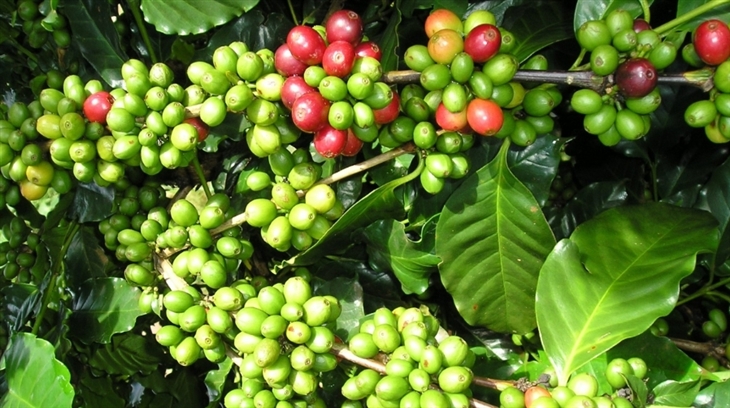
AsemconnectVietnam - Developing value chain, applying science and technology, digital transformation and deep processing are directions Dien Bien is choosing to elevate Arabica in the high-end export market.
Laying foundation for a high-quality Arabica industry
Once known for its high-quality Arabica coffee growing regions in Muong Ang, Tuan Giao and Pha Din Pass area, Dien Bien is shaping a new development strategy for coffee industry, choosing a path based on increasing value, with science, technology, digital transformation, deep processing and export market as driving forces. This is also a suitable trend as Vietnamese coffee industry shifts from goal of increasing production to improving quality, meeting increasingly stringent standards of international market.
At forum "Sustainable agricultural development linked to green transformation and enhancing value chain of key products in Dien Bien", Mr. Le Xuan Canh, Director of Dien Bien Department of Agriculture and Environment, stated that Arabica coffee has been identified as one of the province's key commodities. Development orientation aims not only to expand production scale but, more importantly, to increase value per unit area, create stable outlets and increase income for the people.
Currently, Dien Bien has approximately 8,500 hectares of Arabica coffee, ranking third nationwide after Son La and Lam Dong. In 2026, the province aims to develop an additional 6,000 hectares of coffee, striving to bring total Arabica area to nearly 20,000 hectares as per the Provincial Party Congress Resolution. However, according to Mr. Le Xuan Canh, expanding area is only a necessary condition. Long-term goal is to form a complete value chain, from breeding and improving cultivation processes, establishing raw material areas, deep processing to market development and export.
“The locality still has about 300,000 hectares of land that can be converted, creating significant room for development of high-value industrial crops. However, expanding raw material areas must be linked to market demand and consumption capacity, especially in the high-quality coffee segment. Along with that is requirement to develop processing industry, build brands, complete planting area codes, geographical indications and standards for export,” Mr. Canh shared, adding that to realize this goal, Dien Bien is promoting application of science and technology in production.
According to Dr. According to Phan Viet Ha, Deputy Director of Tay Nguyen Institute of Agricultural and Forestry Science and Technology, many forecasts indicate that by 2050, area of Arabica coffee in many traditional producing countries could decrease by about 50% due to impact of climate change. This presents an opportunity for regions with suitable ecological conditions, such as Dien Bien, to develop high-quality Arabica. However, Arabica is a coffee variety that requires strict ecological conditions and only thrives in regions with suitable altitude, temperature and climate. Therefore, expanding area needs to be based on scientific principles rather than mere trends. According to Dr. Phan Viet Ha, from the outset, Dien Bien needs to clearly define its development direction: specialty coffee, high-quality coffee or commercial coffee, in order to build appropriate production processes and market strategies.
Creating a competitive advantage through quality, digital transformation, and branding
From an industry management perspective, Mr. Nguyen Quy Duong, Deputy Director of Department of Crop Production and Plant Protection, believes that although total coffee acreage nationwide has exceeded the plan, Arabica still has much room for development thanks to its high economic value and potential to become a specialty coffee. However, Dien Bien's advantage lies not in competing on scale with traditional production regions, but in its ability to build a distinct Arabica brand.
In an interview with a reporter from Industry and Trade Newspaper, Mr. Le Duc Huy, Vice President of Vietnam Coffee and Cocoa Association and Chairman of Board of Directors of Simexco Dak Lak, stated that Dien Bien has advantage of being a "latecomer," allowing it to build a modern coffee industry from the outset. Instead of having to transform hundreds of thousands of hectares of raw material areas like many other localities, the planned scale of approximately 20,000 hectares makes it easier for the province to apply new management models.
Mr. Le Duc Huy proposed that Dien Bien province aim to become the first locality in Vietnam to comprehensively digitize its coffee industry, building a synchronized database on raw material areas, production management and traceability right from the expansion phase. According to Mr. Le Duc Huy, digital transformation not only helps meet increasingly stringent market regulations, such as European Union's Regulation on Deforestation (EUDR), but also creates a foundation for improving management capacity and increasing competitiveness of Dien Bien Arabica coffee brand.
Besides digital transformation, quality must be controlled throughout entire value chain. From raw material areas, harvesting, preliminary processing, processing to storage, everything needs to be standardized to ensure the consistency of each export batch, because even one link failing to meet requirements can affect the reputation of the entire raw material area.
At the same time, Dien Bien needs to simultaneously exploit its cultural and tourism advantages to increase value of its products. "Besides climate and soil conditions suitable for Arabica, locality also possesses unique cultural identity of the Northwest region, its history and its distinctive landscapes. Combining coffee development with experiential tourism will contribute to building the image of a specialty coffee region, creating additional value beyond the coffee bean", Mr. Le Duc Huy shared.
From a branding perspective, Mr. Le Minh Cuong, Director of HSDC Trading and Service Company Limited, believes that Dien Bien Arabica needs to be positioned as a product with its own unique identity, rather than just an agricultural product. The story of the land, people and local culture needs to be consistently expressed through brand identity, packaging, and product design. "Packaging not only serves a preservation function but also represents a commitment to quality and is a key factor in building consumer trust," Mr. Le Minh Cuong stated.
Sharing the same view, Mr. Pham Ngoc Mau, Deputy Director of the International Cooperation Department (Ministry of Agriculture and Environment), believes that brand building must stem from market demand. Businesses need to research consumer preferences in each country, from requirements for quality and sustainable development to product design and storytelling, instead of just focusing on existing advantages.
According to Mr. Pham Ngoc Mau, exporting remains the most effective way to increase value of coffee industry, but it will only succeed when the product has a strong enough brand and meets increasingly stringent technical barriers. This requires Dien Bien Arabica to fully meet standards on traceability, emission reduction, sustainable production, and transparency throughout the entire supply chain.
According to industry experts, Dien Bien's coffee development strategy is shifting from a crop development mindset to an industry development mindset. Goal is not just to expand the area of Arabica cultivation, but to create a modern production ecosystem connecting scientific research, raw material areas, processing businesses, and export markets. If this direction is realized, Dien Bien Arabica will have the opportunity to affirm its position on the map of Vietnamese specialty coffee, while expanding growth potential for coffee industry in context of a global market that increasingly values quality, sustainability and brand value.
Source: Vitic/ congthuong.vn
Once known for its high-quality Arabica coffee growing regions in Muong Ang, Tuan Giao and Pha Din Pass area, Dien Bien is shaping a new development strategy for coffee industry, choosing a path based on increasing value, with science, technology, digital transformation, deep processing and export market as driving forces. This is also a suitable trend as Vietnamese coffee industry shifts from goal of increasing production to improving quality, meeting increasingly stringent standards of international market.
At forum "Sustainable agricultural development linked to green transformation and enhancing value chain of key products in Dien Bien", Mr. Le Xuan Canh, Director of Dien Bien Department of Agriculture and Environment, stated that Arabica coffee has been identified as one of the province's key commodities. Development orientation aims not only to expand production scale but, more importantly, to increase value per unit area, create stable outlets and increase income for the people.
Currently, Dien Bien has approximately 8,500 hectares of Arabica coffee, ranking third nationwide after Son La and Lam Dong. In 2026, the province aims to develop an additional 6,000 hectares of coffee, striving to bring total Arabica area to nearly 20,000 hectares as per the Provincial Party Congress Resolution. However, according to Mr. Le Xuan Canh, expanding area is only a necessary condition. Long-term goal is to form a complete value chain, from breeding and improving cultivation processes, establishing raw material areas, deep processing to market development and export.
“The locality still has about 300,000 hectares of land that can be converted, creating significant room for development of high-value industrial crops. However, expanding raw material areas must be linked to market demand and consumption capacity, especially in the high-quality coffee segment. Along with that is requirement to develop processing industry, build brands, complete planting area codes, geographical indications and standards for export,” Mr. Canh shared, adding that to realize this goal, Dien Bien is promoting application of science and technology in production.
According to Dr. According to Phan Viet Ha, Deputy Director of Tay Nguyen Institute of Agricultural and Forestry Science and Technology, many forecasts indicate that by 2050, area of Arabica coffee in many traditional producing countries could decrease by about 50% due to impact of climate change. This presents an opportunity for regions with suitable ecological conditions, such as Dien Bien, to develop high-quality Arabica. However, Arabica is a coffee variety that requires strict ecological conditions and only thrives in regions with suitable altitude, temperature and climate. Therefore, expanding area needs to be based on scientific principles rather than mere trends. According to Dr. Phan Viet Ha, from the outset, Dien Bien needs to clearly define its development direction: specialty coffee, high-quality coffee or commercial coffee, in order to build appropriate production processes and market strategies.
Creating a competitive advantage through quality, digital transformation, and branding
From an industry management perspective, Mr. Nguyen Quy Duong, Deputy Director of Department of Crop Production and Plant Protection, believes that although total coffee acreage nationwide has exceeded the plan, Arabica still has much room for development thanks to its high economic value and potential to become a specialty coffee. However, Dien Bien's advantage lies not in competing on scale with traditional production regions, but in its ability to build a distinct Arabica brand.
In an interview with a reporter from Industry and Trade Newspaper, Mr. Le Duc Huy, Vice President of Vietnam Coffee and Cocoa Association and Chairman of Board of Directors of Simexco Dak Lak, stated that Dien Bien has advantage of being a "latecomer," allowing it to build a modern coffee industry from the outset. Instead of having to transform hundreds of thousands of hectares of raw material areas like many other localities, the planned scale of approximately 20,000 hectares makes it easier for the province to apply new management models.
Mr. Le Duc Huy proposed that Dien Bien province aim to become the first locality in Vietnam to comprehensively digitize its coffee industry, building a synchronized database on raw material areas, production management and traceability right from the expansion phase. According to Mr. Le Duc Huy, digital transformation not only helps meet increasingly stringent market regulations, such as European Union's Regulation on Deforestation (EUDR), but also creates a foundation for improving management capacity and increasing competitiveness of Dien Bien Arabica coffee brand.
Besides digital transformation, quality must be controlled throughout entire value chain. From raw material areas, harvesting, preliminary processing, processing to storage, everything needs to be standardized to ensure the consistency of each export batch, because even one link failing to meet requirements can affect the reputation of the entire raw material area.
At the same time, Dien Bien needs to simultaneously exploit its cultural and tourism advantages to increase value of its products. "Besides climate and soil conditions suitable for Arabica, locality also possesses unique cultural identity of the Northwest region, its history and its distinctive landscapes. Combining coffee development with experiential tourism will contribute to building the image of a specialty coffee region, creating additional value beyond the coffee bean", Mr. Le Duc Huy shared.
From a branding perspective, Mr. Le Minh Cuong, Director of HSDC Trading and Service Company Limited, believes that Dien Bien Arabica needs to be positioned as a product with its own unique identity, rather than just an agricultural product. The story of the land, people and local culture needs to be consistently expressed through brand identity, packaging, and product design. "Packaging not only serves a preservation function but also represents a commitment to quality and is a key factor in building consumer trust," Mr. Le Minh Cuong stated.
Sharing the same view, Mr. Pham Ngoc Mau, Deputy Director of the International Cooperation Department (Ministry of Agriculture and Environment), believes that brand building must stem from market demand. Businesses need to research consumer preferences in each country, from requirements for quality and sustainable development to product design and storytelling, instead of just focusing on existing advantages.
According to Mr. Pham Ngoc Mau, exporting remains the most effective way to increase value of coffee industry, but it will only succeed when the product has a strong enough brand and meets increasingly stringent technical barriers. This requires Dien Bien Arabica to fully meet standards on traceability, emission reduction, sustainable production, and transparency throughout the entire supply chain.
According to industry experts, Dien Bien's coffee development strategy is shifting from a crop development mindset to an industry development mindset. Goal is not just to expand the area of Arabica cultivation, but to create a modern production ecosystem connecting scientific research, raw material areas, processing businesses, and export markets. If this direction is realized, Dien Bien Arabica will have the opportunity to affirm its position on the map of Vietnamese specialty coffee, while expanding growth potential for coffee industry in context of a global market that increasingly values quality, sustainability and brand value.
Source: Vitic/ congthuong.vn
Electronics and hi-tech products: leading role in export structure of FDI sector
Simplifying issuance of growing area codes, accelerating agricultural export
Vietnam's iron and steel imports increased in both volume and value
Vietnam's main import markets of phones and components in first half of 2026
Vietnam's seafood imports fell slightly in first half of 2026
Trade volume soars by 28.1% in first seven months
Vietnam's fetilizer exports saw strong growth
Vietnam-Japan trade and prospects for breakthrough in 2026
Vietnam's leading paper import markets in first months of 2026
Vietnam's seafood exports reached double-digit growth in first half of 2026
India officially opens its market to fresh Vietnamese durian
Removing bottlenecks to unlock economic growth momentum
Unlocking planting area code, expanding durian export markets
Vietnam's seafood export face new opportunities from Vietnam-EFTA FTA
Ministry of Industry and Trade issues action plan to ...
The Ministry of Industry and Trade (MoIT) has issued an action plan to implement the “GoGlobal Program for 2026-2030,” outlining key ...National Assembly Chairman: Foreign affairs must become a ...
Place preserving memories of President Ho Chi Minh in ...
Vietnamese leaders pay tribute to President Ho Chi Minh on ...
Viet Nam approves International Financial Center ...
The Viet Nam International Financial Center (IFC) is expected to rank among the top 75 financial centers worldwide, top 25 financial ...Project on Ecosystem of supporting enterprises in ...
Inter-sectoral legal support program for small and ...
General plan task of Can Tho City until 2050 with a vision ...
