


Vietnam's seafood export face new opportunities from Vietnam-EFTA FTA
Friday, July 31,2026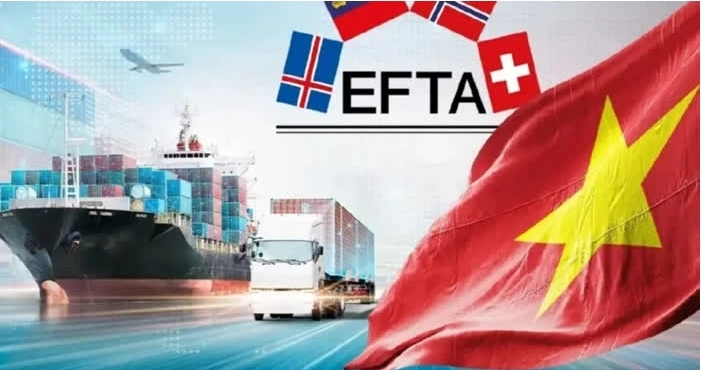
AsemconnectVietnam - Completion of negotiations between Vietnam and European Free Trade Association (EFTA) for a Free Trade Agreement (FTA) opens up opportunities to access high-value markets with high purchasing power and standards for Vietnamese seafood.
Expanding export markets, increasing opportunities in high-value segment
According to Vietnam Association of Seafood Processing and Export (VASEP), completion of negotiations between Vietnam and the European Free Trade Association (EFTA), comprising Switzerland, Norway, Iceland and Liechtenstein, is a positive sign in context of volatile global trade, increasing protectionist trends and major markets increasingly tightening standards for seafood.
For seafood industry, Vietnam-EFTA FTA is an opportunity to expand into high-value markets with high standards, aligning with Vietnam's orientation towards increasing export value.
Currently, seafood exports to EFTA bloc are modest, mainly concentrated in Switzerland and Norway. In 2025, export to Switzerland are projected to reach US$34.123 million, a 15% increase compared to 2024; export to Norway are expected to reach US$18.479 million, a 95% increase. Total export value to these two markets is approximately US$52.6 million, representing a small proportion of Vietnam's total seafood export but indicating potential for growth in high-value segment.
In the first five months of 2026, seafood exports to Switzerland reached US$13.437 million, a 15% decrease compared to the same period, accounting for approximately 0.3% of Vietnam's total seafood export value. In May alone, export reached US$3.5 million, a 13.5% decrease. Meanwhile, export to Norway reached US$7.027 million, a 36.7% increase. In May alone, export reached US$1.643 million, an increase of 11.5%. The figures show that while EFTA market is not yet large in scale, it still shows positive signs, especially in Norway.
According to VASEP, the first benefit of FTA is diversification of export markets. Although not a populous market bloc, EFTA has a high level of development, significant purchasing power and stable demand for high-quality food. This is an opportunity for Vietnamese seafood to reduce its dependence on traditional markets, given risks posed by the US regarding tariffs, trade protection measures and MMPA; and EU's continued increase in requirements regarding IUU (Illegal, Unreported, and Unregulated) fishing, traceability, residue levels and sustainable development standards.
However, this is not a market that can be expanded solely through price competitiveness. Opportunities are concentrated in high value-added and high-standard products such as processed shrimp, high-quality frozen shrimp, pangasius fillets or portions, processed pangasius, tuna, squid and octopus, crabs, shellfish and convenient products for retail systems.
In addition, once agreement is signed, ratified and comes into effect, commitments to reduce or eliminate tariffs will create more favorable conditions for goods of Vietnamese origin to access the EFTA market. However, tariff preferences will only be effective when businesses fully meet rules of origin, certification documents, food safety requirements, and technical standards of each market.
To take advantage of FTA, businesses must prepare thoroughly regarding standards and origin.
According to VASEP, Vietnam-EFTA Free Trade Agreement not only creates opportunities to expand export but also promotes bilateral cooperation. Norway and Iceland are countries with strengths in aquaculture, exploitation, resource management, refrigeration technology, deep processing and logistics. Therefore, the agreement can open up opportunities for cooperation in technology, raw materials, investment, supply chain management and new product development. For businesses with processing capabilities, high-quality raw materials from EFTA can also serve the domestic market, HORECA systems, modern retail, or re-export.
However, challenges are also clear. First and foremost are the requirements regarding standards. Norway, Iceland and Liechtenstein are all part of European Economic Area (EEA), with a high degree of alignment with EU's standards system; while Switzerland, although not part of the EEA, also applies very strict requirements regarding food safety, traceability, environment, labor and social responsibility. Therefore, Vietnamese businesses wishing to expand their market share in EFTA must prepare comprehensively, from farming areas, fishing vessels, raw materials, factories, cold chain, labeling to sustainability certifications.
Another challenge is rules of origin. Many Vietnamese seafood products use a portion of imported raw materials or undergo multiple processing stages. Therefore, businesses need to carefully study commitment schedule, rules of origin for each HS code, cumulation mechanisms and origin certification procedures. Without fully meeting these conditions, tax incentives are unlikely to translate into a real competitive advantage.
Conversely, when tariffs are reduced, seafood from EFTA, especially salmon, mackerel, cod, whitefish and frozen products from Norway and Iceland, will have more favorable conditions to enter Vietnamese market. This will create additional competitive pressure in the high-end segment, restaurants and hotels, modern retail and convenience products. However, this also serves as an impetus for domestic businesses to improve quality, invest in deep processing, develop brands and standardize distribution systems.
Overall, Vietnam-EFTA FTA is a significant step towards integration for the seafood industry, but it does not automatically create advantages. Opportunities will belong to businesses that prepare early in terms of quality, certification, traceability, rules of origin, packaging, labeling and ability to work with retail systems, importers and food services in Switzerland, Norway and Iceland.
In the short term, seafood industry needs to continue monitoring signing, ratification and publication of detailed commitments of the agreement. In long term, EFTA could become a high-value niche market, contributing to helping Vietnamese seafood not only increase export turnover but also enhance value, develop sustainably and improve its position in the global seafood supply chain.
Source: Vitic/ congthuong.vn
According to Vietnam Association of Seafood Processing and Export (VASEP), completion of negotiations between Vietnam and the European Free Trade Association (EFTA), comprising Switzerland, Norway, Iceland and Liechtenstein, is a positive sign in context of volatile global trade, increasing protectionist trends and major markets increasingly tightening standards for seafood.
For seafood industry, Vietnam-EFTA FTA is an opportunity to expand into high-value markets with high standards, aligning with Vietnam's orientation towards increasing export value.
Currently, seafood exports to EFTA bloc are modest, mainly concentrated in Switzerland and Norway. In 2025, export to Switzerland are projected to reach US$34.123 million, a 15% increase compared to 2024; export to Norway are expected to reach US$18.479 million, a 95% increase. Total export value to these two markets is approximately US$52.6 million, representing a small proportion of Vietnam's total seafood export but indicating potential for growth in high-value segment.
In the first five months of 2026, seafood exports to Switzerland reached US$13.437 million, a 15% decrease compared to the same period, accounting for approximately 0.3% of Vietnam's total seafood export value. In May alone, export reached US$3.5 million, a 13.5% decrease. Meanwhile, export to Norway reached US$7.027 million, a 36.7% increase. In May alone, export reached US$1.643 million, an increase of 11.5%. The figures show that while EFTA market is not yet large in scale, it still shows positive signs, especially in Norway.
According to VASEP, the first benefit of FTA is diversification of export markets. Although not a populous market bloc, EFTA has a high level of development, significant purchasing power and stable demand for high-quality food. This is an opportunity for Vietnamese seafood to reduce its dependence on traditional markets, given risks posed by the US regarding tariffs, trade protection measures and MMPA; and EU's continued increase in requirements regarding IUU (Illegal, Unreported, and Unregulated) fishing, traceability, residue levels and sustainable development standards.
However, this is not a market that can be expanded solely through price competitiveness. Opportunities are concentrated in high value-added and high-standard products such as processed shrimp, high-quality frozen shrimp, pangasius fillets or portions, processed pangasius, tuna, squid and octopus, crabs, shellfish and convenient products for retail systems.
In addition, once agreement is signed, ratified and comes into effect, commitments to reduce or eliminate tariffs will create more favorable conditions for goods of Vietnamese origin to access the EFTA market. However, tariff preferences will only be effective when businesses fully meet rules of origin, certification documents, food safety requirements, and technical standards of each market.
To take advantage of FTA, businesses must prepare thoroughly regarding standards and origin.
According to VASEP, Vietnam-EFTA Free Trade Agreement not only creates opportunities to expand export but also promotes bilateral cooperation. Norway and Iceland are countries with strengths in aquaculture, exploitation, resource management, refrigeration technology, deep processing and logistics. Therefore, the agreement can open up opportunities for cooperation in technology, raw materials, investment, supply chain management and new product development. For businesses with processing capabilities, high-quality raw materials from EFTA can also serve the domestic market, HORECA systems, modern retail, or re-export.
However, challenges are also clear. First and foremost are the requirements regarding standards. Norway, Iceland and Liechtenstein are all part of European Economic Area (EEA), with a high degree of alignment with EU's standards system; while Switzerland, although not part of the EEA, also applies very strict requirements regarding food safety, traceability, environment, labor and social responsibility. Therefore, Vietnamese businesses wishing to expand their market share in EFTA must prepare comprehensively, from farming areas, fishing vessels, raw materials, factories, cold chain, labeling to sustainability certifications.
Another challenge is rules of origin. Many Vietnamese seafood products use a portion of imported raw materials or undergo multiple processing stages. Therefore, businesses need to carefully study commitment schedule, rules of origin for each HS code, cumulation mechanisms and origin certification procedures. Without fully meeting these conditions, tax incentives are unlikely to translate into a real competitive advantage.
Conversely, when tariffs are reduced, seafood from EFTA, especially salmon, mackerel, cod, whitefish and frozen products from Norway and Iceland, will have more favorable conditions to enter Vietnamese market. This will create additional competitive pressure in the high-end segment, restaurants and hotels, modern retail and convenience products. However, this also serves as an impetus for domestic businesses to improve quality, invest in deep processing, develop brands and standardize distribution systems.
Overall, Vietnam-EFTA FTA is a significant step towards integration for the seafood industry, but it does not automatically create advantages. Opportunities will belong to businesses that prepare early in terms of quality, certification, traceability, rules of origin, packaging, labeling and ability to work with retail systems, importers and food services in Switzerland, Norway and Iceland.
In the short term, seafood industry needs to continue monitoring signing, ratification and publication of detailed commitments of the agreement. In long term, EFTA could become a high-value niche market, contributing to helping Vietnamese seafood not only increase export turnover but also enhance value, develop sustainably and improve its position in the global seafood supply chain.
Source: Vitic/ congthuong.vn
Abundant supply, rice export enter a new race
Trade promotion strengthens Vietnam’s textile and garment sector
A fresh approach to industrial development
Decrees detailing Law on trade promotion activities consolidated
Increased output drives automotive industry growth
Trend of FDI import growth - positive signal for production and exports
Strategy to turn lobster into a billion-dollar export industry
Seafood export boost, Chinese market increases by nearly 39%
Unprecedented tax incentives proposed to boost Vietnam's gaming industry
Fruit and vegetable exports surpass $1bln monthly milestone for the first time
Expectations for easier IPO listing requirements
Electronics and phone exports drive Vietnam’s trade growth
Steel exports fell in volume, rose in value in first half of 2026
Vietnam’s exports to Malaysia saw growth in first half of 2026
Ministry of Industry and Trade issues action plan to ...
The Ministry of Industry and Trade (MoIT) has issued an action plan to implement the “GoGlobal Program for 2026-2030,” outlining key ...National Assembly Chairman: Foreign affairs must become a ...
Place preserving memories of President Ho Chi Minh in ...
Vietnamese leaders pay tribute to President Ho Chi Minh on ...
Plan on boosting export of Hanoi City in a period of ...
To organize synchronized and effective implementation of key tasks and solutions of the Politburo's Resolutions, the ...Inter-sectoral legal support program for small and ...
General plan task of Can Tho City until 2050 with a vision ...
