


Abundant supply, rice export enter a new race
Friday, July 31,2026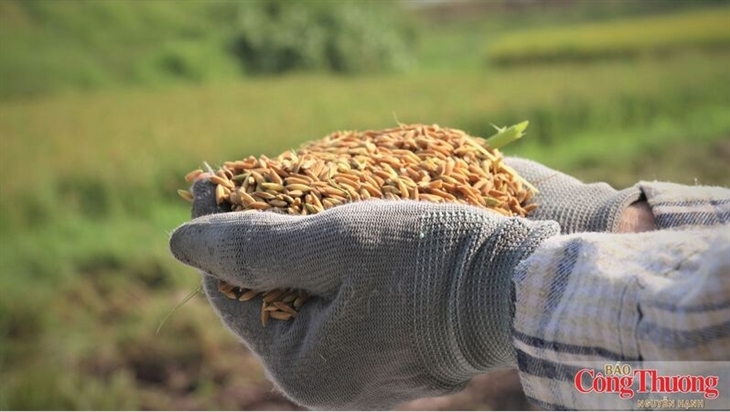
AsemconnectVietnam - World rice prices have risen again, but supply remains abundant. Increased export competition forces Vietnamese businesses to improve quality and diversify markets to maintain their competitive advantage.
According to the latest report from Vietnam Food Association (VFA), Oryza White Rice Index (WRI) ended the last week of July 2026 at US$432/tonne, an increase of US$4/ton compared to the previous week and US$15/tonne compared to a month earlier. This development reflects the recovery trend of export rice prices on the international market. In addition, the International Grains Council (IGC) forecasts that in the 2026/2027 crop year, supply will be abundant with a production of 545 million tonnes, while consumption will be around 543 million tonnes. Global rice trade is projected to reach a record 62 million tons, while inventories are expected to increase to 199 million tons, mainly due to large supplies from India.
Weather conditions continue to be a notable variable. El Niño is projected to strengthen in the second half of 2026, combined with the positive phase of the Indian Ocean Dipole (IOD), potentially increasing drought in Southeast Asia and impacting rice production in many countries in the region. Meanwhile, the gradual restoration of shipping through the Strait of Hormuz is easing pressure on fertilizer and energy supply chains. Global urea and oil prices are trending downwards, contributing to lower input costs for agricultural production, although shipping and maritime insurance costs remain high.
In major importing countries, trend towards ensuring food security continues to be strengthened. Indonesia currently possesses rice reserves exceeding 5 million tonnes, its highest level in history, and is projected to be import-free in 2026 thanks to strong domestic production growth. According to the FAO, the country has become the largest rice producer in Southeast Asia and the fourth largest in the world.
Meanwhile, the Philippines remains a major import market, with the US Department of Agriculture (USDA) forecasting that the country will import approximately 5.2 million tonnes of rice in the 2026/2027 crop year to compensate for domestic supply shortages. However, the Philippine government continues to implement various measures to stabilize prices and increase domestic procurement to reduce dependence on imports.
Among rice exporting countries, India continues to strengthen its position with 5% broken rice priced at around US$351/tonne, maintaining a competitive advantage thanks to abundant supply and over 1.15 million tonnes of rice awaiting export. Meanwhile, price of 5% broken rice from Thailand increased to US$482/tonne, while Pakistan reached approximately US$403/tonne.
For Vietnam, global market presents both opportunities and challenges. Import demand in many markets remains positive, but competitive pressure from India's low-cost supply and increasing trend of food self-sufficiency in many countries will affect export prospects.
According to Department of Crop Production and Plant Protection (Ministry of Agriculture and Environment), as of June 22nd, provinces in the Mekong Delta have planted over 1.076 million hectares of summer-autumn rice, reaching nearly 87% of the plan. The harvested area is approximately 123,000 hectares, with an estimated yield of 765,000 tonnes, providing a supply for exports in the coming months.
In context of continued fluctuations in global rice market, Vietnamese export businesses are advised to closely monitor weather developments, trade policies and demand from key markets to proactively plan procurement, processing and export, while improving quality and diversifying markets to maintain competitiveness.
Source: Vitic/ congthuong.vn
Weather conditions continue to be a notable variable. El Niño is projected to strengthen in the second half of 2026, combined with the positive phase of the Indian Ocean Dipole (IOD), potentially increasing drought in Southeast Asia and impacting rice production in many countries in the region. Meanwhile, the gradual restoration of shipping through the Strait of Hormuz is easing pressure on fertilizer and energy supply chains. Global urea and oil prices are trending downwards, contributing to lower input costs for agricultural production, although shipping and maritime insurance costs remain high.
In major importing countries, trend towards ensuring food security continues to be strengthened. Indonesia currently possesses rice reserves exceeding 5 million tonnes, its highest level in history, and is projected to be import-free in 2026 thanks to strong domestic production growth. According to the FAO, the country has become the largest rice producer in Southeast Asia and the fourth largest in the world.
Meanwhile, the Philippines remains a major import market, with the US Department of Agriculture (USDA) forecasting that the country will import approximately 5.2 million tonnes of rice in the 2026/2027 crop year to compensate for domestic supply shortages. However, the Philippine government continues to implement various measures to stabilize prices and increase domestic procurement to reduce dependence on imports.
Among rice exporting countries, India continues to strengthen its position with 5% broken rice priced at around US$351/tonne, maintaining a competitive advantage thanks to abundant supply and over 1.15 million tonnes of rice awaiting export. Meanwhile, price of 5% broken rice from Thailand increased to US$482/tonne, while Pakistan reached approximately US$403/tonne.
For Vietnam, global market presents both opportunities and challenges. Import demand in many markets remains positive, but competitive pressure from India's low-cost supply and increasing trend of food self-sufficiency in many countries will affect export prospects.
According to Department of Crop Production and Plant Protection (Ministry of Agriculture and Environment), as of June 22nd, provinces in the Mekong Delta have planted over 1.076 million hectares of summer-autumn rice, reaching nearly 87% of the plan. The harvested area is approximately 123,000 hectares, with an estimated yield of 765,000 tonnes, providing a supply for exports in the coming months.
In context of continued fluctuations in global rice market, Vietnamese export businesses are advised to closely monitor weather developments, trade policies and demand from key markets to proactively plan procurement, processing and export, while improving quality and diversifying markets to maintain competitiveness.
Source: Vitic/ congthuong.vn
A fresh approach to industrial development
Decrees detailing Law on trade promotion activities consolidated
Increased output drives automotive industry growth
Trend of FDI import growth - positive signal for production and exports
Strategy to turn lobster into a billion-dollar export industry
Seafood export boost, Chinese market increases by nearly 39%
Unprecedented tax incentives proposed to boost Vietnam's gaming industry
Fruit and vegetable exports surpass $1bln monthly milestone for the first time
Expectations for easier IPO listing requirements
Electronics and phone exports drive Vietnam’s trade growth
Steel exports fell in volume, rose in value in first half of 2026
Vietnam’s exports to Malaysia saw growth in first half of 2026
Quang Tri to tackle 55 delayed projects
Vietnam remains a promising digital entertainment market
Ministry of Industry and Trade issues action plan to ...
The Ministry of Industry and Trade (MoIT) has issued an action plan to implement the “GoGlobal Program for 2026-2030,” outlining key ...National Assembly Chairman: Foreign affairs must become a ...
Place preserving memories of President Ho Chi Minh in ...
Vietnamese leaders pay tribute to President Ho Chi Minh on ...
Plan on boosting export of Hanoi City in a period of ...
To organize synchronized and effective implementation of key tasks and solutions of the Politburo's Resolutions, the ...Inter-sectoral legal support program for small and ...
General plan task of Can Tho City until 2050 with a vision ...
