


Transparency in supply chain to maintain growth momentum of wood export
Friday, July 17,2026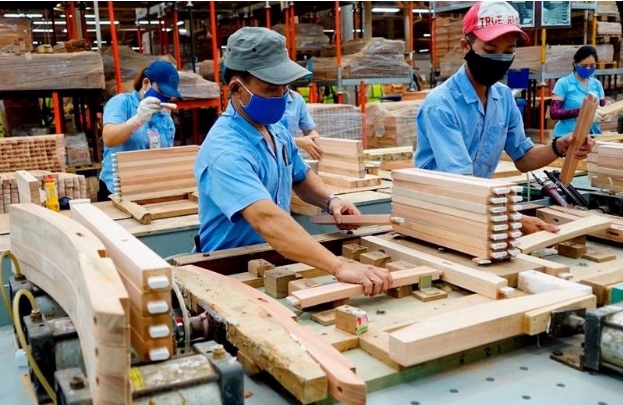
AsemconnectVietnam - Global wood trade is changing, forcing Vietnamese businesses to strengthen traceability and meet sustainability standards to maintain export growth momentum.
Wood trade is growing, but market pressure is increasing
Vietnam has risen to become one of the world's major wood processing and export centers. However, along with growth in trade scale come increasingly stringent requirements from importing markets, especially regarding legality of wood sources, traceability and sustainable development. In this context, traceability is no longer an option but has become a mandatory condition for timber industry to maintain its position in the international market.
In an interview with Industry and Trade Newspaper, Mr. To Xuan Phuc, Executive Director of Forestry Policy, Finance and Trade Program at Forest Trends, stated that Vietnamese timber industry is currently formed from two main sources of raw materials: imported timber and domestically produced timber. Each year, Vietnam imports approximately 5-6 million cubic meters of round and sawn timber to meet needs of export processing as well as timber type requirements of various markets. Of this, about 70% of timber is imported from countries with developed forest management systems such as the United States, Canada, the European Union, Australia, and New Zealand; the remainder comes from some countries in the Mekong sub-region and Africa.
Conversely, domestic raw materials mainly come from plantation timber, rubber wood and scattered trees. Policy of not exploiting natural forests helps to move all raw materials for production towards greater legality and sustainability. This raw material creates many key export product groups such as furniture, plywood, wood chips, wood pellets, etc.
According to Mr. To Xuan Phuc, Vietnam's wood export turnover has maintained an upward trend for many years, despite impact of Covid-19 pandemic and global trade fluctuations. Currently, the United States remains the largest market, accounting for about 55% of Vietnam's total wood export turnover, followed by Japan, China, European Union and South Korea. Each market has different requirements regarding product types and raw materials. According to Mr. To Xuan Phuc, while the United States focuses on high value-added products such as furniture and wooden chairs, China mainly imports wood chips; Japan and South Korea focus on wood pellets, wood chips and industrial wood products. This shows that Vietnam's timber supply chain is becoming increasingly closely aligned with the specific requirements of each market.
Alongside opportunities for trade expansion comes increasing pressure from new regulations. The VPA/FLEGT agreement with European Union, EU's Regulation on Deforestation (EUDR), agreement on legal timber with the United States and the UK's roadmap to combat deforestation all share requirement that businesses prove legal origin of their raw materials. In particular, EUDR requires traceability to each logging plot, fully identifying geographical location, owner and all relevant information regarding source of the raw materials. According to Mr. Phuc, this represents a fundamental change in the way the timber industry manages its supply chain.
ASEAN needs to cooperate to build a transparent supply chain.
A noteworthy point highlighted by Mr. To Xuan Phuc is that scale of intra-ASEAN timber trade remains quite modest compared to its potential. By 2025, total export value of timber and wood products from Vietnam to ASEAN will only reach less than US$600 million, while total export value of entire industry will reach nearly US$17 billion. Indonesia is Vietnam's largest market in the region, followed by Thailand, Singapore, and Cambodia. On import side, Vietnam mainly buys round timber and sawn timber from Laos; rubber wood from Thailand; and industrial wood products from Malaysia and Indonesia.
According to Mr. Phuc, challenge lies in the fact that many ASEAN countries have not yet fully established national-level traceability and legality verification systems for timber. This could become a major obstacle to regional trade in the future. “Vietnam has a large demand for rubber wood from Cambodia and Laos. However, if these countries have not established traceability systems, raw materials will face difficulties in participating in production chain for export to major markets,” Mr. Phuc cited, arguing that building and moving towards mutual recognition of traceability systems within ASEAN will not only facilitate intra-regional trade but also help the entire region better meet increasingly stringent international standards.
From a business perspective, Mr. Phung Quoc Man, Chairman of Ho Chi Minh City Handicraft and Wood Processing Association (HAWA), noted that ASEAN holds a significant position on global wood and furniture industry map. However, advantage in production capacity will no longer be sufficient if businesses fail to meet requirements regarding legality of wood sources, traceability, forest certification and environmental and social responsibility. "Sustainable development is no longer an option but a prerequisite for ASEAN businesses to participate in the global supply chain. This is also an opportunity to increase added value, competitiveness, and build a common image of the ASEAN wood industry in the international market", Mr. Phung Quoc Man emphasized.
According to industry experts, competitiveness of Vietnam's wood industry in the new phase is no longer solely based on cost or production capacity. Ability to demonstrate legality of raw materials, transparency in supply chain and compliance with sustainable development standards is becoming new "passport" for wood trade. Amidst increasingly stringent international regulations, ASEAN's strengthening of linkages, harmonization of traceability systems and enhancement of supply chain governance capacity will be decisive factors for the region to maintain its position in global timber trade.
Source: Vitic/ congthuong.vn
Vietnam has risen to become one of the world's major wood processing and export centers. However, along with growth in trade scale come increasingly stringent requirements from importing markets, especially regarding legality of wood sources, traceability and sustainable development. In this context, traceability is no longer an option but has become a mandatory condition for timber industry to maintain its position in the international market.
In an interview with Industry and Trade Newspaper, Mr. To Xuan Phuc, Executive Director of Forestry Policy, Finance and Trade Program at Forest Trends, stated that Vietnamese timber industry is currently formed from two main sources of raw materials: imported timber and domestically produced timber. Each year, Vietnam imports approximately 5-6 million cubic meters of round and sawn timber to meet needs of export processing as well as timber type requirements of various markets. Of this, about 70% of timber is imported from countries with developed forest management systems such as the United States, Canada, the European Union, Australia, and New Zealand; the remainder comes from some countries in the Mekong sub-region and Africa.
Conversely, domestic raw materials mainly come from plantation timber, rubber wood and scattered trees. Policy of not exploiting natural forests helps to move all raw materials for production towards greater legality and sustainability. This raw material creates many key export product groups such as furniture, plywood, wood chips, wood pellets, etc.
According to Mr. To Xuan Phuc, Vietnam's wood export turnover has maintained an upward trend for many years, despite impact of Covid-19 pandemic and global trade fluctuations. Currently, the United States remains the largest market, accounting for about 55% of Vietnam's total wood export turnover, followed by Japan, China, European Union and South Korea. Each market has different requirements regarding product types and raw materials. According to Mr. To Xuan Phuc, while the United States focuses on high value-added products such as furniture and wooden chairs, China mainly imports wood chips; Japan and South Korea focus on wood pellets, wood chips and industrial wood products. This shows that Vietnam's timber supply chain is becoming increasingly closely aligned with the specific requirements of each market.
Alongside opportunities for trade expansion comes increasing pressure from new regulations. The VPA/FLEGT agreement with European Union, EU's Regulation on Deforestation (EUDR), agreement on legal timber with the United States and the UK's roadmap to combat deforestation all share requirement that businesses prove legal origin of their raw materials. In particular, EUDR requires traceability to each logging plot, fully identifying geographical location, owner and all relevant information regarding source of the raw materials. According to Mr. Phuc, this represents a fundamental change in the way the timber industry manages its supply chain.
ASEAN needs to cooperate to build a transparent supply chain.
A noteworthy point highlighted by Mr. To Xuan Phuc is that scale of intra-ASEAN timber trade remains quite modest compared to its potential. By 2025, total export value of timber and wood products from Vietnam to ASEAN will only reach less than US$600 million, while total export value of entire industry will reach nearly US$17 billion. Indonesia is Vietnam's largest market in the region, followed by Thailand, Singapore, and Cambodia. On import side, Vietnam mainly buys round timber and sawn timber from Laos; rubber wood from Thailand; and industrial wood products from Malaysia and Indonesia.
According to Mr. Phuc, challenge lies in the fact that many ASEAN countries have not yet fully established national-level traceability and legality verification systems for timber. This could become a major obstacle to regional trade in the future. “Vietnam has a large demand for rubber wood from Cambodia and Laos. However, if these countries have not established traceability systems, raw materials will face difficulties in participating in production chain for export to major markets,” Mr. Phuc cited, arguing that building and moving towards mutual recognition of traceability systems within ASEAN will not only facilitate intra-regional trade but also help the entire region better meet increasingly stringent international standards.
From a business perspective, Mr. Phung Quoc Man, Chairman of Ho Chi Minh City Handicraft and Wood Processing Association (HAWA), noted that ASEAN holds a significant position on global wood and furniture industry map. However, advantage in production capacity will no longer be sufficient if businesses fail to meet requirements regarding legality of wood sources, traceability, forest certification and environmental and social responsibility. "Sustainable development is no longer an option but a prerequisite for ASEAN businesses to participate in the global supply chain. This is also an opportunity to increase added value, competitiveness, and build a common image of the ASEAN wood industry in the international market", Mr. Phung Quoc Man emphasized.
According to industry experts, competitiveness of Vietnam's wood industry in the new phase is no longer solely based on cost or production capacity. Ability to demonstrate legality of raw materials, transparency in supply chain and compliance with sustainable development standards is becoming new "passport" for wood trade. Amidst increasingly stringent international regulations, ASEAN's strengthening of linkages, harmonization of traceability systems and enhancement of supply chain governance capacity will be decisive factors for the region to maintain its position in global timber trade.
Source: Vitic/ congthuong.vn
Vietnam rice market on July 17, 2026: Prices fluctuated as trading remained slow
Vietnam's Every Half Coffee Roasters raises $8 million in Series A funding
Six banks syndicate over $1 bln for HCMC-Trung Luong-My Thuan expressway expansion
Positive factors backed strong FDI growth in first half of 2026
Decrees detailing Law on trade promotion activities consolidated
Vietnam's corn imports increased sharply in first half of 2026
Industry recorded highest growth in first half of 2026
Vietnam - Canada's reliable partner in CPTPP
Exports and imports created momentum for double-digit growth
Agricultural commodity prices on July 14: King mandarin prices surge
EU and Japan raise SPS regulations, businesses need to proactively adapt
Traceability: a digital platform enhancing competitiveness of Vietnamese agricultural products
Trend of FDI import growth - positive signal for production and exports
Paper exports increased in first half of 2026
Ministry of Industry and Trade issues action plan to ...
The Ministry of Industry and Trade (MoIT) has issued an action plan to implement the “GoGlobal Program for 2026-2030,” outlining key ...National Assembly Chairman: Foreign affairs must become a ...
Place preserving memories of President Ho Chi Minh in ...
Vietnamese leaders pay tribute to President Ho Chi Minh on ...

Plan on boosting export of Hanoi City in a period of ...
To organize synchronized and effective implementation of key tasks and solutions of the Politburo's Resolutions, the ...Inter-sectoral legal support program for small and ...
General plan task of Can Tho City until 2050 with a vision ...
