


Nam Viet (ANV): Profits under pressure from transportation costs
Tuesday, July 21,2026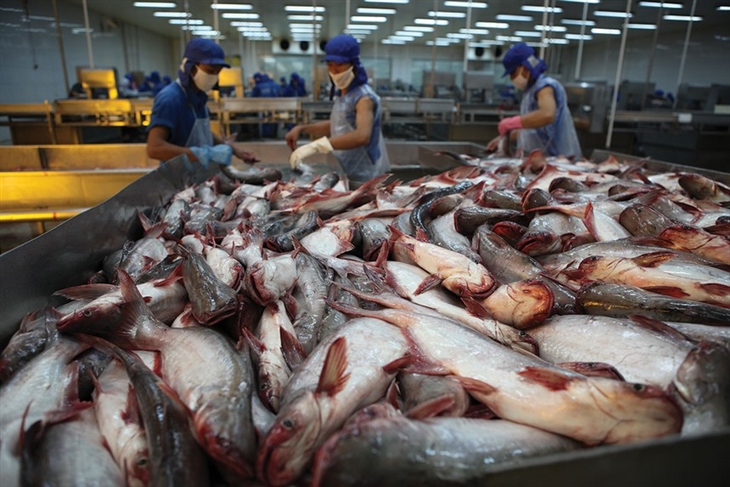
AsemconnectVietnam - After a year of explosive growth in 2025, Nam Viet Joint Stock Company enters 2026 with high expectations. However, rising sea freight and input material costs, along with competitive pressure in the Chinese market, are making the goal of maintaining profit margins for this pangasius company more challenging.
Stock Prices Reflect Short-Term Pressure
Although the VN-Index maintained high levels in the first half of 2026 thanks to large-cap stocks, many mid-cap stocks continued to hit lows. Nam Viet Joint Stock Company (ANV) is a prime example of this.
From October 13, 2025 to July 7, 2026, ANV's share price plummeted by 37.3%, falling from VND32,280 per share to VND20,250 per share and currently trading below the 200-day moving average (MA200). Liquidity for this stock has also sharply decreased, reflecting the cautious sentiment of investors.
The decline in the stock price is not purely a technical trend, but also partly reflects the company's business results. At the 2026 Annual General Meeting, Nam Viet's management acknowledged that after-tax profit for the first six months of the year is expected to decline compared to the same period last year. The main reason is the escalating shipping costs and input material prices due to geopolitical tensions in the Middle East. However, the company expects business results to improve in the second half of the year.
In light of these fluctuations, BIDV Securities Company (BSC) has lowered its forecast for Nam Viet's parent company's after-tax profit in 2026 by approximately 9.3% compared to its previous forecast. According to this analyst's estimates, Nam Viet's revenue in 2026 could reach approximately VND7,720 billion (an 11% increase compared to 2025) and after-tax profit is expected to reach VND1,076 billion (an 8% increase).
BSC also adjusted down Nam Viet's expected gross profit margin from 24.1% to 23.5% due to the price of fishmeal protein sometimes doubling compared to the same period last year. In addition, the net profit margin is also under pressure due to a 30-50% increase in sea freight costs, an extended shipping time of 20-25 days, and the unresolved shortage of refrigerated containers. Conversely, BSC expects the prices of fish fry and animal feed to cool down in the second half of the year as tensions in the Middle East ease and world oil prices fall.
The Efficiency Challenge from Export Markets
Nam Viet had high expectations for a new growth cycle when it returned to the US market in 2022. At that time, the company expected that re-exploiting this high-margin market would help it make a strong breakthrough alongside traditional markets such as China and Europe. This is also the area where Nam Viet's major competitor, Vinh Hoan (VHC), had asserted its leading position for many years.
However, the actual results in the following years did not meet expectations. In 2022, thanks to the strong increase in demand for stockpiling goods after the Covid-19 pandemic, Nam Viet's General Director, Mr. Doan Toi, set an ambitious target of VND1,000 billion in profit. However, at the end of the fiscal year, the company only recorded approximately VND674 billion in after-tax profit, reaching 67% of the plan.
During the period of 2023-2024, difficulties surrounded the company, causing a sharp decline in profits, reaching only VND64 billion and VND79 billion respectively, corresponding to a mere 21% completion of the plan. It was not until 2025 that Nam Viet recorded a breakthrough again with revenue reaching VND6,952 billion and profit reaching VND1,152 billion, far exceeding the set targets.
Entering 2026, the company continues to set growth targets with revenue of VND7,700 billion and pre-tax profit of VND1,260 billion, representing increases of approximately 11% and 9% respectively compared to 2025.
As of the end of Q1/2026, Nam Viet's financial report recorded approximately VND611 billion in cash and short-term financial investments. Meanwhile, outstanding loans amounted to nearly VND1,818 billion, equivalent to 48.8% of equity. Notably, the cash flow from business operations in Q1/2026 was negative approximately VND175 billion, due to a resurgence in accounts receivable and inventory.
Currently, Nam Viet exports to over 100 countries and maintains a closed-loop production chain model, being 100% self-sufficient in animal feed and raw fish materials. The company owns 10 feed production lines with a capacity of over 1,000 tons/day, along with a farming system comprising 14 directly owned farming areas (152 hectares) and nearly 600 hectares of farming area at its subsidiary, Nam Viet - Binh Phu. Simultaneously, 4 processing plants are in operation with a total designed capacity of 1,000 tons of raw materials/day.
"Double Pressure" in the Market of a Billion People
According to data from the Vietnam Association of Seafood Processing and Export (VASEP), pangasius exports in June 2026 reached approximately US$209 million, an increase of nearly 8% compared to the same period last year. For the first six months of the year, the export value reached approximately US$1.1 billion, an increase of over 12% and accounting for nearly 20% of the country's total seafood export value. This shows that global demand for pangasius remains relatively positive. Although consumers in many markets tend to save on spending and shift to more affordable protein products, Vietnamese pangasius is still preferred due to its price advantages, large supply, and flexible processing capabilities for various distribution channels.
However, VASEP also warned that logistics costs, especially global refrigerated container freight, are a major obstacle for the seafood industry in the second half of 2026. Any fluctuations in fuel surcharges, insurance, or port congestion directly erode the profit margins of export businesses.
Currently, global freight indices such as the Drewry World Container Index and SCFI are high as the peak shipping season arrives earlier than usual due to US importers accelerating the collection and stockpiling of goods to avoid new tax policies. For Vietnamese seafood businesses, the most significant impact is on routes to the US and Europe, where refrigerated transport costs are already higher than for dry goods and are prone to various surcharges.
Nam Viet does not face direct pressure from the US route like Vinh Hoan due to its market structure heavily focused on China, but the company is facing another challenge: fierce competition from domestic substitute products from China, particularly tilapia. When China's tilapia exports faced difficulties, this low-priced product line was heavily consumed in the domestic market, creating direct competitive pressure on the selling price and market share of Vietnamese pangasius.
In other words, Nam Viet is facing a double pressure: rising input logistics costs while output prices are constrained by competitive pressure.
Nam Viet's biggest strength at this time is its self-sufficient supply chain, which helps minimize the risk of raw material price fluctuations compared to purely trading competitors. In addition, its consolidated farming land area of 752 hectares is a very valuable asset if valued at current investment costs.
In the short term, the ability to pass on some transportation costs to the selling price and maintain market share in China will be key to determining Nam Viet's valuation. If shipping costs cool down, the journey to regain the company's previous profit peaks and the recovery of ANV shares may be shortened.
N.Nga
Source: VITIC/Bao Tai chinh – Dau tu
HSG estimated to have completed 114% of its profit plan for the entire 2025-2026 fiscal year in 9 months
DSC achieved VND333 billion revenue in 6 months, maintaining growth in core segments
Vietbank (VBB) reached VND923 billion profit in 6 months, up 79.4% yoy
Vietcombank (VCB) accompanies national goals, fostering new growth drivers
Transparent governance: A sustainable foundation in PVFCCo – Phu My's ESG journey
MSR is realizing a global strategic materials platform as AI drives the semiconductor race
ACV achieves nearly VND10,750 billion revenue in 6 months
PVOIL (OIL): Overcoming difficulties, seizing opportunities, striving to complete the 2026 plan
Hoa Phat (HPG) produced 7 million tons of steel in the first half of 2026
Haxaco (HAX) estimates over VND60 billion profit in 6 months, expecting to complete annual plan
PVFCCo - Phu My (DPM) achieves 80% of annual NPK fertilizer sales target
Hoa Sen (HSG) expands in the Indian market
Hai An (HAH) plans to add VND193.3 billion to its affiliated company
TCM estimates profit of over VND94 billion in 5 months
