


Traceability: a digital platform enhancing competitiveness of Vietnamese agricultural products
Wednesday, July 15,2026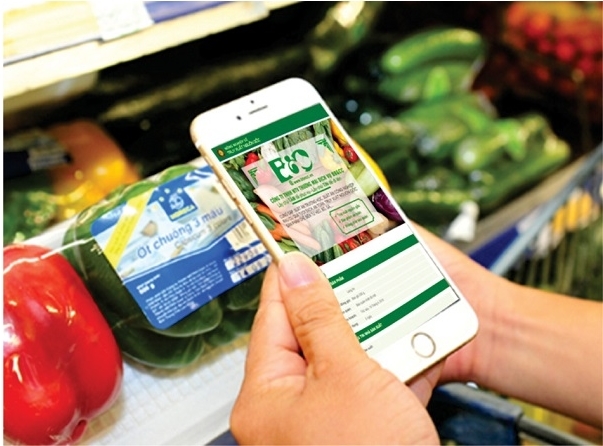
AsemconnectVietnam - Agricultural product traceability system is operational, creating a unified data platform to support businesses in meeting market standards and promoting exports.
From market demands to national data infrastructure
After many years of traceability being implemented sporadically in each locality, each industry or according to specific requirements of each importing market, Ministry of Agriculture and Environment's official launch of Agricultural Product Traceability System marks a shift from a decentralized approach to a unified national data platform.
This is not simply a new technological system, but rather a step towards perfecting the "soft infrastructure" of agricultural sector in context of major markets such as China, EU, the US and Japan increasingly tightening regulations on supply chain transparency, food safety and producer responsibility.
In reality, many agricultural shipments have faced difficulties not because of product quality, but because of a lack of data proving origin, growing region, packaging facility or the inability to trace the product when requested by importers. Therefore, building a unified data system is expected to address the biggest bottleneck in the agricultural sector today: scattered, uninterconnected and difficult-to-verify data.
System is built on an open architecture, integrating blockchain technology, electronic signatures, product identification according to GS1 standards and GS1 Digital Link QR codes. More importantly, it is a shared platform connecting management agencies, localities, businesses, cooperatives and traceability solution providers.
After pilot phase, system has integrated over 18,500 products belonging to 181 product groups from 170 businesses in 24 localities. In particular, six containers of durian were successfully exported to China through the full-process electronic traceability system, demonstrating the practical effectiveness of the model.
Deputy Prime Minister Ho Quoc Dung emphasized that traceability is no longer a requirement for only a few product sectors but has become an inevitable trend in quality management and market development. According to Deputy Prime Minister, if Vietnam wants to build a modern agricultural sector, it must simultaneously do two things well: build agricultural product brands and ensure transparency throughout the entire production process through traceability.
Notably, Deputy Prime Minister requested that management agencies absolutely not turn traceability into a new administrative procedure. Instead, the system must become a tool to support businesses in improving quality, reducing costs, and expanding markets.
For data to be "alive," businesses and localities must work together.
If management agencies consider this digital platform of agricultural sector, businesses will see it as a "common language" to connect with the market. As one of the first businesses to connect to the national system, Ms. Do Thi Thu Nga, Director of Legal and External Affairs at Masan MEATLife Joint Stock Company, said that the company has completed data connection for traceability of chicken meat products and is continuing to integrate its MEATDeli chilled meat lines into the system.
According to Ms. Nga, applying a unified traceability standard will help businesses reduce situation where each market and locality uses a different platform; while improving management efficiency, increasing transparency and competitiveness of the entire industry.
From perspective of system development unit, Mr. To Nguyen Thanh, representative of Netacom Company, said that after six months of implementation, platform has connected with eight traceability software providers, 16 export businesses and many large businesses such as Thai Binh Seed, Loc Troi, Manh Thien Vuong, AHC; and is also interconnected with localities such as Hanoi, Thai Nguyen, Hung Yen, Quang Ninh and Dak Lak.
According to Mr. Thanh, the system is designed to serve approximately 200,000 businesses, 9 million farming households and cooperatives, storing about 1.5 billion products annually and processing about 7.7 billion traceability scans. This is foundation for nationwide expansion.
From a local perspective, Mr. Ta Van Tuong, Deputy Director of Hanoi Department of Agriculture and Environment, assessed that linking with national system will help businesses proactively update data, while also creating a basis for quality control for nearly 1,500 food supply chains supplying Hanoi market.
According to Mr. Tuong, the greatest value of system lies not only in its traceability but also in the formation of a "correct, complete, clean, and live" data source. When businesses update data at the time of occurrence, management agencies can gradually reduce manual reporting methods, moving towards providing online public services on the same platform.
Based on practical implementation, Hanoi also recommended that Ministry of Agriculture and Environment continue to improve the mechanism for connecting and sharing data between central and local levels; and at the same time, develop a roadmap to expand the application of traceability to more agricultural product groups.
Official launch of agricultural product traceability system is only the beginning. The effectiveness of the platform will depend on the level of participation of businesses, cooperatives, localities, and producers in regularly, accurately, and transparently updating data.
In context of increasing technical barriers, traceability is no longer just a "passport" for each export shipment but is becoming the digital infrastructure of modern agriculture. When data is standardized and interconnected, not only will businesses gain a competitive advantage, but management agencies will also have a more effective monitoring tool, contributing to enhancing the reputation and value of Vietnamese agricultural products in the international market.
Source: Vitic/ congthuong.vn
After many years of traceability being implemented sporadically in each locality, each industry or according to specific requirements of each importing market, Ministry of Agriculture and Environment's official launch of Agricultural Product Traceability System marks a shift from a decentralized approach to a unified national data platform.
This is not simply a new technological system, but rather a step towards perfecting the "soft infrastructure" of agricultural sector in context of major markets such as China, EU, the US and Japan increasingly tightening regulations on supply chain transparency, food safety and producer responsibility.
In reality, many agricultural shipments have faced difficulties not because of product quality, but because of a lack of data proving origin, growing region, packaging facility or the inability to trace the product when requested by importers. Therefore, building a unified data system is expected to address the biggest bottleneck in the agricultural sector today: scattered, uninterconnected and difficult-to-verify data.
System is built on an open architecture, integrating blockchain technology, electronic signatures, product identification according to GS1 standards and GS1 Digital Link QR codes. More importantly, it is a shared platform connecting management agencies, localities, businesses, cooperatives and traceability solution providers.
After pilot phase, system has integrated over 18,500 products belonging to 181 product groups from 170 businesses in 24 localities. In particular, six containers of durian were successfully exported to China through the full-process electronic traceability system, demonstrating the practical effectiveness of the model.
Deputy Prime Minister Ho Quoc Dung emphasized that traceability is no longer a requirement for only a few product sectors but has become an inevitable trend in quality management and market development. According to Deputy Prime Minister, if Vietnam wants to build a modern agricultural sector, it must simultaneously do two things well: build agricultural product brands and ensure transparency throughout the entire production process through traceability.
Notably, Deputy Prime Minister requested that management agencies absolutely not turn traceability into a new administrative procedure. Instead, the system must become a tool to support businesses in improving quality, reducing costs, and expanding markets.
For data to be "alive," businesses and localities must work together.
If management agencies consider this digital platform of agricultural sector, businesses will see it as a "common language" to connect with the market. As one of the first businesses to connect to the national system, Ms. Do Thi Thu Nga, Director of Legal and External Affairs at Masan MEATLife Joint Stock Company, said that the company has completed data connection for traceability of chicken meat products and is continuing to integrate its MEATDeli chilled meat lines into the system.
According to Ms. Nga, applying a unified traceability standard will help businesses reduce situation where each market and locality uses a different platform; while improving management efficiency, increasing transparency and competitiveness of the entire industry.
From perspective of system development unit, Mr. To Nguyen Thanh, representative of Netacom Company, said that after six months of implementation, platform has connected with eight traceability software providers, 16 export businesses and many large businesses such as Thai Binh Seed, Loc Troi, Manh Thien Vuong, AHC; and is also interconnected with localities such as Hanoi, Thai Nguyen, Hung Yen, Quang Ninh and Dak Lak.
According to Mr. Thanh, the system is designed to serve approximately 200,000 businesses, 9 million farming households and cooperatives, storing about 1.5 billion products annually and processing about 7.7 billion traceability scans. This is foundation for nationwide expansion.
From a local perspective, Mr. Ta Van Tuong, Deputy Director of Hanoi Department of Agriculture and Environment, assessed that linking with national system will help businesses proactively update data, while also creating a basis for quality control for nearly 1,500 food supply chains supplying Hanoi market.
According to Mr. Tuong, the greatest value of system lies not only in its traceability but also in the formation of a "correct, complete, clean, and live" data source. When businesses update data at the time of occurrence, management agencies can gradually reduce manual reporting methods, moving towards providing online public services on the same platform.
Based on practical implementation, Hanoi also recommended that Ministry of Agriculture and Environment continue to improve the mechanism for connecting and sharing data between central and local levels; and at the same time, develop a roadmap to expand the application of traceability to more agricultural product groups.
Official launch of agricultural product traceability system is only the beginning. The effectiveness of the platform will depend on the level of participation of businesses, cooperatives, localities, and producers in regularly, accurately, and transparently updating data.
In context of increasing technical barriers, traceability is no longer just a "passport" for each export shipment but is becoming the digital infrastructure of modern agriculture. When data is standardized and interconnected, not only will businesses gain a competitive advantage, but management agencies will also have a more effective monitoring tool, contributing to enhancing the reputation and value of Vietnamese agricultural products in the international market.
Source: Vitic/ congthuong.vn
Paper exports increased in the first half of 2026
Industrial production and manufacturing sector showed impressive growth
In the first half of 2026, agricultural, forestry and aquatic product export reached nearly US$36 billion
Building a strategy to turn tilapia into a billion-dollar export industry
In the first 6 months, total import and export turnover exceeded 500 billion USD, an increase of 27.1%
Wood export contribute to maintain double-digit export growth
Quantum technology development and opportunities for Vietnam
Vietnam sees growth potential for seafood exports to EFTA markets
Auto sales rise 15% in first half as hybrid vehicle demand surges
Three most promising sectors from year-end growth drivers
Industry and domestic consumption drive growth in last months of 2026
Exports and imports created momentum for double-digit growth
FDI drives Nghe An’s export growth
Nghe An approves 2,000-unit social housing project
Ministry of Industry and Trade issues action plan to ...
The Ministry of Industry and Trade (MoIT) has issued an action plan to implement the “GoGlobal Program for 2026-2030,” outlining key ...National Assembly Chairman: Foreign affairs must become a ...
Place preserving memories of President Ho Chi Minh in ...
Vietnamese leaders pay tribute to President Ho Chi Minh on ...

Plan on boosting export of Hanoi City in a period of ...
To organize synchronized and effective implementation of key tasks and solutions of the Politburo's Resolutions, the ...Inter-sectoral legal support program for small and ...
General plan task of Can Tho City until 2050 with a vision ...
