


Building a strategy to turn tilapia into a billion-dollar export industry
Tuesday, July 14,2026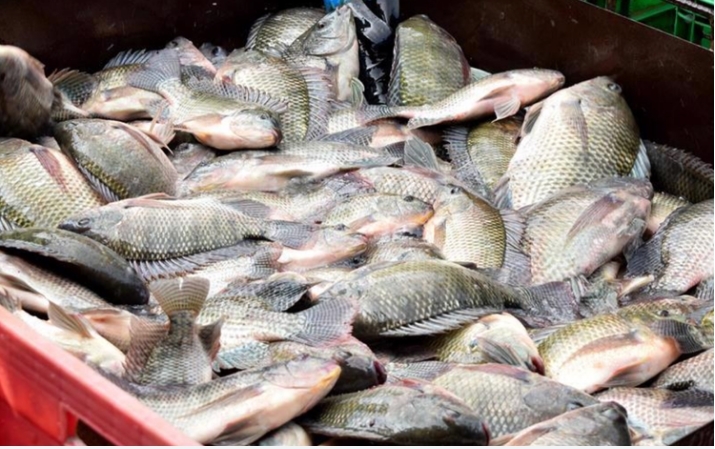
AsemconnectVietnam - Urgently control disease outbreaks, strengthen negotiations and build a strategy to make tilapia a billion-dollar export industry by 2030.
This was requirement of Deputy Minister of Agriculture and Environment Vo Van Hung at a meeting on July 8th to assess situation and implement technical solutions and response scenarios in response to new policy developments from the Brazilian market regarding Vietnamese tilapia export.
Tilapia exports to Brazil are increasing sharply but facing technical pressure
Reporting at the meeting, Mr. Tran Dinh Luan, Director of Fisheries and Fisheries Inspection Department, stated that Vietnamese tilapia industry maintained stable growth during 2015-2025 period. In 2025, production is expected to reach approximately 420,000 tonnes, with an average annual increase of 8.4%. Currently, Vietnam has about 420,000 hectares of specialized farming, 300,000 hectares of integrated farming and approximately 3 million cubic meters of commercial cage farming. Export turnover is also increasing rapidly, from US$17 million in 2023 to US$41 million in 2024 and reaching nearly US$100 million in 2025.
Brazil has emerged as an important market, importing US$26 million worth of Vietnamese tilapia in the first four months of 2026 alone, accounting for approximately 54% of total export turnover of this product. However, recently, Vietnam has been continuously implementing strict control measures related to the TiLV virus.
Specifically, Brazilian Ministry of Agriculture and Livestock requires imported shipments to have certificates confirming they are free of TiLV. In addition, a bill banning import of tilapia has been initially passed by the Brazilian House of Representatives, while several states have also issued measures restricting the circulation and distribution of products from Vietnam.
According to Dr. Ngo Xuan Nam, Deputy Director of SPS Office of Vietnam, at technical meeting of the WTO's SPS Committee, Brazil affirmed that aforementioned bill has not yet come into legal effect. Brazilian federal government also stated that the states do not have authority to regulate international trade and that Brazilian market remains open to Vietnamese tilapia.
Both sides agreed to continue holding technical meetings to review the disease risk assessment report in accordance with WTO regulations. Brazil is currently awaiting Vietnam's final response regarding the quarantine certificate template.
According to businesses, technical barriers have caused many shipments to experience extended customs clearance times, resulting in storage costs ranging from several hundred million to over one billion VND per shipment. Changes to port of arrival also increase logistics costs by approximately 30%. However, demand in the Brazilian market remains high, leading to an upward trend in export prices. Businesses are continuing to optimize their production chains, while also researching investment in cold storage and developing breeding programs in Brazil to expand long-term cooperation.
Towards goal of billion-dollar exports by 2030
Concluding meeting, Deputy Minister of Agriculture and Environment Vo Van Hung requested that units focus on implementing four key tasks simultaneously. First, Fisheries Inspection Department, in coordination with Department of Animal Husbandry and Veterinary Medicine, should urgently complete the national disease control dossier for tilapia, especially TiLV virus. Simultaneously, a transparent data system on farming areas and breeding stock should be established to serve as a basis for international negotiations.
Deputy Minister also requested increased dialogue with Brazil. Department of International Cooperation needs to coordinate with Ministry of Industry and Trade and Ministry of Foreign Affairs to promptly send an official diplomatic note and at the same time prepare sufficient scientific basis and data to support direct meetings with Brazilian authorities.
In addition, Department of Quality, Processing and Market Development needs to coordinate with Vietnam Association of Seafood Processing and Export (VASEP) to guide businesses in reviewing production processes, improving quality, diversifying products and expanding export markets to reduce dependence on a single market.
Department of Fisheries and Fisheries Inspection is tasked with developing a systematic and long-term plan for development of tilapia industry. The goal is to quickly finalize regulations for each farming method, overcome fragmented production and aim to make tilapia a billion-dollar export industry by 2030.
In context of continuously increasing technical barriers in various markets, close coordination between management agencies, associations, and the business community will be a decisive factor in helping the tilapia industry overcome challenges, enhance competitiveness and sustainably expand export markets.
Source: Vitic/ congthuong.vn
Tilapia exports to Brazil are increasing sharply but facing technical pressure
Reporting at the meeting, Mr. Tran Dinh Luan, Director of Fisheries and Fisheries Inspection Department, stated that Vietnamese tilapia industry maintained stable growth during 2015-2025 period. In 2025, production is expected to reach approximately 420,000 tonnes, with an average annual increase of 8.4%. Currently, Vietnam has about 420,000 hectares of specialized farming, 300,000 hectares of integrated farming and approximately 3 million cubic meters of commercial cage farming. Export turnover is also increasing rapidly, from US$17 million in 2023 to US$41 million in 2024 and reaching nearly US$100 million in 2025.
Brazil has emerged as an important market, importing US$26 million worth of Vietnamese tilapia in the first four months of 2026 alone, accounting for approximately 54% of total export turnover of this product. However, recently, Vietnam has been continuously implementing strict control measures related to the TiLV virus.
Specifically, Brazilian Ministry of Agriculture and Livestock requires imported shipments to have certificates confirming they are free of TiLV. In addition, a bill banning import of tilapia has been initially passed by the Brazilian House of Representatives, while several states have also issued measures restricting the circulation and distribution of products from Vietnam.
According to Dr. Ngo Xuan Nam, Deputy Director of SPS Office of Vietnam, at technical meeting of the WTO's SPS Committee, Brazil affirmed that aforementioned bill has not yet come into legal effect. Brazilian federal government also stated that the states do not have authority to regulate international trade and that Brazilian market remains open to Vietnamese tilapia.
Both sides agreed to continue holding technical meetings to review the disease risk assessment report in accordance with WTO regulations. Brazil is currently awaiting Vietnam's final response regarding the quarantine certificate template.
According to businesses, technical barriers have caused many shipments to experience extended customs clearance times, resulting in storage costs ranging from several hundred million to over one billion VND per shipment. Changes to port of arrival also increase logistics costs by approximately 30%. However, demand in the Brazilian market remains high, leading to an upward trend in export prices. Businesses are continuing to optimize their production chains, while also researching investment in cold storage and developing breeding programs in Brazil to expand long-term cooperation.
Towards goal of billion-dollar exports by 2030
Concluding meeting, Deputy Minister of Agriculture and Environment Vo Van Hung requested that units focus on implementing four key tasks simultaneously. First, Fisheries Inspection Department, in coordination with Department of Animal Husbandry and Veterinary Medicine, should urgently complete the national disease control dossier for tilapia, especially TiLV virus. Simultaneously, a transparent data system on farming areas and breeding stock should be established to serve as a basis for international negotiations.
Deputy Minister also requested increased dialogue with Brazil. Department of International Cooperation needs to coordinate with Ministry of Industry and Trade and Ministry of Foreign Affairs to promptly send an official diplomatic note and at the same time prepare sufficient scientific basis and data to support direct meetings with Brazilian authorities.
In addition, Department of Quality, Processing and Market Development needs to coordinate with Vietnam Association of Seafood Processing and Export (VASEP) to guide businesses in reviewing production processes, improving quality, diversifying products and expanding export markets to reduce dependence on a single market.
Department of Fisheries and Fisheries Inspection is tasked with developing a systematic and long-term plan for development of tilapia industry. The goal is to quickly finalize regulations for each farming method, overcome fragmented production and aim to make tilapia a billion-dollar export industry by 2030.
In context of continuously increasing technical barriers in various markets, close coordination between management agencies, associations, and the business community will be a decisive factor in helping the tilapia industry overcome challenges, enhance competitiveness and sustainably expand export markets.
Source: Vitic/ congthuong.vn
Wood export contribute to maintain double-digit export growth
Quantum technology development and opportunities for Vietnam
Vietnam sees growth potential for seafood exports to EFTA markets
Auto sales rise 15% in first half as hybrid vehicle demand surges
Three most promising sectors from year-end growth drivers
Industry and domestic consumption drive growth in last months of 2026
Exports and imports created momentum for double-digit growth
FDI drives Nghe An’s export growth
Nghe An approves 2,000-unit social housing project
Increasing agricultural export to the United States: a key from supply chain
Vietnam commodities update, July 13: Gold fell, rice export prices steady
Industrial production and manufacturing sector showed impressive growth
Industry and construction: main drivers of 8.18% GDP growth
12 imported groups of items must undergo customs procedures at border gates
Ministry of Industry and Trade issues action plan to ...
The Ministry of Industry and Trade (MoIT) has issued an action plan to implement the “GoGlobal Program for 2026-2030,” outlining key ...National Assembly Chairman: Foreign affairs must become a ...
Place preserving memories of President Ho Chi Minh in ...
Vietnamese leaders pay tribute to President Ho Chi Minh on ...
Plan on boosting export of Hanoi City in a period of ...
To organize synchronized and effective implementation of key tasks and solutions of the Politburo's Resolutions, the ...Inter-sectoral legal support program for small and ...
General plan task of Can Tho City until 2050 with a vision ...
