


Wood export contribute to maintain double-digit export growth
Tuesday, July 14,2026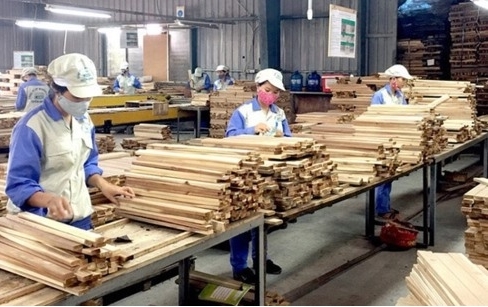
AsemconnectVietnam - As one of Vietnam's major export-oriented industries, wood export not only generate significant foreign exchange revenue but also contribute to reducing trade deficit.
Wood export play a crucial role in export growth
In context of the Government setting a target of double-digit export growth, considering export as one of important drivers of economic growth, the wood industry is expected to continue to make a positive contribution to the country's overall goal.
According to data from Customs Department (Ministry of Finance), exports of wood and wood products in May 2026 reached US$1.4 billion, a decrease of 8.8% compared to April 2026, but an increase of 1.1% compared to May 2025. Of that total, export value of wood products reached US$927.5 million, a decrease of 7.6% compared to April 2026 and a decrease of 7.6% compared to May 2025.
Overall, in the first five months of 2026, export value of wood and wood products reached US$7.02 billion, an increase of 2.9% compared to the same period in 2025.
This result shows that wood industry has maintained stable growth despite many key export markets continuing to face fluctuations in demand and trade regulations.
Growth drivers in recent times have mainly come from raw materials such as wood chips, sawn timber, boards and flooring, along with some products such as wooden-framed chairs. Meanwhile, high-value-added furniture group continues to face difficulties due to slow recovery of orders from traditional markets.
Speaking with a reporter from Industry and Trade Newspaper on the sidelines of the recent conference on promoting double-digit export growth organized by Ministry of Industry and Trade, Mr. Ngo Sy Hoai, Vice President and General Secretary of the Vietnam Wood and Forest Products Association (Viforest), stated that wood industry is currently one of Vietnam's major export-oriented sectors. This achievement is due to the industry's proactive sourcing of over 80% of its raw materials from domestic plantations, significantly reducing imports while maintaining high export turnover.
Mr. Ngo Sy Hoai said that this proactive sourcing of raw materials has helped the industry generate a substantial export surplus, contributing positively to the economy and the country's export growth. However, to maintain its role as a key export sector, wood businesses are facing considerable pressure.
According to Mr. Hoai, rising logistics costs have increased input costs for businesses, leading to increasingly narrow profit margins. Nevertheless, this is a common challenge for many export industries.
For timber industry, greater challenges come from demands of the international market. Businesses must meet increasingly stringent standards regarding timber legality, traceability, green growth and many new regulations from importing markets. "Faced with these pressures, businesses in the industry always encourage each other, working together to adapt and we have overcome them quite well," shared Mr. Ngo Sy Hoai.
Currently, the United States remains the largest export market for Vietnam's timber industry. According to Mr. Ngo Sy Hoai, in 2025, the US will import approximately $21.8 billion worth of indoor and outdoor furniture from 35 countries and territories, with Vietnam exporting about $9 billion. Statistics from Viforest show that currently, about 4-5 out of 10 families in the US use furniture manufactured in Vietnam, from kitchen cabinets and tables and chairs to beds and living room furniture. This demonstrates significant position of the Vietnamese timber industry in this market.
Nevertheless, businesses are quietly seeking new markets while simultaneously refreshing their approaches in traditional markets such as Japan, South Korea and China. According to Customs Department, in the first four months of the year, markets under RCEP Agreement continued to maintain growth momentum with a turnover of nearly $2 billion, an increase of approximately 17%. Meanwhile, export to CPTPP bloc reached over $1 billion, an increase of nearly 8%.
Several Asian markets also recorded positive results. Export to Japan reached over $730 million, an increase of approximately 6%. In the ASEAN region, turnover reached over $122 million, with Cambodia increasing by more than 22% and Laos recording a very high increase of over 278%, although its scale remains modest.
According to experts, trend of market diversification is helping Vietnamese wood businesses gradually reduce their dependence on a few traditional markets. Furthermore, effectively leveraging free trade agreements is creating additional room for growth amidst increasingly fierce international competition.
Tax policies are acting as a "lever" to increase exports by hundreds of millions of dollars.
According to Mr. Ngo Sy Hoai, in current challenging context, one of solutions that can have the quickest impact on export growth is to adjust tax policies to better suit the reality.
He stated that the wood industry has for many years petitioned for abolition of the 25% export tax on sawn timber produced from imported round timber. According to Mr. Hoai's analysis, businesses import round timber from the United States and Europe for processing, sawing, and drying before exporting, but still have to pay this tax. If the policy is adjusted, the industry's export turnover could increase by approximately 400-500 million USD immediately.
In addition, some other tax regulations are also considered unreasonable. According to Mr. Hoai, black wood pellets are currently subject to a 5% export tax, while white wood pellets are taxed at 0%, even though black wood pellets only require an additional heat treatment step to better meet the requirements of markets with higher standards.
Similarly, very thin veneer products with high added value are still subject to a 10% export tax. This discourages almost no businesses from producing them, meaning the State does not collect significant revenue, while businesses lose opportunities to expand production, workers lose jobs, and export turnover does not increase.
In addition, Mr. Ngo Sy Hoai continued to propose adjusting export tax on sawn timber from imported raw materials to 0%; and considering abolishing taxes on black wood pellets and veneer to create favorable conditions for businesses to expand production. It is expected that if these tax policy obstacles are removed, the wood industry could increase its export turnover by approximately 500-700 million USD annually.
Source: Vitic/ congthuong.vn
In context of the Government setting a target of double-digit export growth, considering export as one of important drivers of economic growth, the wood industry is expected to continue to make a positive contribution to the country's overall goal.
According to data from Customs Department (Ministry of Finance), exports of wood and wood products in May 2026 reached US$1.4 billion, a decrease of 8.8% compared to April 2026, but an increase of 1.1% compared to May 2025. Of that total, export value of wood products reached US$927.5 million, a decrease of 7.6% compared to April 2026 and a decrease of 7.6% compared to May 2025.
Overall, in the first five months of 2026, export value of wood and wood products reached US$7.02 billion, an increase of 2.9% compared to the same period in 2025.
This result shows that wood industry has maintained stable growth despite many key export markets continuing to face fluctuations in demand and trade regulations.
Growth drivers in recent times have mainly come from raw materials such as wood chips, sawn timber, boards and flooring, along with some products such as wooden-framed chairs. Meanwhile, high-value-added furniture group continues to face difficulties due to slow recovery of orders from traditional markets.
Speaking with a reporter from Industry and Trade Newspaper on the sidelines of the recent conference on promoting double-digit export growth organized by Ministry of Industry and Trade, Mr. Ngo Sy Hoai, Vice President and General Secretary of the Vietnam Wood and Forest Products Association (Viforest), stated that wood industry is currently one of Vietnam's major export-oriented sectors. This achievement is due to the industry's proactive sourcing of over 80% of its raw materials from domestic plantations, significantly reducing imports while maintaining high export turnover.
Mr. Ngo Sy Hoai said that this proactive sourcing of raw materials has helped the industry generate a substantial export surplus, contributing positively to the economy and the country's export growth. However, to maintain its role as a key export sector, wood businesses are facing considerable pressure.
According to Mr. Hoai, rising logistics costs have increased input costs for businesses, leading to increasingly narrow profit margins. Nevertheless, this is a common challenge for many export industries.
For timber industry, greater challenges come from demands of the international market. Businesses must meet increasingly stringent standards regarding timber legality, traceability, green growth and many new regulations from importing markets. "Faced with these pressures, businesses in the industry always encourage each other, working together to adapt and we have overcome them quite well," shared Mr. Ngo Sy Hoai.
Currently, the United States remains the largest export market for Vietnam's timber industry. According to Mr. Ngo Sy Hoai, in 2025, the US will import approximately $21.8 billion worth of indoor and outdoor furniture from 35 countries and territories, with Vietnam exporting about $9 billion. Statistics from Viforest show that currently, about 4-5 out of 10 families in the US use furniture manufactured in Vietnam, from kitchen cabinets and tables and chairs to beds and living room furniture. This demonstrates significant position of the Vietnamese timber industry in this market.
Nevertheless, businesses are quietly seeking new markets while simultaneously refreshing their approaches in traditional markets such as Japan, South Korea and China. According to Customs Department, in the first four months of the year, markets under RCEP Agreement continued to maintain growth momentum with a turnover of nearly $2 billion, an increase of approximately 17%. Meanwhile, export to CPTPP bloc reached over $1 billion, an increase of nearly 8%.
Several Asian markets also recorded positive results. Export to Japan reached over $730 million, an increase of approximately 6%. In the ASEAN region, turnover reached over $122 million, with Cambodia increasing by more than 22% and Laos recording a very high increase of over 278%, although its scale remains modest.
According to experts, trend of market diversification is helping Vietnamese wood businesses gradually reduce their dependence on a few traditional markets. Furthermore, effectively leveraging free trade agreements is creating additional room for growth amidst increasingly fierce international competition.
Tax policies are acting as a "lever" to increase exports by hundreds of millions of dollars.
According to Mr. Ngo Sy Hoai, in current challenging context, one of solutions that can have the quickest impact on export growth is to adjust tax policies to better suit the reality.
He stated that the wood industry has for many years petitioned for abolition of the 25% export tax on sawn timber produced from imported round timber. According to Mr. Hoai's analysis, businesses import round timber from the United States and Europe for processing, sawing, and drying before exporting, but still have to pay this tax. If the policy is adjusted, the industry's export turnover could increase by approximately 400-500 million USD immediately.
In addition, some other tax regulations are also considered unreasonable. According to Mr. Hoai, black wood pellets are currently subject to a 5% export tax, while white wood pellets are taxed at 0%, even though black wood pellets only require an additional heat treatment step to better meet the requirements of markets with higher standards.
Similarly, very thin veneer products with high added value are still subject to a 10% export tax. This discourages almost no businesses from producing them, meaning the State does not collect significant revenue, while businesses lose opportunities to expand production, workers lose jobs, and export turnover does not increase.
In addition, Mr. Ngo Sy Hoai continued to propose adjusting export tax on sawn timber from imported raw materials to 0%; and considering abolishing taxes on black wood pellets and veneer to create favorable conditions for businesses to expand production. It is expected that if these tax policy obstacles are removed, the wood industry could increase its export turnover by approximately 500-700 million USD annually.
Source: Vitic/ congthuong.vn
Vietnam sees growth potential for seafood exports to EFTA markets
Auto sales rise 15% in first half as hybrid vehicle demand surges
Three most promising sectors from year-end growth drivers
Industry and domestic consumption drive growth in last months of 2026
Exports and imports created momentum for double-digit growth
FDI drives Nghe An’s export growth
Nghe An approves 2,000-unit social housing project
Increasing agricultural export to the United States: a key from supply chain
Vietnam commodities update, July 13: Gold fell, rice export prices steady
Industrial production and manufacturing sector showed impressive growth
Industry and construction: main drivers of 8.18% GDP growth
12 imported groups of items must undergo customs procedures at border gates
Rice export in the first half of 2026: maintaining growth
Textile and garment industry achieves approximately US$10 billion trade surplus in the first six months of 2026
