


Plan on boosting export of Hanoi City in a period of 2026-2030
Friday, June 26,2026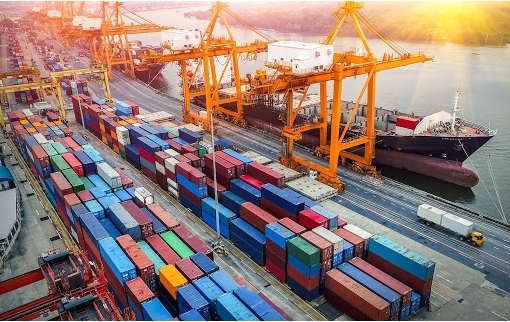
AsemconnectVietnam - To organize synchronized and effective implementation of key tasks and solutions of the Politburo's Resolutions, the Government's directives, guidance of central ministries and agencies and the Resolutions of the City Party Committee and the City People's Council on boosting exports in Hanoi City in 2026-2030 period
I. Purpose and requirements
1. Purpose
To organize synchronized and effective implementation of key tasks and solutions of the Politburo's Resolutions, the Government's directives, guidance of central ministries and agencies and the Resolutions of the City Party Committee and the City People's Council on boosting exports in Hanoi City in 2026-2030 period; to mobilize participation of entire political system, the business community, trade support organizations and the people of the Capital City, including:
- Promoting development of key export enterprises and industries; increasing added value, competitiveness, product quality and export efficiency; linking with application of science and technology, innovation, digital transformation, e-commerce and modern logistics.
- Promoting shift in export structure towards sustainability; Expanding export markets, especially through effectively utilizing new-generation Free Trade Agreements (FTAs); diversifying markets and reducing dependence on a few traditional markets; focusing on boosting direct exports of key products and products with competitive advantages of the City; promoting investment, technology transfer and self-reliance in modern technology in production to improve quality and value of exports of deeply processed products with high technological content; developing product brands.
- Enhancing role of the Capital as a center of economy, science and technology and innovation; promoting regional linkages and participation in global value chains; improving labor productivity and quality of growth.
- Improving investment and business environment; providing maximum support to businesses in trade promotion activities, market information, branding, quality standards, traceability and reducing transaction costs and time.
2. Requirements
- The plan must inherit and select appropriate content from the Central and City's Export Strategy to 2030, while also being consistent with actual production and business conditions of Hanoi.
- Clearly define key focus areas along each axis: export markets, key industries, business groups, e-commerce, logistics, science and technology, digital transformation, trade promotion and policies supporting businesses.
- Tasks and solutions should be developed based on specific tasks assigned and delegated from central ministries and agencies; closely follow socio-economic development orientation of the Central and City; be appropriate to practical situation, focused, effective and feasible.
- Ensure unified direction and assignment of tasks to departments, agencies and units under the City and relevant organizations in implementation of the plan.
- Funding for implementation is guaranteed from the State budget and socialized sources; it must be used economically, efficiently, openly, transparently and in accordance with the law.
- Implementation of the Plan is linked to goal of transforming export growth model towards in-depth development; increasing proportion of processed products, high-tech products and green products; increasing participation of domestic enterprises in supply chain; and linking it with requirements of sustainable development and environmental protection.
II. Advantages and disadvantages, opportunities and challenges affecting export activities in 2026-2030 period
1. Advantages
Global economy continues its recovery trend, merchandise trade is growing again, consumer demand in major markets is forecast to improve; supply chains are gradually being restructured towards diversification, creating more room for Vietnamese enterprises to participate more deeply.
- Vietnam continues to maintain macroeconomic stability, inflation is controlled and investment and business environment is improving; The government and ministries are persistently implementing packages of solutions to remove difficulties for production and business and promote growth with exports remaining one of three important driving forces.
- Vietnam's FTA system is increasingly complete with 17 signed and effective agreements; specifically for Hanoi, new generation FTAs (CPTPP, EVFTA, UKVFTA, RCEP...) create a legal framework and broad tariff preferences for the city's key industries and products.
- The city's industrial, commercial, logistics, information technology and innovation infrastructure is receiving investment according to the direction of Program 01-CTr/TU, creating an important foundation for production, export, digital economy development and green economy.
2. Difficulties and challenges
- Geopolitical tensions, strategic competition, armed conflicts in some regions, trade protectionist trends, trade defense measures, stricter environmental, climate, labor and traceability standards continue to affect costs, risks, and stability of export markets.
- Interest rates and financing costs in some markets remain high; logistics, transportation and insurance costs, although lower, have not yet returned to pre-pandemic levels; many countries are implementing adjustments to border carbon taxes, requiring sustainable development, green production and circular economy practices.
- Competitiveness of some businesses, especially small and medium-sized enterprises (SMEs), remains limited in terms of capital, management, technology, quality standards, ability to meet environmental regulations, social responsibility, and intellectual property; ability to undergo digital transformation and participate in cross-border e-commerce is uneven.
3. Opportunities and challenges requiring development of the plan
Hanoi's export activities in 2026-2030 period face significant opportunities from markets, technology, FTAs and innovation; while also facing numerous challenges from competition, quality standards, supply chain costs and new market demands. Therefore, issuance of plan on boosting export in Hanoi City for a period of 2026-2030 is necessary and urgent with the aim of: orienting policies to promote export activities; specifying tasks for agencies and units and clearly assigning responsibilities; strengthening coordination among agencies and units; focusing on supporting businesses to effectively exploit markets and sustainably increase export turnover.
III. Objectives
1. General objectives
- To develop sustainable exports based on a harmonious structure of goods and markets; a harmonious balance between short-term and long-term goals; linked to green trade, fair trade, environmental protection, biodiversity and adaptation to climate change.
- To develop goods exports in conjunction with investment in development of economic and technical infrastructure, science and technology, digital transformation, digital economy development, development of green, clean and sustainable production and improving quality of human resources;
- To be consistent with scale and level of production and business development; to promote cultural values and ensure national defense and security in the city.
- To develop export in line with market development orientation, based on effectively applying commitments in free trade agreements, especially new generation free trade agreements, in order to diversify export goods and markets, effectively exploit opportunities and mitigate difficulties and challenges.
- To increase proportion of processed and manufactured industries, high-tech products, agricultural products and processed foods, green products and high value-added products; to expand and diversify export markets, gradually reducing dependence on a few traditional markets; to enhance competitiveness, labor productivity and export efficiency, contributing positively to the city's double-digit GRDP growth target.
2. Specific objectives
- Period 2026-2030: Strive for an export turnover growth target of 12% or more per year. Focus on export growth by region and market; by key export sectors; by export enterprise groups; by infrastructure, services and export support capacity; digital transformation, science and technology, standards and quality of export goods.
- Strive to increase proportion of high-tech product exports to over 50% of the total export value by 2030.
IV. Tasks and solutions
1. Developing export markets and effectively utilizing FTAs
a) Strengthen exploitation of key traditional markets such as: the United States, EU, Japan, South Korea, China and ASEAN; organize trade promotion activities, connect businesses, introduce products, seek orders and expand distribution system in these markets.
b) Proactively and effectively utilize new-generation free trade agreements (EVFTA, CPTPP, UKVFTA, RCEP, VIFTA, CEPA) to reduce tariffs, expand market share, increase market penetration rates and diversify export customer groups; support businesses in improving their capacity to meet quality requirements, food safety standards and international technical certifications.
c) Promote exploitation of new, potential markets such as the Middle East, South Asia, Africa and Latin America; promote market research, product positioning, brand building and the establishment of partner networks; develop export opportunities through Vietnamese trade missions abroad.
d) Effectively implement information dissemination to provide early warning, advice, and support to businesses in trade defense; enhance capacity to respond to international litigation; and develop a real-time export market information system.
2. Developing key export industries and high value-added products
a) Focus on promoting key industries with high competitive advantages and significant contributions to export turnover such as: computers - electronics - components; machinery - equipment - spare parts; textiles and garments; leather and footwear; wood and wood products; agricultural products - processed food; handicrafts; supporting industrial products.
b) Encourage businesses to expand production scale, innovate technology, improve processes, enhance quality and meet environmental standards; strengthen deep processing and reduce raw material exports; develop green products, creative cultural products and OCOP products for export.
c) Encourage cooperation and linkages in production and consumption between export businesses, supporting industrial enterprises and production facilities in the area; build supply chains for export industries with the goal of reducing production costs and optimizing added value.
d) Build and develop export product brands; promote trademark registration, intellectual property protection and geographical indications domestically and internationally; effectively utilize digital media to increase brand recognition of Hanoi in international market.
3. Support for export businesses by target group
a) Foreign-invested enterprises: facilitating production expansion, increasing the localization of input materials, developing supporting industries and enhancing supply chain connections with domestic businesses; providing market information and international standards.
b) Large domestic enterprises: increasing leadership capacity and developing production-export chains; expanding export markets under new generation Free Trade Agreements (FTAs); increasing the proportion of high value-added export products.
c) Small and medium-sized enterprises: supporting market research and analysis, trade promotion, supply-demand connection, e-commerce, logistics, export management training, product standardization, and brand building; supporting certification procedures and international trade legal matters.
d) Traditional craft products and OCOP products: supporting quality improvement, packaging, design and traceability; Connecting with export distribution channels and cross-border e-commerce.
d) Logistics businesses: increasing capacity to provide comprehensive services, reducing transportation, warehousing, storage and insurance costs; connecting with export businesses by industry.
e) Cross-border e-commerce businesses: supporting participation in international digital platforms (Amazon, Alibaba, ShopeeGlobal, Temu...); building digital storefronts; promoting products; standardizing the digital transaction chain.
4. Developing logistics infrastructure to serve exports
a) Coordinating investment in standardizing logistics infrastructure including: warehouses, container yards, bonded warehouses, ICD ports, multimodal logistics centers; connecting seaports - railways - airports - highways.
b) Encouraging logistics businesses to invest in technology, automation, transportation management, supply chain management, and warehouse management; providing comprehensive services, value-added services and cross-border e-commerce services.
c) Coordinate inter-regional logistics services for export with neighboring provinces and cities; connect national and international logistics systems.
d) Develop a green logistics system, reduce carbon emissions; promote environmental standards in the transportation and storage of export goods.
5. Promote application of science and technology, digital transformation, and e-commerce in exports
a) Support businesses in applying automation technology, enterprise resource planning (ERP), and effectively managing all activities from main suppliers to points of sale (SCM); digital transformation in production management and supply chain management; improve productivity, quality and efficiency of export operations.
b) Support businesses in building capacity for electronic traceability, quality control, standardization, international certification and eco-labeling.
c) Develop cross-border e-commerce; support businesses in building digital storefronts, implementing international marketing and sales strategies through digital platforms; Increase access to global markets.
d) Encourage businesses to build digital databases for market analysis, partner search, demand forecasting, and competitive analysis.
6. International trade promotion and export brand promotion
a) Organize key trade promotion programs by industry, market, and business group; supply-demand connection conferences, trade delegations and international exhibitions both domestically and abroad.
b) Support businesses in participating in international trade fairs and exhibitions, export connection programs; build export product brands; and promote the image of Hanoi products to the international market.
c) Strengthen coordination with Vietnamese trade offices abroad; provide market information, standards, trends, import conditions, trade opportunities and risks.
7. Administrative procedure reform, support for credit, tax and customs policies
a) Continue reforming administrative procedures in fields of trade, export, taxation, and customs; strengthen the deployment of online public services; reduce transaction costs.
b) Provide credit support for export businesses; facilitate access to capital for production and business; encourage investment in technological innovation and improve production capacity.
c) Enhance use of electronic and expedited customs clearance; build a mechanism to prioritize reputable export businesses.
8. Developing export human resources and business management capacity
a) Organize training and refresher courses on international trade knowledge, export management skills, data analysis, risk management, trade negotiation and cross-border e-commerce.
b) Strengthen coordination between businesses, training institutions, and industry associations in developing high-quality human resources.
9. Improving the effectiveness of state management and export management capacity
a) Strengthen inspection, supervision, and evaluation of plan implementation progress; periodically review and update tasks according to practical requirements.
b) Promote the connection, exploitation, and application of import and export data in state management; support market forecasting; provide transparent and timely information.
c) Strengthen coordination among departments, sectors and units; Creating the most favorable conditions for export businesses.
V. Implementation
To ensure effective implementation of plan to promote exports in Hanoi City, 2026-2030, departments, agencies, units and People's Committees of communes and wards shall urgently organize implementation of the following tasks:
1. Department of Industry and Trade (leading agency)
- Lead implementation of the Plan; guide, urge, monitor, supervise and evaluate results of implementation; compile reports to the City People's Committee periodically every year and report on an ad hoc basis when requested.
- Lead development of projects and plans as assigned in the City People's Committee's plans on implementation of resolutions and directives of the Central Government in field of export.
- Lead development, operation and updating of the City's export database; export market information system, early warning of market risks, technical standards and trade defense;
- Sharing data with departments, agencies, communes/wards and businesses.
- Chairing and coordinating with relevant agencies to organize international trade promotion programs, cross-border e-commerce, supply-demand connection, specialized exhibitions and trade conferences; strengthening participation in new generation FTAs to expand export markets.
- Chairing and guiding businesses in carrying out export-related procedures; disseminating policies and export market information through training courses, market newsletters and other communication methods.
- Coordinating with relevant units to promote development of supporting industries, key export sectors and export product brands of the City; supporting OCOP businesses and craft villages to participate in export markets.
2. Office of the People's Committee of Hanoi City
- Coordinating organization of international trade promotion delegations, economic diplomacy, and promoting image of Hanoi's export products;
- Connecting businesses with Vietnamese trade mission system abroad.
- Providing market information, trade activities and building economic cooperation relationships between the City and localities and international organizations.
3. Department of Finance
- Chairing and coordinating with Department of Industry and Trade to review and allocate public investment resources to serve development of production, logistics and industrial infrastructure; prioritizing projects with spillover effects on export activities.
- Strengthening attraction of foreign investment into export sector, supporting industries and export supply chains; supporting FDI enterprises to increase localization rate and connect with domestic enterprises.
4. Department of Construction
- Chairing and advising on development of connecting transportation infrastructure to serve exports, ensuring flow of goods from production and processing areas to airports, seaports, intermodal railway stations and logistics centers.
- Coordinating construction of multimodal transport networks, green transport, and smart transport;
- Reduce logistics costs and shorten shipping times for export goods.
- Lead implementation of planning and construction permits for logistics infrastructure, warehouses, multimodal logistics centers, inland container depots (ICDs) and industrial parks serving export.
- Coordinate review of land resources for the development of logistics and export production in the city.
5. Department of Agriculture and Environment
- Support businesses and production facilities: International quality certification systems (ISO, HACCP, Halal, etc.); application of high technology, development of integrated production and processing models linked to the agricultural product consumption market, application of advanced quality management systems to enhance competitiveness, create high added value, ensure quality and food safety and meet market and export demand.
- Support businesses in establishing and participating in the Hanoi City's agricultural, forestry and aquatic food traceability system (check.hanoi.gov.vn) to ensure transparency and traceability of agricultural, forestry and aquatic products.
6. Department of Internal Affairs
- Organize job fairs on Hanoi Job Exchange system under the Hanoi Employment Service Center.
- Provide job counseling and placement services, job fairs, especially for workers in export-oriented industries and businesses…
7. Department of Science and Technology
- Support businesses in research, technology transfer, process innovation, quality improvement, traceability, and standardization of export products.
- Encourage application of automation and digital management technologies in production and logistics; support intellectual property registration, trademark and brand protection.
8. Hanoi City Tax Department
- Guide and support businesses in implementing tax policies related to exports; promptly resolve issues related to tax refunds, tax incentives and other arising tax procedures.
- Enhance transparency and openness of information; reform administrative procedures; shorten processing time for documents.
9. Customs Branch Area I
- Continue to promote implementation of electronic customs procedures, fast customs clearance, and automated customs clearance; reduce costs and shorten customs clearance time for export businesses.
- Timely address difficulties and obstacles faced by export businesses in the area during customs procedures, enhancing transparency and clarity in the application of the law.
10. State Bank of Vietnam - Regional Branch 1
Directing the commercial banking system in the area:
- Actively implement solutions to promote credit expansion while ensuring safety; allocate loan capital for production and business development, especially in priority areas including the export sector; design credit packages with preferential interest rates for export businesses;
- Promote digital transformation, improve the quality and diversify commercial credit products; ensure safe and efficient international payments; develop payment guarantee services and export credit insurance.
11. Management Board of High-Tech Parks and Industrial Zones
Support businesses in industrial zones and high-tech parks to expand production scale; attract new investments to serve exports; Increase production-export linkages between businesses inside and outside industrial zones.
12. Hanoi City Farmers' Association; business associations, industry associations
- Support training, education and market information sharing; build brands, planting area codes, and traceability; connect supply and demand for OCOP products and craft villages.
- Proactively improve production capacity, management and digital transformation; improve product quality to meet international standards, expand markets; actively participate in trade promotion activities.
- Comply with Vietnamese law, international practices, regulations on product standards, quality and safety; protect the environment and fulfill social responsibility.
- Proactively develop plans/programs to implement objectives, tasks and contents outlined in the plan, in accordance with functions, tasks and areas of activity of the Association.
13. People's Committee of communes and wards
- Disseminate policies; support businesses, cooperatives and craft villages in the area in implementing export activities; update market information and business needs to the City.
- Organize review and updating of export business data in the area and send it to the Department of Industry and Trade according to the reporting regime.
VI. Reporting regime and implementation regulations
1. Reporting regime
a) Department of Industry and Trade is permanent agency, responsible for monitoring, urging, supervising, and summarizing the results of the Plan's implementation; annually, it presides over and coordinates with relevant departments, sectors, and units to develop a specific plan for implementing this Plan; periodically reports to the City People's Committee as prescribed: Annual reports must be submitted before December 15th; Ad-hoc reports: to be submitted as requested by the City People's Committee.
b) City departments, agencies and units and the People's Committees of communes and wards are responsible for:
- Based on tasks and solutions in this Plan, developing annual plans/programs or documents to implement the assigned tasks according to functions and duties of the agency or unit.
- Monitoring progress and results of task implementation; updating data and information related to the export situation in the area.
- Submitting reports on implementation results to Department of Industry and Trade for compilation (annual reports must be submitted before December 15th; ad-hoc reports will be submitted as requested).
c) Business associations and industry associations: Strictly comply with annual reporting requirements.
d) Department of Industry and Trade is responsible for advising the City People's Committee to consider and promptly direct adjustments and additions to tasks and solutions during the implementation process.
e) Data disclosure and sharing mechanism:
Assigned units must facilitate Department of Industry and Trade's access to, exploitation of, and timely compilation of accurate data.
The City's export data is centrally managed at the Department of Industry and Trade and shared according to assigned authority, serving management, supervision and policy planning.
2. Funding
a) Funding for the Plan is secured from the state budget according to the City's current budget allocation; while also encouraging the mobilization of other legitimate financial resources from businesses, organizations, individuals and social contributions.
b) Preparation, appraisal, allocation, use and settlement of funds must comply with the provisions of the State Budget Law, the Public Investment Law and relevant guiding documents; ensuring efficiency, economy, transparency and adherence to the intended purpose and target beneficiaries.
c) Based on this Plan and assigned tasks, departments, agencies and units of the City and the People's Committees of communes and wards are responsible for preparing budget estimates for the implementation of tasks within their scope of management, consolidating them in the annual budget estimates for submission to the competent authority for approval as prescribed.
d) Integration and effective use of resources from relevant programs, schemes, and projects of the City and the Central Government are encouraged for activities supporting export businesses, trade promotion, cross-border e-commerce, logistics, technological innovation and development of supporting industries.
d) Encourage socialization of international trade promotion activities, mobilizing resources from businesses, industry associations, trade promotion organizations and trade fairs, exhibitions and events; while ensuring a balance of interests and compliance with the law.
Source: Vitic/ thuvienphapluat.vn
Place preserving memories of President Ho Chi Minh in ...
Although there is little publicly available documentation confirming exactly when Place Ho Chi Minh was established, French urban ...Vietnamese leaders pay tribute to President Ho Chi Minh on ...
16th NA reviews amendments to four tax-related laws on ...
General Secretary, State President praises ethnic minority ...
National conference disseminates resolution of 14th Party ...
General plan task of Can Tho City until 2050 with a vision ...
General plan of Can Tho city is based on viewpoint of inheritance and development, in accordance with the Party's Resolutions on ...International market expansion program in a period of ...
Public debt borrowing and repayment plan for 2026
Tourism destinations refresh offerings to welcome New ...
Across the Mekong Delta, many tourist sites have been busy upgrading their offerings. At the Con Son tourism site in Can Tho city, members ...Annual New Year festival shines in Da Nang
Phu Quoc emerging as a favourite global destination
Vietnam Airlines adds 270 flights to during 2026 New Year ...
