


Vietnam - ASEAN 'join hands' to develop smart logistics
Wednesday, June 10,2026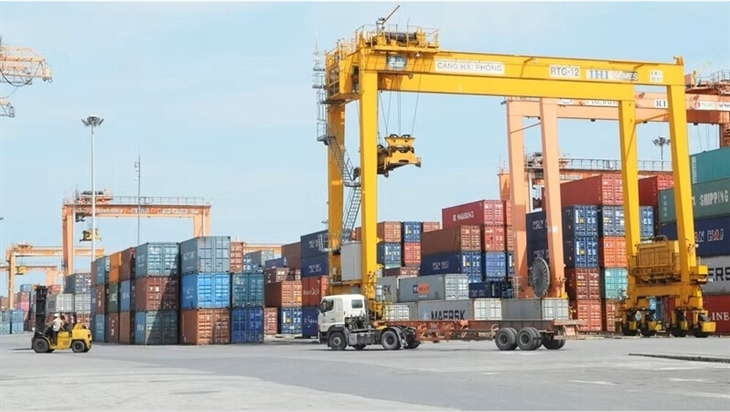
AsemconnectVietnam - Green and smart logistics is becoming an inevitable trend, opening up opportunities for ASEAN, including Vietnam, to enhance its competitiveness and promote sustainable trade.
Vietnam is the most dynamic logistics market in Southeast Asia
In recently published Waypoint: Global Industrial Dynamics 2026 report by Cushman & Wakefield, Vietnam is assessed as one of the most dynamic logistics markets in Southeast Asia.
According to Cushman & Wakefield, growth in Vietnam is supported by manufacturing activity, export-oriented investment flows and continued expansion of domestic consumption.
As businesses diversify their supply chains in the region, demand for logistics and industrial space in Vietnam is increasingly focused on locations with convenient connections to seaports, airports, highways, and manufacturing clusters.
Expressing a similar viewpoint, in an interview with Industry and Trade Newspaper, Mr. Nguyen Anh Son, Director of Import-Export Department of Ministry of Industry and Trade, stated that Vietnam, with its strategic geographical location, expanding production and export scale and rapid development of its seaport system, transportation infrastructure and e-commerce, is very favorable for development of logistics.
Mr. Nguyen Anh Son also said that Vietnam is actively cooperating with ASEAN countries in logistics development. He also expressed that Vietnam can promote cooperation in many directions.
First, connecting infrastructure and cross-border transport corridors, especially within framework of ASEAN and East-West economic corridors. Promoting transnational road transport routes connecting Vietnam - Laos - Northeast Thailand to reduce time and costs for intra-regional goods transportation.
Cooperation in developing green logistics, smart logistics, data sharing and application of digital technology in supply chain management.
Attracting investment and transferring management experience from major logistics corporations in the region to Vietnam will enhance capacity of domestic logistics businesses.
“Potential for cooperation will not only be limited to transportation or warehousing, but will expand to value-added services such as regional distribution centers, cross-border e-commerce logistics, cold chain logistics, logistics serving semiconductors, energy and green economy”, Mr. Nguyen Anh Son pointed out.
Keeping pace with green and smart logistics
Regarding development of green and smart logistics, head of Import-Export Department recognizes that this is one of the areas with great potential for cooperation between Vietnam and ASEAN countries. Digital transformation and development of green logistics are no longer just a trend for individual countries but are becoming essential requirements to enhance competitiveness of entire regional supply chain.
Currently, ASEAN is aiming to build a highly interconnected logistics ecosystem, operating on a digital data platform and reducing carbon emissions. In this process, Vietnam has many favorable conditions to participate more deeply in the region's smart logistics ecosystem thanks to its large trade scale, rapid e-commerce development and important connecting position in Asian supply chain.
According to Mr. Nguyen Anh Son, potential for cooperation between Vietnam and ASEAN countries is very broad, especially in three main areas. First is data connectivity and the digitalization of the logistics chain. ASEAN countries can fully promote sharing of customs, transportation, port, warehousing and traceability data on a common digital platform or interconnected mechanisms.
Next is cooperation in developing smart logistics. Some countries like Singapore and Malaysia are leading in smart ports, applying AI, IoT, blockchain and big data in logistics coordination. This is an opportunity for Vietnam to strengthen cooperation in human resource training, technology transfer, building smart ports, digital logistics centers and modern supply chain management systems. If properly utilized, Vietnamese logistics businesses will significantly improve productivity and reduce operating costs.
Finally, cooperation in developing green logistics and sustainable supply chains is crucial. The Net Zero target by 2050 compels supply chains across the region to transform their operational structures. Major markets are increasingly demanding carbon emission reductions, traceability and ESG (environmental, social, governance) standards. Therefore, ASEAN needs to coordinate in developing common standards for green logistics, green transport, green warehousing and mechanisms for measuring emissions in logistics chain. This will be a very important factor in helping businesses in the region maintain their export competitiveness in the future.
“To realize these goals, ASEAN still needs to address several challenges such as disparities in digitalization levels among countries, a lack of synchronization in data standards, technological infrastructure, and a legal framework for cross-border data sharing. Therefore, in addition to infrastructure investment, it is crucial to strengthen institutional harmonization, technical standards and coordination mechanisms among the regulatory agencies of ASEAN countries”, Mr. Nguyen Anh Son emphasized.
Source: Vitic/ congthuong.vn
In recently published Waypoint: Global Industrial Dynamics 2026 report by Cushman & Wakefield, Vietnam is assessed as one of the most dynamic logistics markets in Southeast Asia.
According to Cushman & Wakefield, growth in Vietnam is supported by manufacturing activity, export-oriented investment flows and continued expansion of domestic consumption.
As businesses diversify their supply chains in the region, demand for logistics and industrial space in Vietnam is increasingly focused on locations with convenient connections to seaports, airports, highways, and manufacturing clusters.
Expressing a similar viewpoint, in an interview with Industry and Trade Newspaper, Mr. Nguyen Anh Son, Director of Import-Export Department of Ministry of Industry and Trade, stated that Vietnam, with its strategic geographical location, expanding production and export scale and rapid development of its seaport system, transportation infrastructure and e-commerce, is very favorable for development of logistics.
Mr. Nguyen Anh Son also said that Vietnam is actively cooperating with ASEAN countries in logistics development. He also expressed that Vietnam can promote cooperation in many directions.
First, connecting infrastructure and cross-border transport corridors, especially within framework of ASEAN and East-West economic corridors. Promoting transnational road transport routes connecting Vietnam - Laos - Northeast Thailand to reduce time and costs for intra-regional goods transportation.
Cooperation in developing green logistics, smart logistics, data sharing and application of digital technology in supply chain management.
Attracting investment and transferring management experience from major logistics corporations in the region to Vietnam will enhance capacity of domestic logistics businesses.
“Potential for cooperation will not only be limited to transportation or warehousing, but will expand to value-added services such as regional distribution centers, cross-border e-commerce logistics, cold chain logistics, logistics serving semiconductors, energy and green economy”, Mr. Nguyen Anh Son pointed out.
Keeping pace with green and smart logistics
Regarding development of green and smart logistics, head of Import-Export Department recognizes that this is one of the areas with great potential for cooperation between Vietnam and ASEAN countries. Digital transformation and development of green logistics are no longer just a trend for individual countries but are becoming essential requirements to enhance competitiveness of entire regional supply chain.
Currently, ASEAN is aiming to build a highly interconnected logistics ecosystem, operating on a digital data platform and reducing carbon emissions. In this process, Vietnam has many favorable conditions to participate more deeply in the region's smart logistics ecosystem thanks to its large trade scale, rapid e-commerce development and important connecting position in Asian supply chain.
According to Mr. Nguyen Anh Son, potential for cooperation between Vietnam and ASEAN countries is very broad, especially in three main areas. First is data connectivity and the digitalization of the logistics chain. ASEAN countries can fully promote sharing of customs, transportation, port, warehousing and traceability data on a common digital platform or interconnected mechanisms.
Next is cooperation in developing smart logistics. Some countries like Singapore and Malaysia are leading in smart ports, applying AI, IoT, blockchain and big data in logistics coordination. This is an opportunity for Vietnam to strengthen cooperation in human resource training, technology transfer, building smart ports, digital logistics centers and modern supply chain management systems. If properly utilized, Vietnamese logistics businesses will significantly improve productivity and reduce operating costs.
Finally, cooperation in developing green logistics and sustainable supply chains is crucial. The Net Zero target by 2050 compels supply chains across the region to transform their operational structures. Major markets are increasingly demanding carbon emission reductions, traceability and ESG (environmental, social, governance) standards. Therefore, ASEAN needs to coordinate in developing common standards for green logistics, green transport, green warehousing and mechanisms for measuring emissions in logistics chain. This will be a very important factor in helping businesses in the region maintain their export competitiveness in the future.
“To realize these goals, ASEAN still needs to address several challenges such as disparities in digitalization levels among countries, a lack of synchronization in data standards, technological infrastructure, and a legal framework for cross-border data sharing. Therefore, in addition to infrastructure investment, it is crucial to strengthen institutional harmonization, technical standards and coordination mechanisms among the regulatory agencies of ASEAN countries”, Mr. Nguyen Anh Son emphasized.
Source: Vitic/ congthuong.vn
Vietnam's petroleum market in May 2026
Ministry of Industry and Trade requires enterprises to ensure uninterrupted supply of biofuel gasoline nationwide
Vietnamese food products gain prominence at RoK's leading food fair
Reference exchange rate rises slightly on June 10
New impetus for Vietnam-ASEAN trade to break through
Vietnam commodity markets on June 10, 2026: Gold holds near record highs
Information on biofuel quality control provided
Vietnam's IIP in May and first five months of 2026
Vietnam corn market remained stable in May as imports stayed strong
Vietnam steel exports edge higher in volume in Jan-Apr, value slips on lower prices
Vietnam steel prices remained stable in May 2026
Vietnam agriculture markets mixed as durian prices diverge, coffee and hog prices ease
List of imported goods subject to food safety inspection issued
Morning digest on June 9
