


New impetus for Vietnam-ASEAN trade to break through
Wednesday, June 10,2026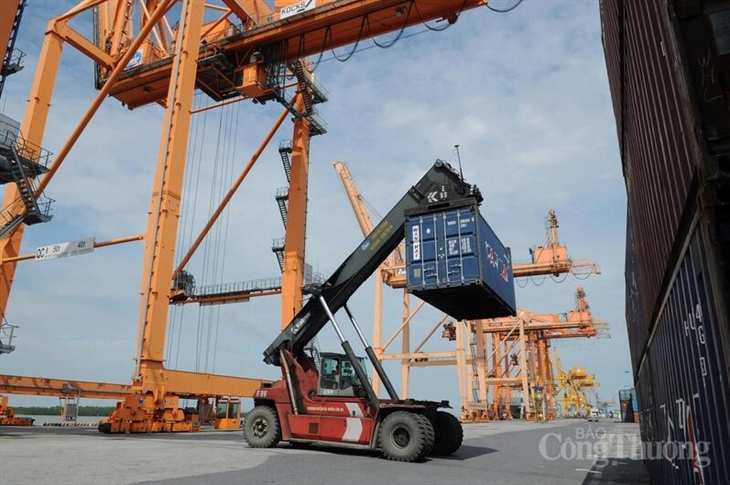
AsemconnectVietnam - From a trade volume of over US$3 billion in the early days of joining ASEAN, by 2025, Vietnam-ASEAN trade turnover has reached nearly US$91 billion, an increase of almost 30 times
ASEAN - one of Vietnam's most important markets
Three decades since officially joining ASEAN, Vietnam has witnessed a dramatic change in its economic and trade relations with the region. According to Customs Department, Ministry of Finance, from a trade exchange of just over US$3 billion in the early years of joining ASEAN (1995), by 2025, two-way trade turnover between Vietnam and ASEAN has reached approximately US$91 billion, an increase of nearly 30 times. This figure not only reflects expansion in trade scale but also shows increasingly important role of ASEAN in Vietnam's economic development and international integration strategy.
Specifically, Vietnam's exports to ASEAN reached US$38.4 billion, an increase of 3.8%; imports from ASEAN reached US$52.5 billion, an increase of 12%. Vietnam's trade deficit with ASEAN was US$14.19 billion, an increase of approximately US$4 billion compared to 2024.
Growth momentum is expected to continue in the first months of 2026. In just the first five months, Vietnam exported US$18.5 billion to the ASEAN market, an increase of 16.9%; while imports from region reached US$27.1 billion, an increase of 21.6%.
In an interview with Industry and Trade Newspaper, Dr. Le Quoc Phuong, former Deputy Director of Vietnam Industry and Trade Information Center (Ministry of Industry and Trade), stated that the crucial foundation for this strong development is Vietnam's deep economic integration within the ASEAN framework.
Vietnam joined ASEAN in 1995 and participated in ASEAN Free Trade Area (AFTA) from January 1, 1996. This was followed by ASEAN Trade in Goods Agreement (ATIGA) and a series of other regional economic cooperation mechanisms. ASEAN is also the center of many free trade agreements with major partners such as China, South Korea, Japan, Australia, New Zealand and India. In addition, there is the Regional Comprehensive Economic Partnership (RCEP).
"Within framework of ASEAN, we participate in many free trade agreements. This has helped trade between Vietnam and ASEAN develop very strongly," Dr. Le Quoc Phuong commented.
Another advantage comes from its geographical location. ASEAN is a region of neighboring countries, with close geographical proximity, creating favorable conditions for movement of goods and connecting supply chains.
After 30 years of joining ASEAN, this region has become one of Vietnam's largest import and export markets. In terms of export volume, ASEAN currently ranks approximately fourth among Vietnam's exports, after the US, China, and South Korea. This demonstrates the region's particularly important role in Vietnam's economic growth and trade activities.
Thanks to agreements such as AFTA, ATIGA, RCEP and ASEAN+ FTAs, many tariff lines between Vietnam and ASEAN countries have been reduced to very low levels, commonly around 0-5%. This is a crucial factor that helps Vietnamese goods access ASEAN market more easily, while simultaneously promoting increasingly vibrant intra-regional trade.
Currently, structure of Vietnam's exports to ASEAN is quite diverse. From industrial products such as electronics, telephones, steel, textiles and construction materials to agricultural products such as rice, seafood, and coffee, a significant presence is becoming increasingly evident in the regional market.
Enhancing business capacity to leverage opportunities from ASEAN
Besides trade, investment is also a crucial pillar in the economic relationship between Vietnam and ASEAN. According to Dr. Le Quoc Phuong, ASEAN is currently one of the largest investment regions in Vietnam. Singapore consistently ranks among the top investors, while Malaysia and Thailand also have many large-scale investment projects in Vietnam. Conversely, ASEAN is also one of the important overseas investment regions for Vietnamese businesses, with locations such as Laos, Cambodia, the Philippines and Indonesia.
The link between trade and investment has contributed to enhancing Vietnam's economic standing and enabling the economy to participate more deeply in regional supply chains. Vietnam imports many components from Thailand, Malaysia and Singapore to serve domestic production and assembly before consumption or export to other markets. This shows that Vietnam is increasingly deeply integrated into the ASEAN production network.
In current trade structure, ASEAN is a major source of machinery, equipment, and raw materials for production. In 2025, trade deficit with ASEAN is expected to exceed US$14 billion. Key import categories include computers, electronic components, machinery and equipment, spare parts and petroleum products.
According to Vietnam Logistics Business Association, Vietnam also possesses a unique advantage: its location between ASEAN and China – one of the world's largest markets. If this strategic geographical location is effectively utilized, Vietnam could become a logistics hub for ASEAN.
Currently, major seaports like Hai Phong and Ho Chi Minh City are playing an increasingly important role in the regional logistics network. As intra-ASEAN trade continues to grow, Vietnam's role as a transit hub for goods will also be correspondingly enhanced.
However, opportunities always come with challenges. According to Dr. Le Quoc Phuong, more open ASEAN becomes, more intense competition will be. Continuous efforts of countries in the region to improve production capacity, enhance the business environment and promote technological innovation place similar demands on Vietnamese businesses.
To more effectively utilize ASEAN market in the coming period, Dr. Le Quoc Phuong believes that the most important thing remains improving the competitiveness of domestic businesses. Along with that, it is crucial to build a strong Vietnamese brand within the ASEAN market before expanding to international markets.
To achieve this, businesses need to improve product quality, increase technological content, enhance management capabilities, build an efficient distribution system, and develop a more systematic marketing strategy. Once brands are established, value of goods will increase, and competitiveness of Vietnamese businesses will be strengthened.
In addition, effectively utilizing free trade agreements such as ATIGA and RCEP continues to be a crucial factor in promoting trade and investment in the region. However, according to Dr. Le Quoc Phuong, ultimate deciding factor remains the capacity of Vietnamese businesses.
Vietnam also needs to increase localization rate, increase added value in export products, and especially increase the technological content in goods. This is the foundation for businesses to participate more deeply in regional supply chains and simultaneously enhance Vietnam's position in international trade.
After 30 years of partnership with ASEAN, Vietnam's trade has made remarkable progress in terms of scale, structure and level of integration. Road ahead still presents many challenges, but with the foundation of integration already built and the growth of the domestic business community, ASEAN will continue to be an important economic space for Vietnam to expand its market, enhance its competitiveness and assert its position in the regional value chain.
Source: Vitic/ congthuong.vn
Three decades since officially joining ASEAN, Vietnam has witnessed a dramatic change in its economic and trade relations with the region. According to Customs Department, Ministry of Finance, from a trade exchange of just over US$3 billion in the early years of joining ASEAN (1995), by 2025, two-way trade turnover between Vietnam and ASEAN has reached approximately US$91 billion, an increase of nearly 30 times. This figure not only reflects expansion in trade scale but also shows increasingly important role of ASEAN in Vietnam's economic development and international integration strategy.
Specifically, Vietnam's exports to ASEAN reached US$38.4 billion, an increase of 3.8%; imports from ASEAN reached US$52.5 billion, an increase of 12%. Vietnam's trade deficit with ASEAN was US$14.19 billion, an increase of approximately US$4 billion compared to 2024.
Growth momentum is expected to continue in the first months of 2026. In just the first five months, Vietnam exported US$18.5 billion to the ASEAN market, an increase of 16.9%; while imports from region reached US$27.1 billion, an increase of 21.6%.
In an interview with Industry and Trade Newspaper, Dr. Le Quoc Phuong, former Deputy Director of Vietnam Industry and Trade Information Center (Ministry of Industry and Trade), stated that the crucial foundation for this strong development is Vietnam's deep economic integration within the ASEAN framework.
Vietnam joined ASEAN in 1995 and participated in ASEAN Free Trade Area (AFTA) from January 1, 1996. This was followed by ASEAN Trade in Goods Agreement (ATIGA) and a series of other regional economic cooperation mechanisms. ASEAN is also the center of many free trade agreements with major partners such as China, South Korea, Japan, Australia, New Zealand and India. In addition, there is the Regional Comprehensive Economic Partnership (RCEP).
"Within framework of ASEAN, we participate in many free trade agreements. This has helped trade between Vietnam and ASEAN develop very strongly," Dr. Le Quoc Phuong commented.
Another advantage comes from its geographical location. ASEAN is a region of neighboring countries, with close geographical proximity, creating favorable conditions for movement of goods and connecting supply chains.
After 30 years of joining ASEAN, this region has become one of Vietnam's largest import and export markets. In terms of export volume, ASEAN currently ranks approximately fourth among Vietnam's exports, after the US, China, and South Korea. This demonstrates the region's particularly important role in Vietnam's economic growth and trade activities.
Thanks to agreements such as AFTA, ATIGA, RCEP and ASEAN+ FTAs, many tariff lines between Vietnam and ASEAN countries have been reduced to very low levels, commonly around 0-5%. This is a crucial factor that helps Vietnamese goods access ASEAN market more easily, while simultaneously promoting increasingly vibrant intra-regional trade.
Currently, structure of Vietnam's exports to ASEAN is quite diverse. From industrial products such as electronics, telephones, steel, textiles and construction materials to agricultural products such as rice, seafood, and coffee, a significant presence is becoming increasingly evident in the regional market.
Enhancing business capacity to leverage opportunities from ASEAN
Besides trade, investment is also a crucial pillar in the economic relationship between Vietnam and ASEAN. According to Dr. Le Quoc Phuong, ASEAN is currently one of the largest investment regions in Vietnam. Singapore consistently ranks among the top investors, while Malaysia and Thailand also have many large-scale investment projects in Vietnam. Conversely, ASEAN is also one of the important overseas investment regions for Vietnamese businesses, with locations such as Laos, Cambodia, the Philippines and Indonesia.
The link between trade and investment has contributed to enhancing Vietnam's economic standing and enabling the economy to participate more deeply in regional supply chains. Vietnam imports many components from Thailand, Malaysia and Singapore to serve domestic production and assembly before consumption or export to other markets. This shows that Vietnam is increasingly deeply integrated into the ASEAN production network.
In current trade structure, ASEAN is a major source of machinery, equipment, and raw materials for production. In 2025, trade deficit with ASEAN is expected to exceed US$14 billion. Key import categories include computers, electronic components, machinery and equipment, spare parts and petroleum products.
According to Vietnam Logistics Business Association, Vietnam also possesses a unique advantage: its location between ASEAN and China – one of the world's largest markets. If this strategic geographical location is effectively utilized, Vietnam could become a logistics hub for ASEAN.
Currently, major seaports like Hai Phong and Ho Chi Minh City are playing an increasingly important role in the regional logistics network. As intra-ASEAN trade continues to grow, Vietnam's role as a transit hub for goods will also be correspondingly enhanced.
However, opportunities always come with challenges. According to Dr. Le Quoc Phuong, more open ASEAN becomes, more intense competition will be. Continuous efforts of countries in the region to improve production capacity, enhance the business environment and promote technological innovation place similar demands on Vietnamese businesses.
To more effectively utilize ASEAN market in the coming period, Dr. Le Quoc Phuong believes that the most important thing remains improving the competitiveness of domestic businesses. Along with that, it is crucial to build a strong Vietnamese brand within the ASEAN market before expanding to international markets.
To achieve this, businesses need to improve product quality, increase technological content, enhance management capabilities, build an efficient distribution system, and develop a more systematic marketing strategy. Once brands are established, value of goods will increase, and competitiveness of Vietnamese businesses will be strengthened.
In addition, effectively utilizing free trade agreements such as ATIGA and RCEP continues to be a crucial factor in promoting trade and investment in the region. However, according to Dr. Le Quoc Phuong, ultimate deciding factor remains the capacity of Vietnamese businesses.
Vietnam also needs to increase localization rate, increase added value in export products, and especially increase the technological content in goods. This is the foundation for businesses to participate more deeply in regional supply chains and simultaneously enhance Vietnam's position in international trade.
After 30 years of partnership with ASEAN, Vietnam's trade has made remarkable progress in terms of scale, structure and level of integration. Road ahead still presents many challenges, but with the foundation of integration already built and the growth of the domestic business community, ASEAN will continue to be an important economic space for Vietnam to expand its market, enhance its competitiveness and assert its position in the regional value chain.
Source: Vitic/ congthuong.vn
Vietnam's petroleum market in May 2026
Vietnam commodity markets on June 10, 2026: Gold holds near record highs
Information on biofuel quality control provided
Vietnam's IIP in May and first five months of 2026
Vietnam corn market remained stable in May as imports stayed strong
Vietnam steel exports edge higher in volume in Jan-Apr, value slips on lower prices
Vietnam steel prices remained stable in May 2026
Vietnam agriculture markets mixed as durian prices diverge, coffee and hog prices ease
List of imported goods subject to food safety inspection issued
Morning digest on June 9
Murphy Oil urged to expand investment in Vietnam
Vietnam Airlines offers 15% online fare discount for senior passengers
Vietnam's first fresh lychees conquered US market
Vietnam feed market faced rising costs in May 2026 as logistics disruptions pushed up prices

Public debt borrowing and repayment plan for 2026
Ensuring resources: Mobilizing sufficient and timely borrowed capital at reasonable costs and acceptable risks to meet expenditure needs ...Plan on implementation of high-tech law
Inter-sectoral legal support program for small and ...
Tourism destinations refresh offerings to welcome New ...
Across the Mekong Delta, many tourist sites have been busy upgrading their offerings. At the Con Son tourism site in Can Tho city, members ...Annual New Year festival shines in Da Nang
Phu Quoc emerging as a favourite global destination
Vietnam Airlines adds 270 flights to during 2026 New Year ...
