


ASEAN: An important market for Vietnam's textile and garment industry
Thursday, June 4,2026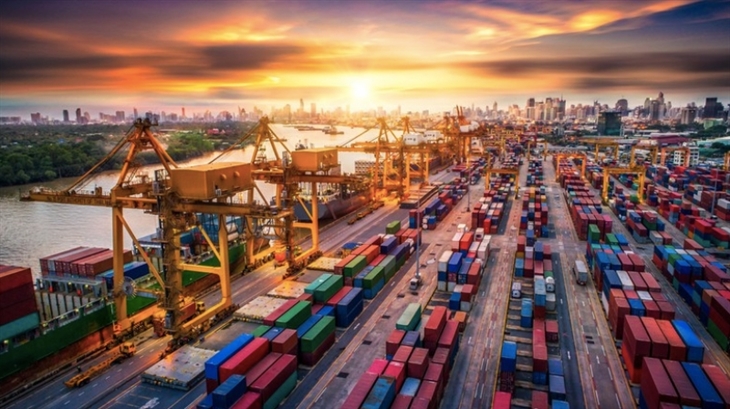
AsemconnectVietnam - ASEAN region, including Thailand and Singapore, is recognized as an important export market for Vietnam's textile and garment industry, with export turnover consistently maintaining positive growth in recent years.
Stable export growth
ASEAN is considered a very important market for textile and garment businesses. Data from Vietnam Textile and Garment Association shows that over the past five years, Vietnam's textile and garment exports to ASEAN countries have consistently increased, from US$2.033 billion in 2020 to US$3.1 billion in 2025, with an average export growth rate of 8.8% for entire period. Main import markets for Vietnam's textiles and garments to the bloc include Singapore and Thailand. ASEAN market currently accounts for 6.74% of the industry's export share.
Statistics from Customs Department (Ministry of Finance) also show that in the first four months of 2026, Vietnam's textile and garment exports to several ASEAN countries remained stable, including: the Philippines with over US$30 million, Singapore with over US$26 million, and Thailand with over US$96 million…Domestic textile and garment businesses are also actively exploiting the regional market as a safe haven when major importing countries are strongly affected by geopolitical conflicts, rising inflation, and declining consumer demand.
Assessing importance of ASEAN market, Mr. Vu Duc Giang - Chairman of Vietnam Textile and Garment Association - said that ASEAN is both a potential market and a region with many direct competitors of Vietnam. ASEAN region is playing an increasingly important role in global supply chain.
According to expert analysis, ASEAN market offers significant geographical advantages for Vietnamese textile and garment businesses, as low logistics costs enhance competitiveness for FOB (Free On Board) or EXW (Ex-Work) orders.
Fast and cost-effective transportation allows Vietnamese exporters flexibility in handling small and medium-sized orders, particularly suitable for basic product lines such as uniforms, casual wear or seasonal goods.
Furthermore, strong growth of e-commerce in countries like Thailand and Singapore creates opportunities for Vietnamese businesses to access a fast-growing and broad consumer market.
However, exporting textiles and garments to ASEAN in general, and to Thailand and Singapore in particular, carries significant risks. Firstly, there are issues related to payment and debt collection. Another challenge is that while some ASEAN countries are also garment manufacturers and exporters, each has its own strengths. In this context, Vietnam has the potential to compete and gain more market share, especially in product groups such as: sportswear, sleepwear, school uniforms, children's clothing, knitted underwear, and office shirts…
Expanding intra-regional supply chain increases competitiveness of Vietnam's textile and garment industry.
In fact, besides being an important export market, regional textile and garment industry also has the potential to cooperate in developing intra-regional supply chains to effectively utilize bilateral and multilateral free trade agreements. This will also benefit from the shift in production by investors.
In an interview with a reporter from Industry and Trade Newspaper, Mr. Nguyen Anh Son - Director of Import-Export Department, Ministry of Industry and Trade, stated that ASEAN is transforming into one of the most dynamic economic blocs in the world. With global supply chains tending to shift and diversify (the "ASEAN+1" strategy), this region is becoming an important production and consumption center.
With numerous advantages, ASEAN member countries, including Thailand and Singapore, have been actively connecting to strengthen trade, investment, diplomatic, political and import-export relations, a major goal being pursued.
In particular, from May 27-29, General Secretary and President To Lam and a high-level Vietnamese delegation visited Thailand at invitation of Thai Prime Minister Anutin Charnvirakul. This event was highly appreciated by experts because Thailand and Vietnam have close ties and are interdependent. Economies and supply chains of the two countries are closely linked and both countries benefit from each other's growth.
Thailand is Vietnam's largest trading partner in ASEAN and the eighth largest foreign investor in Vietnam, while Vietnam is Thailand's second largest trading partner in ASEAN.
Visit of General Secretary and President To Lam once again affirms that comprehensive strategic partnership between Thailand and Vietnam not only benefits both countries but also contributes to building ASEAN into a rapidly developing, strong region with an increasingly important position in the world.
Similarly, visit of General Secretary and President To Lam and high-level Vietnamese delegation to Singapore from May 29-31, 2026 and their participation in the 23rd Shangri-La Dialogue, is also recognized as an affirmation of Vietnam's interest in countries in the region, including Singapore. Potential for cooperation between Vietnam and Singapore is not only in trade but also in logistics, technology transfer, and human resource training…
Source: Vitic/ congthuong.vn
ASEAN is considered a very important market for textile and garment businesses. Data from Vietnam Textile and Garment Association shows that over the past five years, Vietnam's textile and garment exports to ASEAN countries have consistently increased, from US$2.033 billion in 2020 to US$3.1 billion in 2025, with an average export growth rate of 8.8% for entire period. Main import markets for Vietnam's textiles and garments to the bloc include Singapore and Thailand. ASEAN market currently accounts for 6.74% of the industry's export share.
Statistics from Customs Department (Ministry of Finance) also show that in the first four months of 2026, Vietnam's textile and garment exports to several ASEAN countries remained stable, including: the Philippines with over US$30 million, Singapore with over US$26 million, and Thailand with over US$96 million…Domestic textile and garment businesses are also actively exploiting the regional market as a safe haven when major importing countries are strongly affected by geopolitical conflicts, rising inflation, and declining consumer demand.
Assessing importance of ASEAN market, Mr. Vu Duc Giang - Chairman of Vietnam Textile and Garment Association - said that ASEAN is both a potential market and a region with many direct competitors of Vietnam. ASEAN region is playing an increasingly important role in global supply chain.
According to expert analysis, ASEAN market offers significant geographical advantages for Vietnamese textile and garment businesses, as low logistics costs enhance competitiveness for FOB (Free On Board) or EXW (Ex-Work) orders.
Fast and cost-effective transportation allows Vietnamese exporters flexibility in handling small and medium-sized orders, particularly suitable for basic product lines such as uniforms, casual wear or seasonal goods.
Furthermore, strong growth of e-commerce in countries like Thailand and Singapore creates opportunities for Vietnamese businesses to access a fast-growing and broad consumer market.
However, exporting textiles and garments to ASEAN in general, and to Thailand and Singapore in particular, carries significant risks. Firstly, there are issues related to payment and debt collection. Another challenge is that while some ASEAN countries are also garment manufacturers and exporters, each has its own strengths. In this context, Vietnam has the potential to compete and gain more market share, especially in product groups such as: sportswear, sleepwear, school uniforms, children's clothing, knitted underwear, and office shirts…
Expanding intra-regional supply chain increases competitiveness of Vietnam's textile and garment industry.
In fact, besides being an important export market, regional textile and garment industry also has the potential to cooperate in developing intra-regional supply chains to effectively utilize bilateral and multilateral free trade agreements. This will also benefit from the shift in production by investors.
In an interview with a reporter from Industry and Trade Newspaper, Mr. Nguyen Anh Son - Director of Import-Export Department, Ministry of Industry and Trade, stated that ASEAN is transforming into one of the most dynamic economic blocs in the world. With global supply chains tending to shift and diversify (the "ASEAN+1" strategy), this region is becoming an important production and consumption center.
With numerous advantages, ASEAN member countries, including Thailand and Singapore, have been actively connecting to strengthen trade, investment, diplomatic, political and import-export relations, a major goal being pursued.
In particular, from May 27-29, General Secretary and President To Lam and a high-level Vietnamese delegation visited Thailand at invitation of Thai Prime Minister Anutin Charnvirakul. This event was highly appreciated by experts because Thailand and Vietnam have close ties and are interdependent. Economies and supply chains of the two countries are closely linked and both countries benefit from each other's growth.
Thailand is Vietnam's largest trading partner in ASEAN and the eighth largest foreign investor in Vietnam, while Vietnam is Thailand's second largest trading partner in ASEAN.
Visit of General Secretary and President To Lam once again affirms that comprehensive strategic partnership between Thailand and Vietnam not only benefits both countries but also contributes to building ASEAN into a rapidly developing, strong region with an increasingly important position in the world.
Similarly, visit of General Secretary and President To Lam and high-level Vietnamese delegation to Singapore from May 29-31, 2026 and their participation in the 23rd Shangri-La Dialogue, is also recognized as an affirmation of Vietnam's interest in countries in the region, including Singapore. Potential for cooperation between Vietnam and Singapore is not only in trade but also in logistics, technology transfer, and human resource training…
Source: Vitic/ congthuong.vn
Vietnam rice market report – May 2026
Vietnam agricultural markets on June 4: Coffee rebounds, pepper steadies while rice export prices soften
TikTok interested in investing in logistics, digital finance in Vietnam
Government to introduce strong incentives for rental housing development
Aquatic products face challenge of maintaining market share in US
FDI inflows into Phu Tho surge 3.5-fold in first five months
New regulations on penalties for industrial property violations
Vietnam's fruit and vegetable exports maintained strong growth
Vietnam domestic rice market in May 2026: Prices rose toward end of crop, supply tightened while export demand remained supportive
Vietnamese businesses and new opportunities in global supply chain
Global rubber prices surge, raising hopes for Vietnamese exporters
Vietnam attracts wave of hi-tech investments as push for value chain advancement continues
Exports of phones and components increased in four months
Da Nang opens runway for startup investment

Public debt borrowing and repayment plan for 2026
Ensuring resources: Mobilizing sufficient and timely borrowed capital at reasonable costs and acceptable risks to meet expenditure needs ...Plan on implementation of high-tech law
Inter-sectoral legal support program for small and ...
Tourism destinations refresh offerings to welcome New ...
Across the Mekong Delta, many tourist sites have been busy upgrading their offerings. At the Con Son tourism site in Can Tho city, members ...Annual New Year festival shines in Da Nang
Phu Quoc emerging as a favourite global destination
Vietnam Airlines adds 270 flights to during 2026 New Year ...
