


Building a database of growing areas to pave a way for agricultural and forestry products to enter EU
Thursday, May 28,2026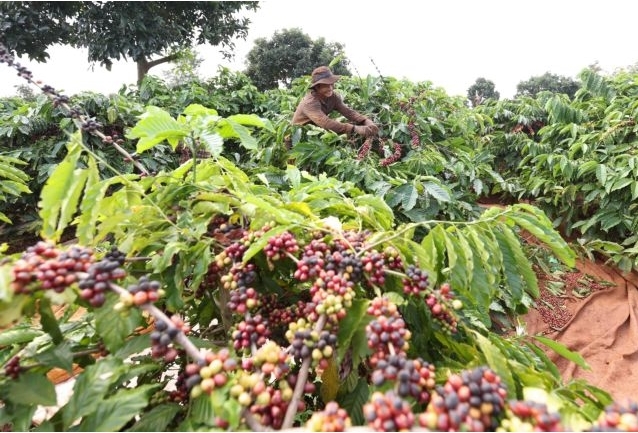
AsemconnectVietnam - EUDR is requiring traceability down to each production plot, forcing Vietnam to accelerate development of a database of growing areas to maintain exports of agricultural and forestry products to EU.
EUDR requires lot-level traceability
As European Union's Regulation on Deforestation (EUDR) gradually comes into effect, requirement for traceability down to lot level is becoming one of the biggest challenges for Vietnam's agricultural and forestry sectors such as coffee, rubber and timber.
At webinar "Collecting and Managing Plantation Data to Meet EUDR: choosing solutions in context of limited resources", jointly organized by EUDR Forestry Network and Agricultural and Forestry Policy Research Network on May 8th, many experts argued that planting area data is no longer a "supporting factor" but has become a core foundation for demonstrating EUDR compliance.
According to Dr. To Xuan Phuc of Forest Trends organization, traceability is now not only a requirement of EU market but is gradually becoming a general management requirement in Vietnam. According to the government's plan, by the end of 2026, all agricultural products, including imported goods consumed domestically, must be traceable. "Traceability is ability to identify and track a product through each stage of the supply chain, thereby tracing it back to its original origin," Mr. Phuc emphasized.
To implement traceability, two core elements are needed: input data and accompanying legal evidence. Input data includes information about growing area, land plot, current crop status, area, geographical coordinates, etc., while legal evidence includes land use right certificates, lease contracts or documents proving legal farming rights.
Assessing current situation, Mr. Phuc noted that Vietnam already has many data systems built by management agencies, such as data on coffee and rubber acreage, planted forests and timber harvesting output.
However, the biggest limitation is that the data is not detailed enough and does not meet the accuracy requirements of the EUDR standard. “EUDR requires the identification of each specific plot and parcel of land along with its clear legal status. Meanwhile, much of current data only aggregates the area, which is insufficient for traceability”, Mr. Phuc noted.
According to Mr. Phuc, Vietnam has already established several raw material area databases through sustainable development programs and international certifications. In the forestry sector, the area of forests certified by FSC is currently around 260,000 hectares, while the area certified by PEFC has exceeded 500,000 hectares. However, most of the data is still concentrated within the supply chains between businesses and farmers, and does not cover the entire production area.
We cannot wait for a perfect system before starting.
Dr. According to Truong Tat Do, from Department of Forestry and Forest Protection (Ministry of Agriculture and Environment), the two most pressing issues currently are the development of 2020 forest boundary map and database of planting areas for traceability purposes. December 31, 2020, is the "mandatory reference point" for EUDR. Any changes in forest status after this date may be considered related to deforestation.
"To prove that a product does not cause deforestation, it is mandatory to have a forest boundary map at or before December 31, 2020, for comparison. Using data after this date will no longer be valid for EUDR," Mr. Do emphasized.
In addition, EUDR requires businesses to provide geographical coordinates of the production area. Areas under 4 hectares can be identified using a single point coordinate; areas over 4 hectares must be identified using a closed polygon.
According to experts, construction and publication of the 2020 forest boundary map is necessary in context of many international organizations having publicly released global forest data based on satellite imagery.
However, international datasets may contain inaccuracies if field verification is lacking. Some coffee plantations with shade trees or agroforestry models risk being mistaken for forests, thereby affecting the EUDR compliance assessment process.
Mr. Pham Ngoc Hai, from Forest Survey and Planning Institute, stated that core data of EUDR is information on the location of the land plot and land use history to prove that no deforestation is occurring. However, implementation in Vietnam is facing many difficulties due to limitations in financial resources, human resources, and data infrastructure.
“With sufficient resources, meeting EUDR requirements is not too difficult. But for a developing country like Vietnam, especially for small-scale farming households, this is a huge challenge,” Mr. Hai stated.
According to Mr. Hai, there are currently many data collection methods such as handheld GPS, RTK, remote sensing imagery or smartphones. Among these, smartphones are considered the most feasible solution due to their low cost and ease of large-scale deployment.
Currently, no single tool perfectly meets the needs of all target groups, from farmers and cooperatives to businesses and management agencies. Therefore, the most important thing is not which tool is used, but that the data must be consistent and capable of being integrated into a centralized database.
The biggest challenge today lies not only in technology but also in the issue of resources and implementation time. According to roadmap, EUDR will officially be applied from the end of 2026. Meanwhile, many localities still lack input data on growing areas. Experts believe that we should not wait for a perfect solution before starting implementation. The most important thing now is to immediately implement it in a way that involves both work and adjustments to meet EUDR roadmap.
Source: Vitic/ congthuong.vn
As European Union's Regulation on Deforestation (EUDR) gradually comes into effect, requirement for traceability down to lot level is becoming one of the biggest challenges for Vietnam's agricultural and forestry sectors such as coffee, rubber and timber.
At webinar "Collecting and Managing Plantation Data to Meet EUDR: choosing solutions in context of limited resources", jointly organized by EUDR Forestry Network and Agricultural and Forestry Policy Research Network on May 8th, many experts argued that planting area data is no longer a "supporting factor" but has become a core foundation for demonstrating EUDR compliance.
According to Dr. To Xuan Phuc of Forest Trends organization, traceability is now not only a requirement of EU market but is gradually becoming a general management requirement in Vietnam. According to the government's plan, by the end of 2026, all agricultural products, including imported goods consumed domestically, must be traceable. "Traceability is ability to identify and track a product through each stage of the supply chain, thereby tracing it back to its original origin," Mr. Phuc emphasized.
To implement traceability, two core elements are needed: input data and accompanying legal evidence. Input data includes information about growing area, land plot, current crop status, area, geographical coordinates, etc., while legal evidence includes land use right certificates, lease contracts or documents proving legal farming rights.
Assessing current situation, Mr. Phuc noted that Vietnam already has many data systems built by management agencies, such as data on coffee and rubber acreage, planted forests and timber harvesting output.
However, the biggest limitation is that the data is not detailed enough and does not meet the accuracy requirements of the EUDR standard. “EUDR requires the identification of each specific plot and parcel of land along with its clear legal status. Meanwhile, much of current data only aggregates the area, which is insufficient for traceability”, Mr. Phuc noted.
According to Mr. Phuc, Vietnam has already established several raw material area databases through sustainable development programs and international certifications. In the forestry sector, the area of forests certified by FSC is currently around 260,000 hectares, while the area certified by PEFC has exceeded 500,000 hectares. However, most of the data is still concentrated within the supply chains between businesses and farmers, and does not cover the entire production area.
We cannot wait for a perfect system before starting.
Dr. According to Truong Tat Do, from Department of Forestry and Forest Protection (Ministry of Agriculture and Environment), the two most pressing issues currently are the development of 2020 forest boundary map and database of planting areas for traceability purposes. December 31, 2020, is the "mandatory reference point" for EUDR. Any changes in forest status after this date may be considered related to deforestation.
"To prove that a product does not cause deforestation, it is mandatory to have a forest boundary map at or before December 31, 2020, for comparison. Using data after this date will no longer be valid for EUDR," Mr. Do emphasized.
In addition, EUDR requires businesses to provide geographical coordinates of the production area. Areas under 4 hectares can be identified using a single point coordinate; areas over 4 hectares must be identified using a closed polygon.
According to experts, construction and publication of the 2020 forest boundary map is necessary in context of many international organizations having publicly released global forest data based on satellite imagery.
However, international datasets may contain inaccuracies if field verification is lacking. Some coffee plantations with shade trees or agroforestry models risk being mistaken for forests, thereby affecting the EUDR compliance assessment process.
Mr. Pham Ngoc Hai, from Forest Survey and Planning Institute, stated that core data of EUDR is information on the location of the land plot and land use history to prove that no deforestation is occurring. However, implementation in Vietnam is facing many difficulties due to limitations in financial resources, human resources, and data infrastructure.
“With sufficient resources, meeting EUDR requirements is not too difficult. But for a developing country like Vietnam, especially for small-scale farming households, this is a huge challenge,” Mr. Hai stated.
According to Mr. Hai, there are currently many data collection methods such as handheld GPS, RTK, remote sensing imagery or smartphones. Among these, smartphones are considered the most feasible solution due to their low cost and ease of large-scale deployment.
Currently, no single tool perfectly meets the needs of all target groups, from farmers and cooperatives to businesses and management agencies. Therefore, the most important thing is not which tool is used, but that the data must be consistent and capable of being integrated into a centralized database.
The biggest challenge today lies not only in technology but also in the issue of resources and implementation time. According to roadmap, EUDR will officially be applied from the end of 2026. Meanwhile, many localities still lack input data on growing areas. Experts believe that we should not wait for a perfect solution before starting implementation. The most important thing now is to immediately implement it in a way that involves both work and adjustments to meet EUDR roadmap.
Source: Vitic/ congthuong.vn
Industry and Trade sector: Opening markets for Vietnamese agricultural products
Coffee export under new pressure
Da Nang city emerges as global innovation start-up hub
Deputy PM urges strict risk control for VIFC rollout
Vietnamese products make strong impression at Foodservice Australia 2026
Int'l exhibition on modern agricultural supplies opens in Ho Chi Minh City
Largest Australian rice distributor expands investment in Vietnam
Vietnam's growth challenge and transformation pressure
Plan to strengthen trade promotion for handicraft products approved
Diversifying transportation methods, maintaining supply chains with the Middle East
Standardizing planting area codes to protect Vietnamese agricultural product brands
Vietnamese rice export expected to recover from Q2/2026
Vietnam agricultural market on May 27, 2026: Central highlands coffee prices slightly rebounded
Phu Tho expands strategic cooperation with Chinese enterprises


Public debt borrowing and repayment plan for 2026
Ensuring resources: Mobilizing sufficient and timely borrowed capital at reasonable costs and acceptable risks to meet expenditure needs ...Plan on implementation of high-tech law
Inter-sectoral legal support program for small and ...

Tourism destinations refresh offerings to welcome New ...
Across the Mekong Delta, many tourist sites have been busy upgrading their offerings. At the Con Son tourism site in Can Tho city, members ...Annual New Year festival shines in Da Nang
Phu Quoc emerging as a favourite global destination
Vietnam Airlines adds 270 flights to during 2026 New Year ...
