


Green transition seen as key to Ho Chi Minh City’s next growth phase
Thursday, May 21,2026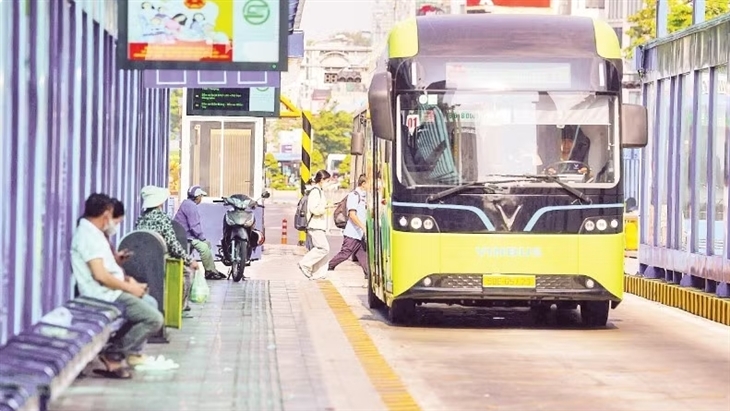
AsemconnectVietnam - Green transition is increasingly viewed as essential to preserving the city’s status as Vietnam’s economic locomotive.
Ho Chi Minh City is moving to position green transition as a new driver of long-term growth, though experts and businesses say major hurdles in financing, infrastructure and policy mechanisms must first be addressed for the strategy to deliver its full potential.
The southern economic hub is entering a new stage of development in which growth is expected to go hand in hand with environmental sustainability and improved quality of life. Green transition is increasingly viewed as essential to preserving the city’s status as Vietnam’s economic locomotive.
As climate change impacts intensify, the push for greener development has become more urgent for the country’s largest economic centre, which contributes around one-third of the national budget. Green transition is no longer seen solely as an environmental obligation but also as a competition requirement for businesses participating in global supply chains.
Nguyen Ngoc Thang, Deputy General Director of Saigon Co.op, said that despite the substantial costs involved in meeting green and ESG (environmental, social and governance) standards, the retailer remains committed to supporting sustainable businesses and promoting environmentally friendly products.
In high-tech agriculture, green transition requires long-term investment and persistence. Lam Thuy Ai, General Director of MEBI FARM, said the company spent a decade developing a circular and environmentally friendly livestock farming model located away from residential areas. The system incorporates green belts as biological air barriers, rooftop solar panels and automated processes to improve energy efficiency.
Still, the transition poses significant challenges across multiple sectors. Following administrative expansion, Ho Chi Minh City is now home to more than 14 million residents, with around 11.4 million motorbikes and 1.3 million cars. The large number of vehicles is putting mounting pressure on transport infrastructure and air quality, producing an estimated 13 million tonnes of CO2 emissions each year.
In the energy sector, the city currently has 22,355 rooftop solar systems with a combined capacity of approximately 1,832 MWp. However, Nguyen Kim Ngoc, Deputy Director of the municipal Department of Industry and Trade, said financial constraints and legal barriers are the main obstacles to further expansion.
Experts noted that while public funding remains limited and procedures are often cumbersome, many off-budget funds are prepared to support green projects through low-interest or interest-free financing. More flexible mechanisms are needed to mobilise and effectively utilise these resources.
Vice Chairman of the municipal People’s Committee Bui Minh Thanh said the city’s 2025–2030 Party Congress Resolution identifies green transition, digital transformation and innovation as three strategic pillars. Under its green transition scheme for 2025–2030, the metropolis aims to implement 10 pillars and 76 targets backed by an estimated 900 trillion VND (34.1 billion USD) in mobilised capital.
To achieve these goals, it is promoting renewable energy, energy efficiency, green hydrogen development and the target of net-zero emissions by 2050. In transport, authorities aim for all public transport vehicles to run on clean energy by 2030.
Ho Chi Minh City is also rolling out several action programmes, including an air pollution control and air quality management plan for 2026–2030 with a vision extending to 2045.
Pham Binh An, Deputy Director of the Ho Chi Minh City Institute for Development Studies, proposed the early establishment of low-emission zones in Can Gio and Con Dao before gradually expanding them to central urban areas.
He also recommended detailed regulations for different types of vehicles, tighter control of emissions from industrial and construction activities, improved urban sanitation and dust treatment, and expanded green spaces to enhance air quality.
From a regional development perspective, Ho Nguyen Thai Bao from the institute said the city’s advantages in land availability, inter-regional infrastructure and marine ecosystems following administrative restructuring could support the growth of carbon-neutral industrial zones, green logistics, green finance, renewable energy and sustainable waterway transport.
Discussing policy solutions, Dr. Phan Thuy Kieu, representing a research group at the institute, said the city should promptly finalise its green growth policy framework to stay on track for net-zero emissions by 2050, especially as emissions are expected to rise alongside urban expansion.
Green transition in Ho Chi Minh City, she said, has moved beyond slogans into a phase of concrete implementation. If effectively leveraged, it could not only help tackle environmental challenges but also pave the way for a new growth cycle driven by innovation, clean technology and higher living standards./.
Source: VNA
Vietnam agricultural markets – May 21, 2026: Coffee and fresh paddy prices rebounded
Car imports increased in 4 months of 2026
Vietnam's iron and steel imports fall in volume but surged in value in 4 months
Vietnam agricultural markets on May 20: Coffee fell sharply while rice exports held firm
Vietnamese rice export under pressure to improve quality
Agricultural export and challenge of maintaining market share and reputation
Vietnam's steel exports increased in 4 months of 2026
New pressure from markets and green barriers for agricultural exports
LG Energy Solution, Honda eye Vietnam’s e-motorbike market
Seminar on trade promotion in South American market to take place in Hanoi
Supporting industry infrastructure map launched to promote global supply chain integration
Ho Chi Minh City listed among global Top 100 startup ecosystems
Agricultural, forestry and fishery export in the first four months of 2026 reach over US$23 billion
Vietnam agricultural markets – May 19, 2026: Coffee and pepper prices plunged amid heavy selling pressure
Public debt borrowing and repayment plan for 2026
Ensuring resources: Mobilizing sufficient and timely borrowed capital at reasonable costs and acceptable risks to meet expenditure needs ...Plan on implementation of high-tech law
Inter-sectoral legal support program for small and ...
Tourism destinations refresh offerings to welcome New ...
Across the Mekong Delta, many tourist sites have been busy upgrading their offerings. At the Con Son tourism site in Can Tho city, members ...Annual New Year festival shines in Da Nang
Phu Quoc emerging as a favourite global destination
Vietnam Airlines adds 270 flights to during 2026 New Year ...
