


Vietnam-ASEAN trade exceeds US$90 billion after 31 years of membership
Thursday, May 14,2026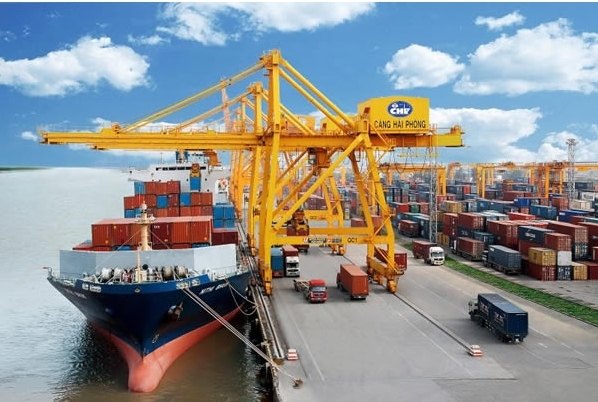
AsemconnectVietnam - From a modest trade volume of US$3.26 billion in 1995, Vietnam-ASEAN trade reached US$83.6 billion in 2024 and is projected to reach US$91 billion in 2025.
A historical turning point and "speaking for itself" figures
1995 marked a historical turning point when Vietnam officially became a member of Association of Southeast Asian Nations (ASEAN), paving the way for comprehensive international integration. After 31 years, with a proactive and responsible spirit, Vietnam has brought this relationship to remarkable growth in both breadth and depth.
The clearest evidence lies in impressive trade growth figures. From a modest trade volume of US$3.26 billion in 1995, Vietnam-ASEAN trade reached US$83.6 billion in 2024 and officially surpassed US$91 billion in 2025. Structure of exported goods is no longer limited to raw materials but has shifted strongly towards goods with high technological content and added value.
Within intra-ASEAN trade map, Thailand is currently the largest partner with export reaching US$8.7 billion and import reaching US$13.2 billion. Other strategic markets such as Singapore, Indonesia, Malaysia and the Philippines also maintain stable growth, creating a diverse and sustainable trade ecosystem.
Along with trade cooperation, ASEAN has become an important source of investment for Vietnam and other regions globally. Data from ASEAN Investment Report (AIR) 2025 shows that FDI inflows into ASEAN region in 2024 reached US$226 billion, an 8% increase compared to 2023. Cambodia, Singapore and Vietnam attracted the largest amounts of FDI. Green and digital investment projects are also rapidly increasing, reflecting trend towards sustainable development and digital transformation in the region.
Specifically for Vietnam, data from Vietnam Customs indicates that eight ASEAN countries (Singapore, Malaysia, Thailand, Brunei, Indonesia, Philippines, Laos, and Cambodia) have invested in all 18 economic sectors of Vietnam. The sector attracting the most projects from ASEAN investors is the processing and manufacturing industry, with 1,009 projects and US$22.2 billion, accounting for 38% of total number of projects and 40.8% of total investment capital.
Furthermore, network of Free Trade Agreements (FTAs) +1 with partners, including regional agreements such as RCEP, provides Vietnam with opportunities to access markets, increase exports and attract investment.
Vietnamese people directly benefit from regional cooperation programs across pillars of ASEAN Community, from combating transnational crime, cooperation, maritime affairs, sustainable development, environment, climate change response, disaster mitigation, to education, labor, entrepreneurship, health, green transformation, digital transformation and smart agriculture...
Promoting energy cooperation within ASEAN
A new highlight in cooperative relationship among ASEAN members is promotion of ASEAN Power Grid (APG). This is not simply an energy infrastructure but also a "strategic line" connecting security and economic self-reliance within the bloc.
With projected regional electricity demand increasing 2.6 times by 2050, Vietnam, thanks to its central geographical location and enormous offshore wind potential, is playing a crucial connecting role. According to a report by ASEAN Energy Centre (ACE), completing APG connection could contribute up to US$3 trillion to the region's GDP by 2040 and create 1.45 million jobs, largely in renewable energy sector.
Furthermore, in face of global geopolitical conflicts, Vietnam has not merely participated in guiding but has proactively promoted integration of long-term visions with concrete actions. The most recent example is Vietnam's proactive role in Middle East conflict, proposing initiatives to enhance ASEAN's resilience. One notable idea is establishment of a strategic petroleum reserve fund for ASEAN, aiming for a collective approach to energy security and reducing dependence on external sources.
In addition, Vietnam has proposed a consular coordination mechanism among member states to enhance protection of citizens in third countries. This is an important step, contributing to realization of concept of an “ASEAN Community” in a way that brings practical benefits to the people.
Strengthening its central role in ASEAN
To realize goal of sustainable development in “era of upward mobility,” Vietnam is focusing on digital economy through ASEAN Framework Agreement on Digital Economy (DEFA), leveraging new generation FTAs (RCEP, CPTPP), actively participating deeply in ASEAN Power Grid (APG) and ASEAN Connectivity Master Plan. This is considered a key driver for maintaining high growth rates and participating more deeply in global value chain.
Sharing her views on this matter with the press, Dr. Le Phuong Hoa, Deputy Director of Asia-Pacific Research Institute, stated that strengthening ASEAN's central role is a prerequisite for protecting common development space. ASEAN has been Vietnam's "protective belt" from early on and from afar through multilateral forums organized by ASEAN, based on supremacy of international law and UNCLOS 1982.
In future, Vietnam will continue to play a coordinating role, minimizing centrifugal trends under pressure of competition among major powers, keeping region an attractive destination for capital and technology. With a long-term vision and concrete actions, Vietnam is working with ASEAN to build a resilient, innovative and sustainable community.
Source: Vitic/ congthuong.vn
1995 marked a historical turning point when Vietnam officially became a member of Association of Southeast Asian Nations (ASEAN), paving the way for comprehensive international integration. After 31 years, with a proactive and responsible spirit, Vietnam has brought this relationship to remarkable growth in both breadth and depth.
The clearest evidence lies in impressive trade growth figures. From a modest trade volume of US$3.26 billion in 1995, Vietnam-ASEAN trade reached US$83.6 billion in 2024 and officially surpassed US$91 billion in 2025. Structure of exported goods is no longer limited to raw materials but has shifted strongly towards goods with high technological content and added value.
Within intra-ASEAN trade map, Thailand is currently the largest partner with export reaching US$8.7 billion and import reaching US$13.2 billion. Other strategic markets such as Singapore, Indonesia, Malaysia and the Philippines also maintain stable growth, creating a diverse and sustainable trade ecosystem.
Along with trade cooperation, ASEAN has become an important source of investment for Vietnam and other regions globally. Data from ASEAN Investment Report (AIR) 2025 shows that FDI inflows into ASEAN region in 2024 reached US$226 billion, an 8% increase compared to 2023. Cambodia, Singapore and Vietnam attracted the largest amounts of FDI. Green and digital investment projects are also rapidly increasing, reflecting trend towards sustainable development and digital transformation in the region.
Specifically for Vietnam, data from Vietnam Customs indicates that eight ASEAN countries (Singapore, Malaysia, Thailand, Brunei, Indonesia, Philippines, Laos, and Cambodia) have invested in all 18 economic sectors of Vietnam. The sector attracting the most projects from ASEAN investors is the processing and manufacturing industry, with 1,009 projects and US$22.2 billion, accounting for 38% of total number of projects and 40.8% of total investment capital.
Furthermore, network of Free Trade Agreements (FTAs) +1 with partners, including regional agreements such as RCEP, provides Vietnam with opportunities to access markets, increase exports and attract investment.
Vietnamese people directly benefit from regional cooperation programs across pillars of ASEAN Community, from combating transnational crime, cooperation, maritime affairs, sustainable development, environment, climate change response, disaster mitigation, to education, labor, entrepreneurship, health, green transformation, digital transformation and smart agriculture...
Promoting energy cooperation within ASEAN
A new highlight in cooperative relationship among ASEAN members is promotion of ASEAN Power Grid (APG). This is not simply an energy infrastructure but also a "strategic line" connecting security and economic self-reliance within the bloc.
With projected regional electricity demand increasing 2.6 times by 2050, Vietnam, thanks to its central geographical location and enormous offshore wind potential, is playing a crucial connecting role. According to a report by ASEAN Energy Centre (ACE), completing APG connection could contribute up to US$3 trillion to the region's GDP by 2040 and create 1.45 million jobs, largely in renewable energy sector.
Furthermore, in face of global geopolitical conflicts, Vietnam has not merely participated in guiding but has proactively promoted integration of long-term visions with concrete actions. The most recent example is Vietnam's proactive role in Middle East conflict, proposing initiatives to enhance ASEAN's resilience. One notable idea is establishment of a strategic petroleum reserve fund for ASEAN, aiming for a collective approach to energy security and reducing dependence on external sources.
In addition, Vietnam has proposed a consular coordination mechanism among member states to enhance protection of citizens in third countries. This is an important step, contributing to realization of concept of an “ASEAN Community” in a way that brings practical benefits to the people.
Strengthening its central role in ASEAN
To realize goal of sustainable development in “era of upward mobility,” Vietnam is focusing on digital economy through ASEAN Framework Agreement on Digital Economy (DEFA), leveraging new generation FTAs (RCEP, CPTPP), actively participating deeply in ASEAN Power Grid (APG) and ASEAN Connectivity Master Plan. This is considered a key driver for maintaining high growth rates and participating more deeply in global value chain.
Sharing her views on this matter with the press, Dr. Le Phuong Hoa, Deputy Director of Asia-Pacific Research Institute, stated that strengthening ASEAN's central role is a prerequisite for protecting common development space. ASEAN has been Vietnam's "protective belt" from early on and from afar through multilateral forums organized by ASEAN, based on supremacy of international law and UNCLOS 1982.
In future, Vietnam will continue to play a coordinating role, minimizing centrifugal trends under pressure of competition among major powers, keeping region an attractive destination for capital and technology. With a long-term vision and concrete actions, Vietnam is working with ASEAN to build a resilient, innovative and sustainable community.
Source: Vitic/ congthuong.vn
Plan to strengthen trade promotion for handicraft products approved
Vietnam’s steel exports in first 4 months of 2026
Vietnam's growth challenge and transformation pressure
Promoting digital economy: driving force for growth
Industrial production in 4 months of 2026 increased
Vietnam introduces agricultural products at large-scale African trade forum
MoIT issues decision recognising Vietnam Logistics Day
Manufacturing remains main driver of industrial growth
Reference exchange rate rises slightly at week’s beginning
Plan for implementation of Law on E-commerce
Vietnam durian prices remained stable on May 8, 2026
Vietnam rice prices saw slight fluctuations on May 8, 2026
Vietnam’s pepper prices remained stable on May 8, 2026
Vietnam coffee prices surged on May 8 as robusta futures rebounded above USD3,400 per tonne

Public debt borrowing and repayment plan for 2026
Ensuring resources: Mobilizing sufficient and timely borrowed capital at reasonable costs and acceptable risks to meet expenditure needs ...Plan on implementation of high-tech law
Inter-sectoral legal support program for small and ...
Tourism destinations refresh offerings to welcome New ...
Across the Mekong Delta, many tourist sites have been busy upgrading their offerings. At the Con Son tourism site in Can Tho city, members ...Annual New Year festival shines in Da Nang
Phu Quoc emerging as a favourite global destination
Vietnam Airlines adds 270 flights to during 2026 New Year ...
