


Russia eyes expanded technological footprint in Asia through Vietnam’s nuclear project
Tuesday, March 31,2026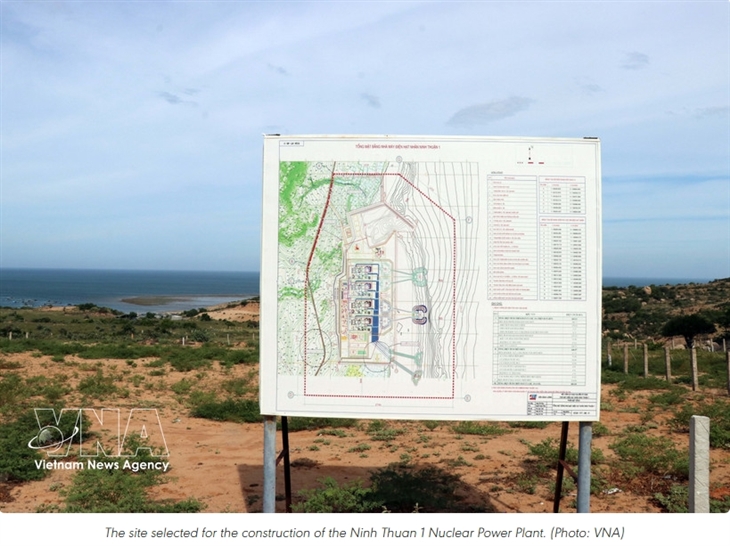
AsemconnectVietnam - For Vietnam, the agreement marks the culmination of years of deliberation and signals a return to nuclear power development. For Russia, meanwhile, large-scale projects such as Ninh Thuan 1 provide a solid foundation to expand its presence in Asia and export its nuclear technologies and infrastructure.
Russian experts have highlighted the positive impacts of the recently-signed cooperation agreement between Vietnam and Russia to construct Ninh Thuan 1 Nuclear Power Plant, describing it as a strategic move that will bolster Vietnam’s energy security while expanding Russia’s technological footprint in Asia.
Russian analysts said that for Vietnam, the agreement marks the culmination of years of deliberation and signals a return to nuclear power development. For Russia, meanwhile, large-scale projects such as Ninh Thuan 1 provide a solid foundation to expand its presence in Asia and export its nuclear technologies and infrastructure.
Vadim Petrov, Deputy chairman of the Interdepartmental Arctic Agenda Working Group of the Russian Ministry of Natural Resources and Environment, noted that the project will strengthen Russia’s position in one of Asia’s fastest-growing energy markets.
With a planned capacity of around 2.4 GW, the plant could generate an estimated 17 TWh annually even at 80% capacity - an important contribution as Vietnam’s power demand is projected by the International Energy Agency (IEA) to double by 2030, he noted.
Sergey Tronin, Assoc. Prof. at the Department of Financial and Investment Management at the Graduate School of Management Faculty of the University of Finance under the Government of the Russian Federation, pointed out that Southeast and East Asia are facing chronic power shortages amid rapid industrialisation. He said Russia is actively promoting not only classic high-power nuclear power plants here, but also small modular reactors, as well as floating power units. In Vietnam, in addition to nuclear power plants, Russia is building a Nuclear Science and Technology Centre.
Russia's competitive advantage lies in the fact that not only the reactor is exported, but the entire infrastructure platform, including design, construction, fuel cycle, personnel training, service and technological transfer, Petrov said, adding that for Russia, these are long export contracts, high added value, machine-building workload, and geo-economic impact.
The portfolio of foreign orders in this area exceeds 200 billion USD, he noted.
Meanwhile, Mikhail Khachaturian, Assoc. Prof. at the Department of Strategic and Innovative Development at the University of Finance said such cooperation gives Russia unconditional economic and technological advantages, especially stable exports of technologies and services; and powerful geo-economic benefits.
According to Nadezhda Kapustina, a professor at the University of Finance of Russia, the presence of Russian nuclear technologies in Vietnam, India, Bangladesh and potentially in other countries of the region creates an extensive network of infrastructure links. This strengthens Moscow's position in the emerging polycentric architecture of international relations./.
Source: en.vietnamplus.vn/russia-eyes-expanded-technological-footprint-in-asia-through-vietnams-nuclear-project-post340158.vnp
Russian analysts said that for Vietnam, the agreement marks the culmination of years of deliberation and signals a return to nuclear power development. For Russia, meanwhile, large-scale projects such as Ninh Thuan 1 provide a solid foundation to expand its presence in Asia and export its nuclear technologies and infrastructure.
Vadim Petrov, Deputy chairman of the Interdepartmental Arctic Agenda Working Group of the Russian Ministry of Natural Resources and Environment, noted that the project will strengthen Russia’s position in one of Asia’s fastest-growing energy markets.
With a planned capacity of around 2.4 GW, the plant could generate an estimated 17 TWh annually even at 80% capacity - an important contribution as Vietnam’s power demand is projected by the International Energy Agency (IEA) to double by 2030, he noted.
Sergey Tronin, Assoc. Prof. at the Department of Financial and Investment Management at the Graduate School of Management Faculty of the University of Finance under the Government of the Russian Federation, pointed out that Southeast and East Asia are facing chronic power shortages amid rapid industrialisation. He said Russia is actively promoting not only classic high-power nuclear power plants here, but also small modular reactors, as well as floating power units. In Vietnam, in addition to nuclear power plants, Russia is building a Nuclear Science and Technology Centre.
Russia's competitive advantage lies in the fact that not only the reactor is exported, but the entire infrastructure platform, including design, construction, fuel cycle, personnel training, service and technological transfer, Petrov said, adding that for Russia, these are long export contracts, high added value, machine-building workload, and geo-economic impact.
The portfolio of foreign orders in this area exceeds 200 billion USD, he noted.
Meanwhile, Mikhail Khachaturian, Assoc. Prof. at the Department of Strategic and Innovative Development at the University of Finance said such cooperation gives Russia unconditional economic and technological advantages, especially stable exports of technologies and services; and powerful geo-economic benefits.
According to Nadezhda Kapustina, a professor at the University of Finance of Russia, the presence of Russian nuclear technologies in Vietnam, India, Bangladesh and potentially in other countries of the region creates an extensive network of infrastructure links. This strengthens Moscow's position in the emerging polycentric architecture of international relations./.
Source: en.vietnamplus.vn/russia-eyes-expanded-technological-footprint-in-asia-through-vietnams-nuclear-project-post340158.vnp
US firms eye expanding fintech investment in Vietnam
Vietnam pledges partnership to develop resilient, green supply chains: Party leader
ASEAN opens new export momentum for Vietnam
PM attends Vietnam – Russian Federation Business Forum in Moscow
Vietnamese mission in Geneva discusses new developments in US tariff policy
Vietnam, Russia expand room for, elevate trade cooperation
Vietnam, Australia boost cooperation in agriculture, food sectors
Vietnam, US forge new growth momentum in technology era
Phu Tho, Thailand boost investment cooperation, business connectivity
Vietnam, Switzerland push to accelerate Vietnam – EFTA FTA talks
Measures sought to help Vietnamese firms expand investment in Indonesia
Upcoming general election signals political stability, stronger parliamentary diplomacy: ambassador
Upcoming general election sparks expectations for new development phase
Vietnamese students in China anticipate election with great hope
Public debt borrowing and repayment plan for 2026
Ensuring resources: Mobilizing sufficient and timely borrowed capital at reasonable costs and acceptable risks to meet expenditure needs ...Plan on implementation of high-tech law
Inter-sectoral legal support program for small and ...
Tourism destinations refresh offerings to welcome New ...
Across the Mekong Delta, many tourist sites have been busy upgrading their offerings. At the Con Son tourism site in Can Tho city, members ...Annual New Year festival shines in Da Nang
Phu Quoc emerging as a favourite global destination
Vietnam Airlines adds 270 flights to during 2026 New Year ...
