


Master plan for territorial hydrology in the central region to 2030, orientations to 2050
Friday, November 30,2018
AsemconnectVietnam - Continue to complete the irrigation system to increase service efficiency, actively respond to climate change. To review and adjust the tasks of multi-purpose projects and works on the water sources in order to increase the capacity of water storage, connection of water sources, production and daily life.
I. Scope
The planning area consists of five Central Highlands provinces: Kon Tum, Gia Lai, Dak Lak, Dak Nong and Lam Dong. The total natural area is 5.46 million hectares and the population is about 5.6 million.
Planning zoning: Based on the natural conditions, the characteristics of the existing irrigation system as well as the planned exploitation and use of water sources, the Central Highlands will be divided into 04 regions (Se San river basin and the Upper Ba River basin and the surrounding area, the Srepok river basin and the surrounding area, and the upper Dong Nai river basin and its vicinity.
Water supply zoning in Appendix I; drainage, drainage in Appendix II.
II. Opinion
Inheritance and development of ongoing planning in the area; In line with the National Target Program to Respond to Climate Change, the Strategic Direction for the Development of Irrigation in Vietnam, the Project on Restructuring of Agriculture in the direction of enhancing Value Added and Sustainable Development.
Continue to complete the irrigation system to increase service efficiency, actively respond to climate change. To review and adjust the tasks of multi-purpose projects and works on the water sources in order to increase the capacity of water storage, connection of water sources, production and daily life.
To focus on upgrading and building large-scale and inter-regional works in service of agricultural restructuring, life stabilization and socio-economic development for ethnic minority people and border inhabitants. Combining construction investment and redeployment of agricultural production, prioritizing water supply for clean agriculture, industrial crops and high economic value crops.
To ensure the general use of works on main streams for water supply, flood prevention, electricity generation and minimum flow maintenance.
To encourage investment in the development of a system of small-scale and scattered ponds and ponds for the purpose of taking initiative in water sources for production and groundwater addition. Priority is given to advanced irrigation solutions, saving water.
Review and adjust the public investment plan appropriately, avoid scattering, mobilize resources from the State budget, other legal sources at home and abroad, contribution of people to invest in construction irrigation works.
III. Target
1. General objective
Proposed overall solution for irrigation development in the Central Highlands until 2030, with orientation to 2050 to actively adapt to climate change conditions, serve the restructuring of agriculture, step by step modern The irrigation system should be improved to ensure water supply for daily life, industry and agriculture, contributing to sustainable socio-economic development, active prevention of drought and flood, waterlogging and environmental protection. To meet the requirements of socio-economic development, to build new rural areas and to improve the living standards of the people in the Central Highlands.
2. Specific objectives
- On water supply: To propose solutions to supply irrigation water for production for over 1.16 million hectares of cultivated land, of which the area guaranteed for irrigation from irrigation works increased from 214.645 hectares (reaching nearly 20 % of the area needed to irrigate the current area) to 607,800 ha (reaching 52% of total irrigated area of which 148,500 ha of rice, 299,700 ha of long-term industrial crops, 159,600 ha of color and other annual crops). Gradually raise the irrigation water level from 75% to 85%; Providing water supply for domestic and industrial use with guaranteed level of 90%.
- On drainage, water drainage and flood prevention: To ensure the drainage of 10% of rain frequency. Studying solutions for drainage and drainage caused by floods and floods in low lying and flooded areas such as Kon Tum city, Lak Buon Tra Pa area, Ayun Pa river and so on. Producing, contributing to sustainable socio-economic development. To protect production with early flood, late flood frequency of 10%, prevention and mitigation of damage caused by floods.
- Having a plan to actively respond to and minimize the damage caused by drought, flood, waterlogging and natural disasters.
1. Climate Change Scenario
The medium-scenario scenario B2 published by the Ministry of Natural Resources and Environment in 2012 takes into account scenario RCP4.5 published by the Ministry of Natural Resources and Environment in 2016 with the following targets:
- Temperature: The average temperature throughout the region tends to increase over time to 2050 from 0.5 ÷ 1.24 ° C depending on the province.
- On the rain: Average annual rainfall in the whole region tends to increase over time. By 2020, it will increase by 7.8 mm, by 2050 it will increase by 25.3 mm compared to 2010.
2. Standard for water supply, drainage and flood control
Guaranteed water supply: To gradually increase the water supply for agriculture from 75% to 85%; Supply of water for domestic and industrial use with the guarantee level of 90%.
Water drainage and drainage: To ensure the rain frequency of 10%, rain 3 days for 5 days.
Flood protection level: Early flood prevention, late flood frequency of 10% to protect production; To take initiative in preventing and mitigating the damage caused by floods.
3. Total irrigation solution
a) Building solutions
To concentrate on repairing and upgrading key works, damaged and degraded works, step by step modernizing existing irrigation systems so as to ensure efficient and sustainable operation; To build and complete large-scale, multi-purpose works serving water supply for industrial parks, deploying urgent works against drought.
To study water supply and drainage works, transfer water from hydropower reservoirs in river basins in the Central Highlands to supply water for hi-tech agricultural production and concentrated industrial trees; To propose water connection and connection between water reservoirs in service of production, people's life and economic sectors.
To develop ponds and lakes, to store water on sloping land; Application of advanced irrigation, water saving to expand the area of irrigation; Rational exploitation and protection of groundwater resources.
Mainstream reservoirs should be operated in accordance with inter-reservoir operation procedures to ensure water supply, electricity generation, flood reduction, and maintenance of the minimum flow in the downstream.
b) Specific solutions for each sub-region are as follows:
Sub-Basin and Sub-Basin
- Water supply, irrigation and drought prevention
Repairing and upgrading 204 irrigation works, adding 2,700 ha, in combination with existing irrigation works for 27,700 ha (14,000 ha of rice, 13,300 ha of long-term industrial crops and 400 ha of vegetables). Prioritize the upgrading of works to ensure the stable area of irrigation and combat the drought.
To build 204 new works, a group of irrigation works of 21,050 ha (6,650 ha of rice, 7,200 ha of long-life industrial trees, 7,200 ha of color and other trees), of which priority shall be given to projects in service of agricultural restructuring. canals, canals, water supply pipelines for industrial crops, drought-prone areas. To invest in water pumping stations from reservoirs to irrigate industrial trees on sloping land; Apply advanced irrigation, save water to expand the area of irrigation.
To continue studying the collection of water from hydroelectric reservoirs for hi-tech agricultural production, concentrated industrial trees; To study the solution of transferring water from hydropower reservoirs on the Se San river to other basins of the Central Highlands and southern Central Vietnam in service of agricultural production, people's life, industry and service and coastal economic zones.
Using the pumping stations Vinh Quang, Mang Lau, Ta Bl pumping water from the Dak Bla River to irrigate and create the source; Water from the canal of Dak Uy lake to add water to Ca Sam, Dak Cam, Mr Phieu, Irrigation Ngoc Reo, Dak Hring, Dak Psi ... in Dak Ha district when the drought occurred.
After planning, the total area irrigated from the irrigation works reached 48,800 ha (of which 20,700 ha of rice, 20,500 ha of industrial crops, and 7,500 ha of other annual crops).
- Domestic and industrial water supply: Upgrading the Dak Cam dam to provide water for the new urban area north of Kon Tum city.
- Drainage and drainage: Dredge the Dak La drainage shaft, extend the culverts of the sluices through the roads in Dak Ha district to drain the Dak La drainage area.
- Flood prevention and control
To build Dak Bla and Dak Po Kei reservoirs to combine electricity generation with a total flood prevention capacity of 57.6 million m3.
To improve the anti-erosion embankment system of Dak Bon river bank in Kon Tum city and Dak Rong commune, Kon Ray district; Construction of embankments on the Po Ko river crossing Dak Pte commune, Dak Glei district, Dak Ta Kan stream embankment, Dak To district to protect the population, stabilize production. Management of the Dak Sir River through Sa Nhon, Sa Nghia communes, Sa Thay district to ensure flood drainage.
Sub-Basin of the Ba River and its vicinity
- Water supply, irrigation and drought prevention
To repair and upgrade 119 irrigation works of 5,700 ha, combine with existing irrigation works for 44,400 ha (21,700 ha of rice, 16,700 ha of coffee, 6,000 ha of color and other annual trees). Prioritize the upgrading of works to expand the area of irrigation, minimize damage caused by drought.
When the drought occurs, actively regulate the flow of Ia Ring lake to Ia Hloc stream to supply water for cattle raising in Chu Pah district (Gia Lai province); Continue to study the plan of water pumping from Ayun Lake to irrigate 10,000 ha of industrial crops in Ia Hru, Nhon Hoa, Ia Dreng, TT. Nho Hoa, Chu Don, Ia Phang in the district of Chu Pưh Gia Lai.
Continuing research: pipeline to transfer water from Ka Nak reservoir to supply water for 7,400 ha of agricultural land, combined with domestic water supply and other economic sectors in downstream of An Khe hydropower; The dam system on the river flows through An Khe town to serve agricultural, domestic and industrial water supply, improve the environment and landscape contribute to socio-economic development of An Khe town.
After planning, the total area irrigated from irrigation works reached 117,600 ha (of which 35,200 ha of rice, 37,100 ha of long-term industrial crops, 45,300 ha of color and other annual crops).
- Domestic and industrial water supply: Take water from An Khe lake to supply domestic water for An Khe town and An Khe sugar factory. The Ayun Pa sugar plant uses water from the main canal of Lower Ayun.
- Drainage and drainage: Dredging of Ia Pia- EaKdrang, Plei Pai, ThChro Hung, ThChro Le, and Tan Phu communes will ensure drainage for an area of 16,300 ha in A Yun Pa and Phu Thien districts. Gia Lai.
- Flood prevention and control: To further study the dredging and expansion of river sections in the area of To Na mountain pass to increase flood drainage and reduce flooding for Cheo Reo area.
Sub-region of the Srepok River and its vicinity
- Water supply, irrigation and drought prevention
Completed Krong Pach Thuong lake, continue to complete the canal system of Krong Buk lake, Upper Ea Soup lake.
Raising the volume of Ia Mo reservoir, combining to apply advanced irrigation, saving to expand the irrigation area to 20,600 ha. Priority should be given to expanding the canal from Plei Pai to Ia Lau dam to supplement irrigation water for downstream of Ia Lau dam. Construction of water pumping stations directly from the reservoirs to irrigate the area of industrial crops in the sloping land.
Upgraded 227 irrigation works increased by 11,500 ha, along with existing works in the irrigated area for 110,200 ha (43,800 ha for rice, 62,700 ha for industrial crops, 3,700 ha for annual crops and other crops), of which To serve anti-drought works.
To build 480 new works to ensure the irrigation of 168,800 hectares (32,300 hectares of rice, 69,700 hectares of industrial crops, 67,000 hectares of other crops and annual crops), concentrate on investment in works to create sources, overcome and prevent drought , serving the restructuring of agriculture.
To study the solution of pumping water used for dead water in reservoirs for drought prevention in drought-stricken areas such as Krong No, Cu Jut, Dak Mil, Dak Song, Dak Glong; transfer water from the lake to the irrigation area of the Nam Da irrigation project (Krong No district), transferring water from the West Lake to Dak Ken Lake, regulating the water of Dak Loou Lake (Dak Mil District); Transfer water from Cau Tu lake (Dak R'Lap district) to Nghia Thang, Dao Nghia and Dak Sin communes when drought occurs.
To study the collection of water from hydroelectric reservoirs for hi-tech agricultural production, concentrated industrial trees; To study the solution of transferring water from hydropower reservoirs on the Srepok river to other basins in the Central Highlands for agricultural production, livelihood and economic sectors.
After planning, the area of irrigated area reached 279,000 hectares (of which 76,100 hectares of rice, 132,100 hectares of long-term industrial crops, 70,800 hectares of other crops and annual crops).
- Domestic and industrial water supply
Additional water supply for Buon Ma Thuot city from Ea Chu Cap, Ea Kao ...; Buon Ho town uses water from Hop Thanh and groundwater; Ea Kar town uses water from Ea Kar lake.
Take surface water from the reservoirs to supply water to the industrial zones of Dak Lak province. To build new reservoirs for Dak Nong industrial parks: Dak Hoa lake (supplying water for Krong No industrial complex), Dak Gung lake (supplying water for Truc Son industrial complex), Dak R'La 5 lake Water supply for Dak R'La industrial complex.
- Pepper, drainage
Lagoon - Buon Trap: construction of 8 pepper pumping stations, 3 pumping stations for irrigation and drainage, drainage for an area of 6,600 ha; To study and dig canal system for 11,000 ha of agricultural land in Krong Ana district and Lak district, Dak Lak province.
Ea Soup: Dredge the streams flowing into the Ea Mo stream, Ea Hleo drainage to the area of 1,500 ha Ea Soup district.
Jut drainage basin, Dak Nong province: To build new canals of villages 7, 8 and Cu Knia canal, with an area of 670 hectares; To dredge the system of Dak Wil pepper canals for an area of 600 hectares.
- Flood prevention and control
Upgrading Quang Dien dyke through Krong Ana district, constructing dykes in Lak - Buon Troop district of Lak district to protect floods early to protect production; embankment along Krong Knot River downstream of Buon Tua Shar Lake. Study on building Krong Bong reservoir to cut flood for downstream.
Upper Dong Nai and Upper Dong Nai basins
- Water supply, irrigation and drought prevention
To repair and upgrade 117 irrigation works with an increase of 4,000 hectares, along with existing works for stable water supply of 59,000 hectares (11,200 hectares of rice, 38,200 hectares of industrial crops and 9,600 hectares of other annual crops. ). To prioritize the upgrading of reservoirs, apply irrigation on sloping land, advanced irrigation and water saving in order to raise the efficiency of water use and expand the area of irrigation.
529 new irrigation works (5,200 ha of rice, 71,500 ha of industrial crops, 26,400 ha of color and other annual crops). Invest in the construction of reservoirs in Lam Dong province to combat drought and serve the restructuring of agriculture.
Studying the plan of pumping water from Dai Ninh hydropower reservoir to irrigate 4,000 ha of industrial crops and vegetables of Tan Hoi, Binh Thanh, N'Thol Ha, Ninh Gia and Nghia Lien town of Duc Trong district, Lam Dong province.
After the planning, the area of the whole area was irrigated from the irrigation works reached 162,200 ha (of which 16,400 ha of rice, 109,800 ha of long-term industrial crops, 36,000 ha of color and other annual crops).
- Domestic and industrial water supply
Domestic water supply of Gia Nghia town is used from the Dak R'tih hydropower reservoir; Da Lat city draws water from Dan Kia lake, Suoi Vang lake, Chien Thang lake, Tuyen Lam lake; Bao Loc city draws water from Nam Phuong lake and Tan Rai lake.
Water supply of Nhan Co Industrial Park from Nhan Co Lake, Thon 8 Lake; BMC industrial cluster draws water from Dak Ha lake and Dac Ha lake; Quang Duc industrial zone draws water from Quang Tin dam; Thuan An industrial cluster draws water from Dak Puer; Quang Tam industrial cluster draws water from Dak Dres lake 1; Dak Song industrial group draws water from Dak Mrung Lake and Thuan Tan Lake 2.
- Pepper, drainage
Downstream of Don Duong (Lam Dong) lake: To regulate, dredge and expand the meandering river sections after Da Nhim hydropower plant in Đ'Ran, Lạc Xuân, Lạc Lâm, Ka Đo and Quảng Lập communes. and Thanh My district, Don Duong district to cover the area of 5,800 ha.
Cat Tien-Da Teh drainage: dredging of Hai Co streams, Bo cones, Da R'Si to drain 5,100 ha. Dredging the R'Miss stream and tributaries, drainage for an area of 3,900 ha.
- Flood prevention and control: Construction of dikes downstream of Don Duong lake and drainage sluices to the Da Nhim river. Highway 721 in the areas along the rivers of Dong Nai in Cat Tien and Da Teh district to ensure seamless communication when the flood.
After planning, irrigation area in the whole Central Highlands reached 607,800 ha (reaching 52% of total area needed for irrigation, including 148,500 ha of rice, 299,700 ha of long-term industrial crops, color and other annual trees 159,600).
For the remaining area of 555,700 hectares, the following solutions will be studied:
- Exploiting groundwater within the allowable limits to expand irrigation for industrial crops;
- To build small dispersed reservoirs to increase the water storage capacity, to take initiative in irrigating irrigation water sources on the spot;
- Completing and extending the canal system to supplement irrigation water for dry areas, increasing irrigation area;
- Study to collect water from reservoirs for irrigation of sloping land along reservoirs and concentrated industrial trees;
- Review the reduction of paddy land area within the service area of irrigation systems in order to have more irrigation water for industrial crops;
- To step up the application of advanced irrigation, to save water in order to have more water sources to expand irrigation areas;
- Propagating and disseminating knowledge and advising local people to take initiative in restructure their crop plants in difficult regions and areas where irrigation water sources can not be located in these plannings;
- To study and promulgate mechanisms and policies, mobilize social resources, mechanisms to support local people to build small ponds and lakes, and complete the canal system.
c) Non-structure solutions
- Ensuring the safety of lakes, dams and irrigation works.
- Planting and protection of watershed forests and protection forests.
- Improving the efficiency of the management of exploitation and modernization in the management and operation of the irrigation system.
- To build and modernize the flood, drought and disaster prediction and warning system; To raise the capacity of medium and long-term forecasting for the operation of irrigation works and actively respond to droughts, floods and natural calamities.
- To carry out research, receive and apply advanced irrigation technology, save water, water storage, protect surface water and underground water.
- To formulate mechanisms for coordination among ministries and branches in the management and synchronization of technical infrastructure plannings.
V. Funds and sources of capital for implementation of the planning
1. Funds for implementation of the planning
The total budget for the implementation of the plan is about 103.224 trillion dong, of which the water supply is 94.339 trillion dong; drainage, flood prevention 7.585 billion; non-construction solution 1,300 billion VND. Investment phases are as follows:
- In the period up to 2030, the implementation cost is about 25,253 billion VND, of which the water supply is 21,092 billion VND; drainage, flood prevention 3.571 billion; non-construction solution of 790 billion VND.
- In the post-2030 period, the implementation cost will be about VND 77,771 billion, of which the water supply will be VND 73,247 billion; drainage, flood prevention 4.014 billion; non-construction solution of 510 billion VND.
2. Capital source
Funds for implementation of the master plan shall be balanced with the annual state budget capital (central budget and local budgets, government bonds, ODA capital), social mobilized capital, contributions of beneficiaries and other legal capital.
VI. The order of execution
Based on the planning contents and budget capability, the State budget shall be balanced according to the provisions of the State Budget Law and ranked in order of priority for synchronous and efficient investment according to the following priority order :
- To upgrade and complete the systems of irrigation works in order to bring into full play the efficiency and priority of closed investment in large irrigation systems of the region and dam reservoir safety works.
- Construction of multi-purpose, inter-regional and emergency works, anti-drought works, linking and linking water sources for socio-economic development, restructuring of the agriculture and construction sector. Set up new countryside.
- To dredge and improve the canals of irrigation and drainage and improve the field system to improve the service efficiency of the works.
- To invest in projects for protection of inhabitants, flooded areas, upgrading dikes and embankments, works in combination with traffic and irrigation works.
- Prioritize investment contents:
Complete the major transitional works.
Repairing, upgrading lakes, dams, pumping stations, solidifying canals.
Construction of works, clusters for the task of restructure agricultural and anti-drought.
Construction of pumping stations and canals, pipelines to irrigate industrial trees in sloping land.
To invest in the construction of drainage works for areas frequently flooded.
Upgrading Quang Dien embankment system, constructing new embankments of Lak-Buon Trau dyke, constructing Krong No embankment.
List of works, non-works solutions and budget for implementation of master plan in Appendix III, IV, V, VI, VII, VIII, IX.
VI. Organization of implementation
1. The Ministry of Agriculture and Rural Development shall publicize, guide, direct and implement objectives, contents, orientations for development, solutions and management of plannings.
People's Committees of Dak Lak, Dak Nong, Gia Lai, Kon Tum, Lam Dong
- Assume the prime responsibility for, and coordinate with the Ministry of Agriculture and Rural Development in, managing and supervising the implementation of the planning in the provinces; To direct, organize the handling and clearance of invasive works and encroach upon the protection corridors of irrigation works according to the provisions of law; To well perform the planting and protection of headwater protection forests.
- To take initiative in arranging and mobilizing capital sources and integrating programs' capital for implementation of the planning.
- Based on this master plan, provincial planning (irrigation component) will be implemented in accordance with the Planning Law.
Long Giang
Source: Vitic/ thuvienphapluat.vn
Program on conservation and development of Vietnamese craft villages in a period of 2021 - 2030
Implementation plan of marine aquaculture development project in Ninh Binh province to 2030 with a vision to 2045
Plan on implementing national environmental protection strategy to 2030 with a vision to 2050 in Kien Giang province
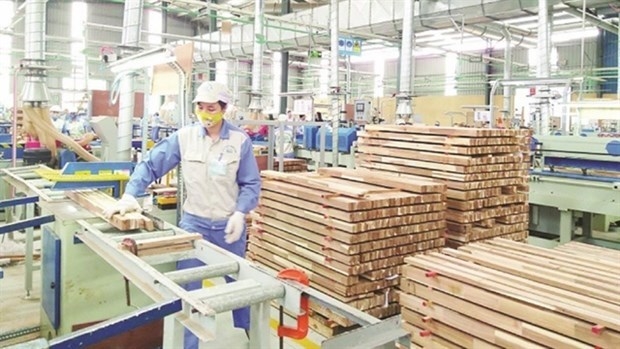
Plan on implementing Decision No. 327/QD-TTG dated March 10, 2022 of the Prime Minister approving the project on developing sustainable and effective wood processing industry in the period of 2021-2030 in Gia Lai province
Action plan on implementing strategy of sustainable agricultural and rural development in a period of 2022-2030 with a vision to 2050 in Hanoi city
Plan on implementing Decision No.923/QD-TTG dated August 2, 2022 of the Prime Minister approving science and technology program for new rural construction in a period of 2021-2025 in Vinh Long province
Plan on implementing strategy of sustainable agricultural and rural development in Bac Kan province in a period of 2021 - 2030 with a vision to 2050
Action plan on implementing livestock development strategy in a period of 2022-2030 with a vision to 2045 in Hanoi city
Implementation plan of Vietnam's forestry development strategy for a period of 2021-2030 with a vision to 2050 in Gia Lai province
National master plan in a period of 2021-2030, vision to 2050
Program on strengthening environmental protection, food safety and rural clean water supply in building new countryside in a period of 2021-2025
Digital transformation program on building new countryside, towards smart new countryside in a period of 2021 - 2025
Rural tourism development program on new rural construction in a period of 2021 - 2025
Project on development of trade, e-commerce systems and border trade in Binh Phuoc province in a period of 2021-2025, orientation to 2030

Plan on implementing Decision No. 327/QD-TTG dated March ...
Concretize viewpoints, objectives, tasks and solutions of the plan in accordance with practical conditions of the locality, associating ...Plan on implementing national environmental protection ...
Implementation plan of marine aquaculture development ...
Program on conservation and development of Vietnamese ...
Plan on improving quality of human resources to 2025 and ...

Efforts taken to turn culinary culture into national ...
The Vietnam Cuisine Culture Association (VCCA) is taking steps to implement a project to build and develop Vietnamese culinary culture ...Vietnamese cuisine making a name for itself with ...
Vietnam advance to next round of AFC U20 Women’s Asian Cup
Cultural tourism and traditional values promoted through ...
